




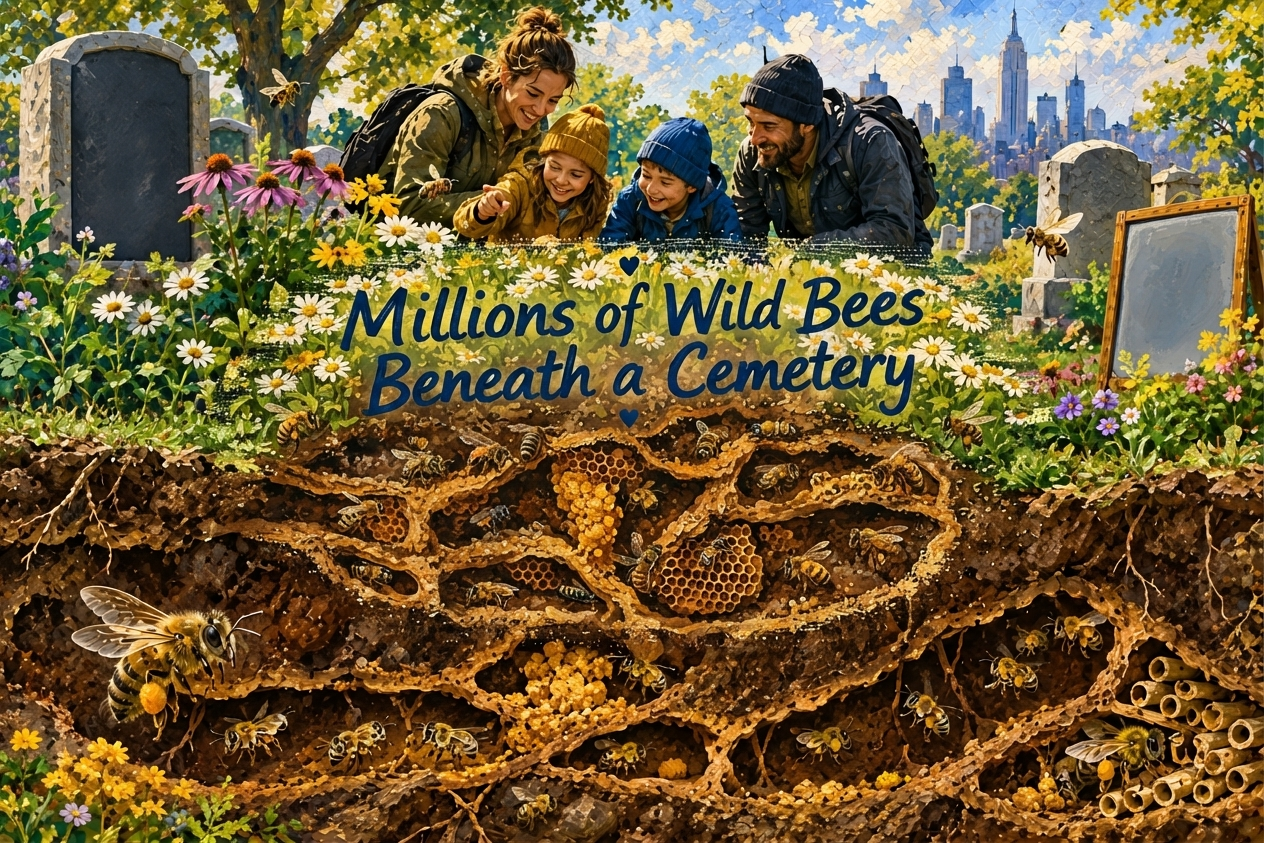
In the concrete heart of New York City, where skyscrapers stretch toward the sky and the hum of urban life rarely stops, an astonishing subterranean world thrives in quiet contrast. Recent findings reveal a staggering ecological marvel: researchers estimate that approximately 5.5 million wild bees live beneath just 1.5 acres of cemetery land.
This discovery shatters conventional notions of what urban spaces can achieve. While cemeteries are designed as final resting places for humans, they double as unexpected havens for wildlife. Undisturbed by constant development, heavy foot traffic, or modern landscaping chemicals, these protected pockets of earth offer undisturbed nesting grounds and rich floral resources.
The presence of millions of wild bees in such a compact space underscores a powerful ecological truth: nature always finds a way. It demonstrates that biodiversity is not restricted to deep forests or sprawling national parks. Even the smallest, most ordinary urban corners can support extraordinary life systems if given the chance.
As urban areas continue to expand, this hidden metropolis beneath the tombstones serves as both a reminder and a blueprint. It highlights the hidden resilience of urban ecosystems and challenges city planners and conservationists alike to rethink how we value “small spaces”—proving that right beneath our feet, big life is quietly finding a way to flourish.