




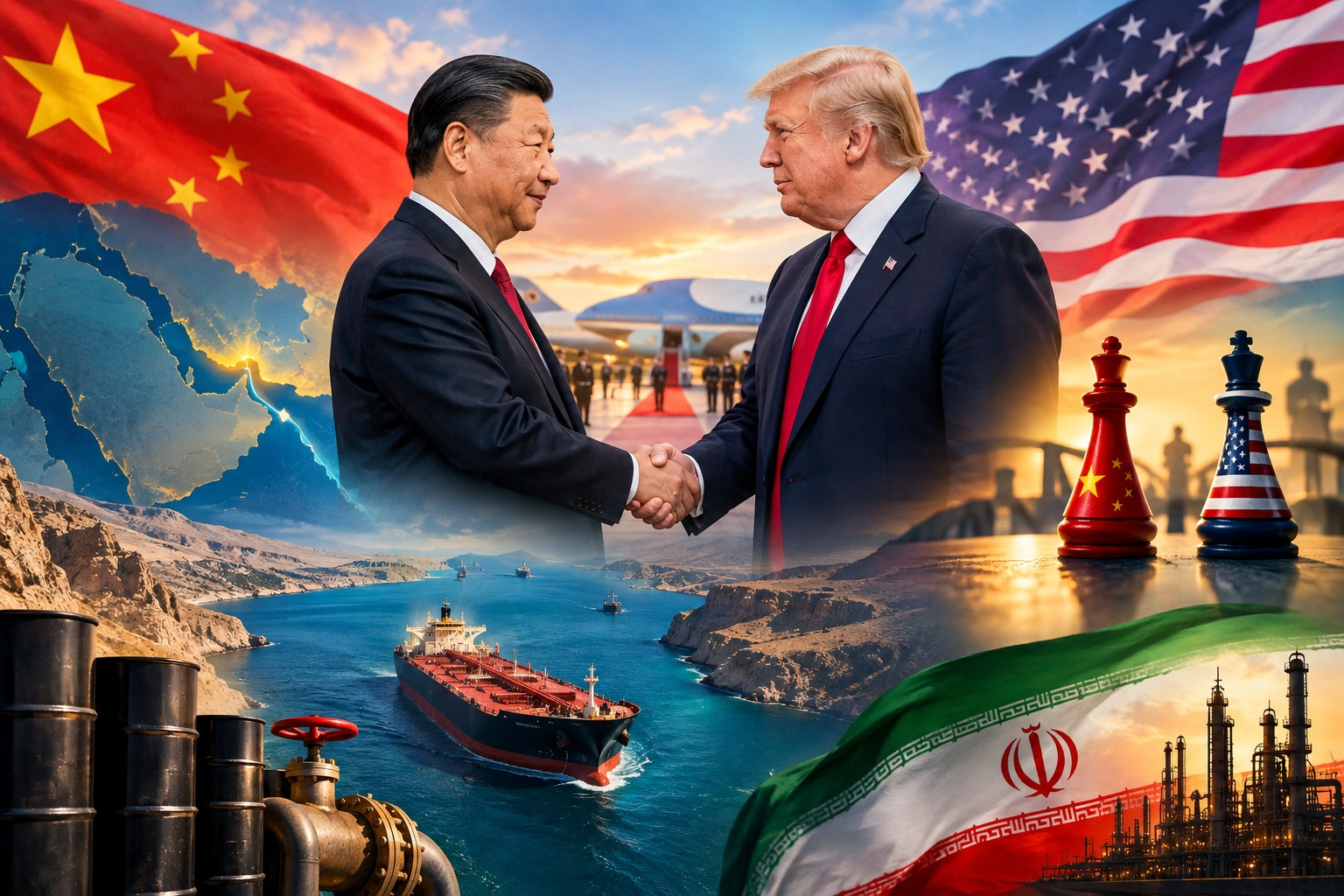
Washington officials reportedly expressed relief when the Chinese Foreign Ministry announced that President Xi Jinping would visit the United States from September 23 to 25. His counterpart, Donald Trump, would personally welcome the guest at the airport, a first for the United States in nearly 60 years. This announcement dispelled rumors about Xi Jinping’s health, which had circulated after unsubstantiated social media accounts claimed the Chinese leader fell ill during the BRICS summit in India.
Similarly, the world is gripped by fears of escalation in the Gulf and the potential for imminent inflation, while simultaneously hoping for some Iran-US re-engagement.
Taiwan remains the central element in any US-Sino meetings and talks. Following their Beijing meeting in May, both Trump and Xi had agreed on a “constructive relationship of strategic stability” framework to prevent permanent and fatal ruptures in the ties.
Chinese officials and experts, however, do not anticipate any immediate major outcomes of the upcoming Xi-Trump summit on the central issues such as Taiwan. The obvious inhibiting factors are the November mid-term elections, Trump’s conflict with the media, the rising costs of energy, and his transactional wheeling and dealing and unpredictability.
At present, the central question arises: could Xi Jinping offer, directly or indirectly, both Washington and Tehran a plan for deescalation, leading to a gradual reduction in tensions and providing a face-saving exit for both adversaries? Will Trump accept such a proposal to assert “victory” a few weeks before the midterm elections, as his approval ratings plummet below 30?
Furthermore, Trump is currently engaged in a conflict with major US television networks, including Fox News Media, ABC News, CBS News, NBC News, and CNN, who have collectively decided to suspend their pooled (shared) television coverage of President Donald Trump. This decision follows Trump’s recent ban on journalists from CNN, MS NOW (MSNBC-related), and Politico from entering the White House.
Of greater significance, can a Chinese facilitation provide even the Iranian Revolutionary Guards Corps (IRGC) with an opportunity to withdraw from its maximalist position regarding the Strait of Hormuz?
As an undeclared consequence of Iran’s inflexible stance over the proposed passage fees for navigation through the Strait of Hormuz, Beijing has expressed displeasure.
For the Chinese government, imposing fees on navigation through Hormuz constitutes a principle-based red line. If Beijing is indeed dissatisfied with what many Chinese scholars refer to as an intransigent conduct, did Foreign Minister Wang Yi address this issue during his meeting with his Iranian counterpart, Abbas Araghchi, on September 16 in Beijing?
It is not entirely certain whether Wang Yi-Araghchi’s meeting will yield any significant outcomes. On the surface, it appears to have reinforced the coordination between Beijing and Tehran on de-escalation, energy security, and regional stability. China has positioned itself as a proponent of dialogue and a supporter of Iran’s legitimate interests.
However, it is unclear why China would not express its displeasure over the continued closure or restricted navigation through the Strait due to the Iranian position. Hormuz serves as a crucial link for approximately 45% of China’s crude oil imports and nearly 30% of its LNG imports, primarily from Qatar. China accounts for approximately 90% of Iran’s oil exports. As the world’s largest oil importer, China consumes around 11-13 million barrels per day in recent years. A substantial portion of oil from Saudi Arabia, Iraq, the United Arab Emirates, Kuwait, and almost all of Iran’s exports passes through this chokepoint. China alone accounts for roughly 37-38% of all oil flowing through Hormuz.
Currently, China is still hesitant to panic due to its adequate strategic oil reserves (estimated at 1.2-1.4 billion barrels, sufficient for approximately 100-130 days of imports). However, it cannot afford the continuous depletion of these reserves.
A prolonged disruption would result in the removal of a significant portion of its seaborne energy supplies (potentially 2-4 million barrels per day or more of oil). Extended closure would lead to higher global oil prices, intensified competition for alternative cargoes, and increased costs for manufacturing, petrochemicals, transportation, and overall economic growth. This disruption has global consequences and extends beyond a mere threat to China’s production and supply chains.
Let us therefore wait and see if some positive developments emerge from the Xi-Trump meeting.