




Since the launch of the U.S.–Iran war on February 28, the dominant narrative emerging from Washington and much of the Western media has been clear: Iran is fractured, its leadership divided, and its system under stress following heavy military strikes and the loss of key figures, including Ali Khamenei. Under Donald Trump, this messaging has been amplified through official statements and media leaks suggesting deep fissures between Iran’s political leadership and military establishment.
White House spokesperson Karoline Leavitt publicly emphasized the need for a “unified” Iranian response to U.S. proposals, while Axios, citing U.S. officials, claimed Tehran had been given a narrow window to “get their act together.” Reports echoed by The Times of Israel, as well as Israeli outlets like Kan and Ynet, reinforced claims of an “absolute fracture” within Iran—suggesting even limited access to Mojtaba Khamenei and a breakdown in internal coordination.
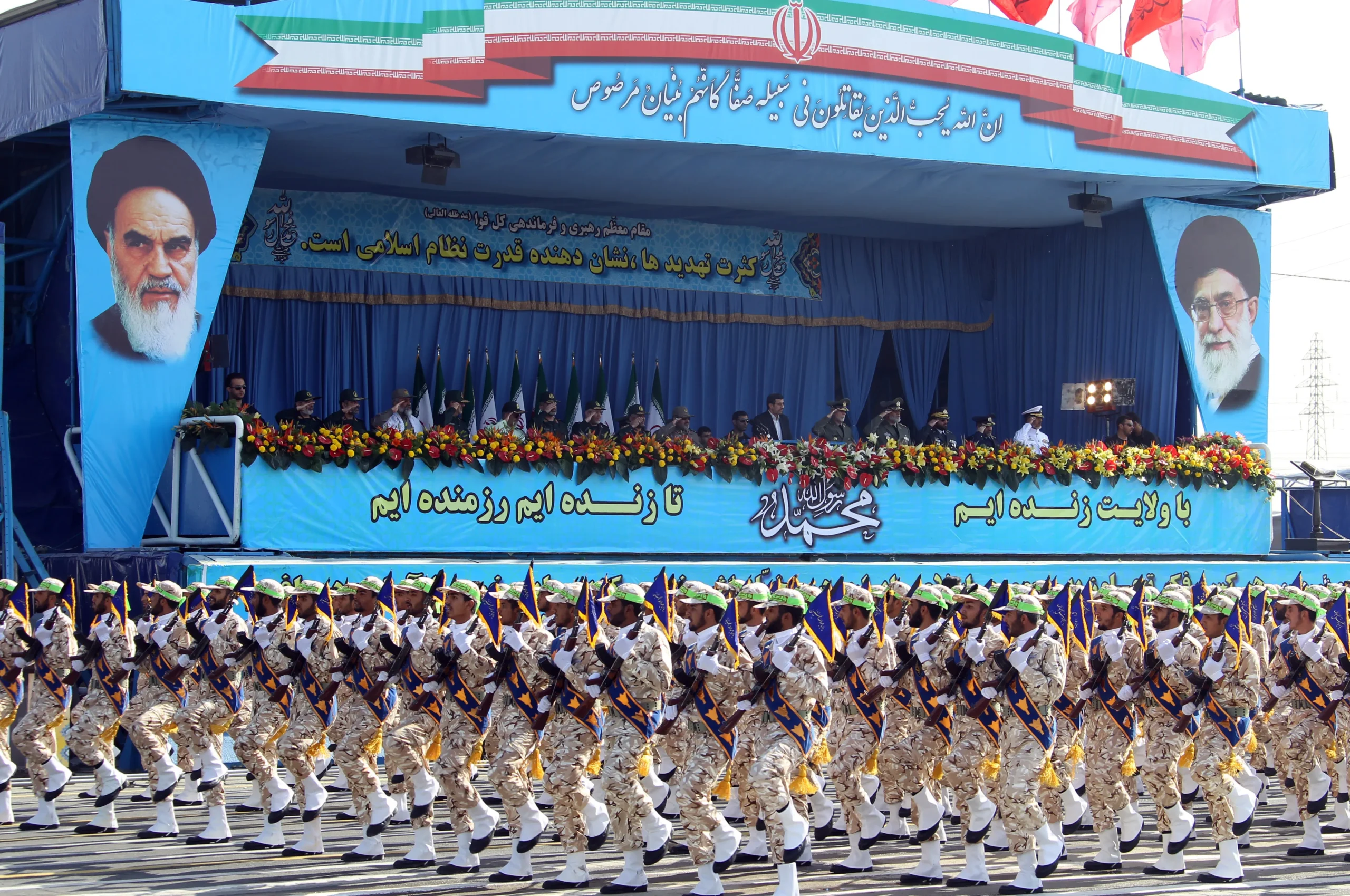
On the ground in Iran, however, a different reality appears to be taking shape—one of consolidation rather than fragmentation, centered around the Islamic Revolutionary Guard Corps. Senior Iranian leaders have publicly and consistently rallied behind the IRGC, portraying it as the backbone of national resilience. President Masoud Pezeshkian praised the force as a product of Ruhollah Khomeini’s foresight, a “robust tree” safeguarding the nation’s independence and dignity.
First Vice President Mohammad Reza Aref highlighted its stabilizing role across West Asia, while Parliament Speaker Mohammad Bagher Ghalibaf described it as an “iron wall” and a source of national pride. This rhetorical unity is reinforced by action: the IRGC’s seizure of two foreign-flagged vessels in the Strait of Hormuz signals not paralysis, but coordinated strategic assertiveness. Far from splintering, Iran’s leadership appears to be coalescing around a security-centered doctrine in response to external pressure.
Ironically, the clearer signs of internal strain may lie not in Tehran but in Washington. Since February 28, the U.S. defense establishment has witnessed a string of high-level dismissals and forced departures. John Phelan was removed as Secretary of the Navy, and Chief of Staff Randy George was also dismissed as part of a big shake-up. These developments reflect mounting operational pressures and possible strategic disagreements within the Pentagon. They also raise a critical question: is the narrative of “division” being projected outward to mask fractures within the U.S. system itself?
Strategically, the conflict has evolved into a classic zero-sum contest, particularly over nuclear enrichment and control of the Strait of Hormuz—issues that leave little room for compromise. According to Robert Pape, the United States is operating under an “illusion of control,” with diminishing leverage as the conflict drags on. He argues that Donald Trump now faces a narrowing set of choices: escalation or retreat.
Iran, on the other hand, is not merely surviving but recalibrating the strategic balance, deliberately prolonging the conflict to weaken Trump politically and deny him a clear victory. The result is a stark inversion of the original narrative: rather than a divided Iran on the brink, what emerges is a power struggling to reconcile its ambitions with a rapidly changing reality.
Robert Pape, a professor of political science at the University of Chicago Trump and Iran may emerge out of the conflict as one of the strongest countries. Trump is trapped, while Iran is proving it can survive despite all sorts of sanctions and the military power of the US and Israel, Pape told the show “Breaking Point” with Ryan Grimm.
The core issues of nuclear enrichment and control of the Strait of Hormuz are zero-sum problems, according to Pape. There is no middle ground, meaning one side must essentially concede, and Iran currently prefers to escalate rather than surrender its leverage.
Professor Pape believes that Donald Trump has lost control of the situation and is struggling with an ‘illusion of control.’ He asserts that America is not winning and has fewer cards to play as each day passes, while Iran’s trajectory is one of growing power. He also suggests that Iran is intentionally stringing out the conflict to ‘torpedo’ Donald Trump’s presidency, aiming to make him a ‘lame duck’ and establish a historical legacy that they succeeded in undermining him where others could not
Trump is trapped at a fork in the road between pulling back (which allows Iran’s rise as a major power) or moving forward with further escalation. Pape notes that Trump is desperately seeking a ‘third way’ or a ‘fig leaf’ of victory to save his presidency, but Iran is refusing to provide one, thereby leaving Trump with no clear path to a graceful exit.
Iran has learned that it can actually ‘beat America,’ a realization that changes the strategic calculus entirely. They are moving up the ladder of escalation, demonstrated by their actions in the Strait of Hormuz and public displays of missile capabilities, which serve as signals of their emerging status
The IRGC insisted on Iran’s sovereignty over the Strait of Hormuz. By asking Iran to open it Trump conceded the Iranian claim on sovereignty.
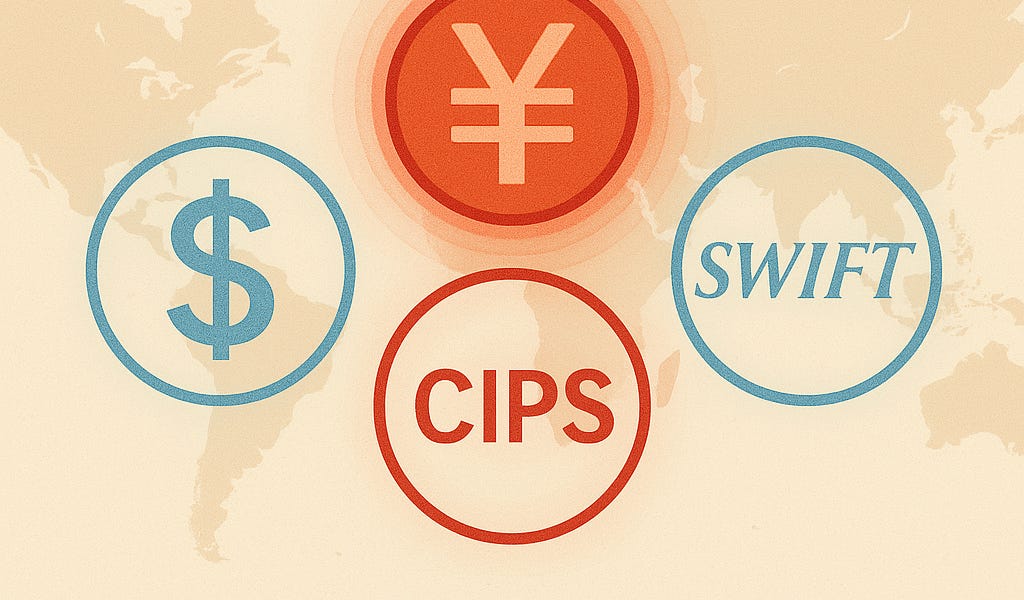
The IRGC has turned Hormuz into a chokepoint that has literally replaced the petrodollar with China’s Cross-border Interbank Payment System (CIPS) – a payment system that bypasses Society for Worldwide Interbank Financial Telecommunications (SWIFT) and offers clearing/settlement services for its participants in Chinese currency Yuan. It connects 1,600 participants across 180 countries
Trump faces the prohibitive costs of miscalculated aggression against Iran. The latter watches on as pressure mounts on the US president, who has already blinked by extending the ceasefire. Will he blink a second time to extricate the US from a disastrous military campaign – both politically as well as economically?