




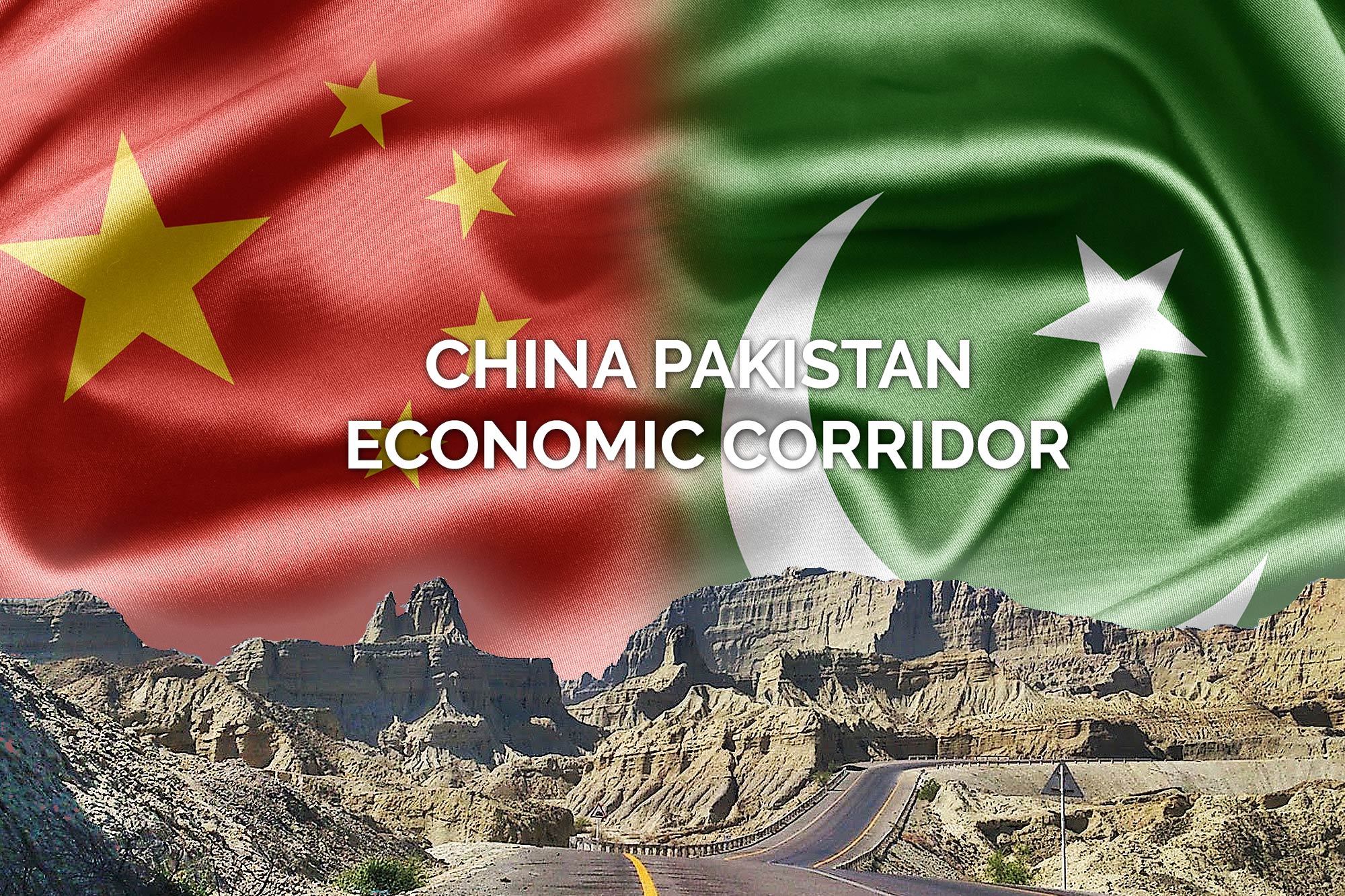
Nearly a decade after its launch, CPEC faces a more difficult question than intent: whether Pakistan’s economy, governance capacity, and security environment can sustain a project of such scale.
When Pakistan and China launched the China–Pakistan Economic Corridor (CPEC) in 2015, the project was hailed as a cornerstone of Beijing’s Belt and Road Initiative and a potential economic turning point for Pakistan. Nearly a decade on, CPEC remains consequential, but increasingly contested, constrained by Pakistan’s fiscal fragility, persistent security challenges, and a shifting geopolitical environment.
Financing Ambition in a High-Debt Economy
CPEC’s original price tag of roughly USD 46 billion, later expanded to over USD 60 billion, was premised on rapid economic uplift, improved energy supply, and export-led growth. In practice, much of the financing has taken the form of loans, commercial credit, and guaranteed returns for Chinese state-owned enterprises, rather than grants or equity-based investment.
This structure has intersected awkwardly with Pakistan’s macroeconomic trajectory. External debt has risen beyond USD 130 billion, foreign exchange buffers remain fragile, and repeated approaches to the IMF and Gulf partners for rollovers and deferrals have become routine. Under such conditions, long-term repayment obligations tied to CPEC projects have become a source of mounting strain, rather than leverage.
Gwadar’s Strategic Promise, and Its Limits
Gwadar Port was conceived as the geographic and symbolic anchor of CPEC, offering China a shorter route to the Arabian Sea while positioning Pakistan as a logistics hub. The completion of the New Gwadar International Airport, financed through a Chinese grant, added to the project’s strategic profile.
Yet Gwadar’s commercial transformation has lagged. Industrial activity remains limited, population inflows have been modest, and supporting ecosystems, including water, power, skilled labour, and regional trade integration, have not kept pace with infrastructure development. The result is a strategic asset that remains underutilised, raising questions about sequencing and economic realism.
Security as the Binding Constraint
CPEC’s most persistent challenge has been security, particularly in Balochistan. Attacks on Chinese engineers and installations have heightened Beijing’s concerns and forced repeated revisions of project timelines and security arrangements.
These incidents reflect deeper structural issues, including local grievances, uneven distribution of economic benefits, and weak civilian governance. For China, the lesson is familiar across Belt and Road geographies: capital-intensive infrastructure cannot substitute for political stability or social buy-in.
Geopolitics and Strategic Hedging
CPEC has long attracted scrutiny in Washington and other Western capitals, where it is viewed through the lens of strategic competition with China. Gwadar, in particular, is often discussed as a potential dual-use facility, despite Pakistan’s insistence on its commercial character.
As the US–China rivalry intensifies, Pakistan has quietly sought to hedge, re-engaging Western partners while slowing the pace of new CPEC commitments. This recalibration reflects not a rupture with Beijing, but an attempt to manage exposure amid growing geopolitical polarisation.
Lessons from China’s Overseas Projects
Experiences elsewhere have shaped perceptions of CPEC’s trajectory. Sri Lanka’s Hambantota Port, Uganda’s Entebbe Airport, and Sierra Leone’s abandoned airport project have become reference points in debates over debt sustainability and governance. While each case differs materially, together they highlight the risks that emerge when host-country capacity falls short of project scale.
For Pakistan, these precedents underscore the importance of renegotiation, transparency, and economic prioritisation, rather than expansion for its own sake.
An Uncertain Future
CPEC is not collapsing, but it is no longer advancing as initially envisioned. Pakistan faces a confluence of economic stress, domestic political uncertainty, and declining public trust, while China reassesses risk amid security concerns and uncertain repayment prospects.
The project’s future will depend less on strategic symbolism than on pragmatic adjustment, including restructuring debt, narrowing project scope, improving local inclusion, and aligning infrastructure with realistic growth pathways.
Conclusion
CPEC was conceived as a strategic corridor; it now functions as a stress test of Pakistan’s economic governance and strategic autonomy. Infrastructure can enable growth, but it cannot compensate for fiscal imbalance, political instability, or geopolitical overreach.
For Pakistan, the task ahead is not to abandon CPEC, nor to double down uncritically, but to recalibrate it. In an era of sharpened great-power rivalry, credibility and capacity matter as much as connectivity.
Corridors, after all, succeed not by ambition alone, but by endurance.