




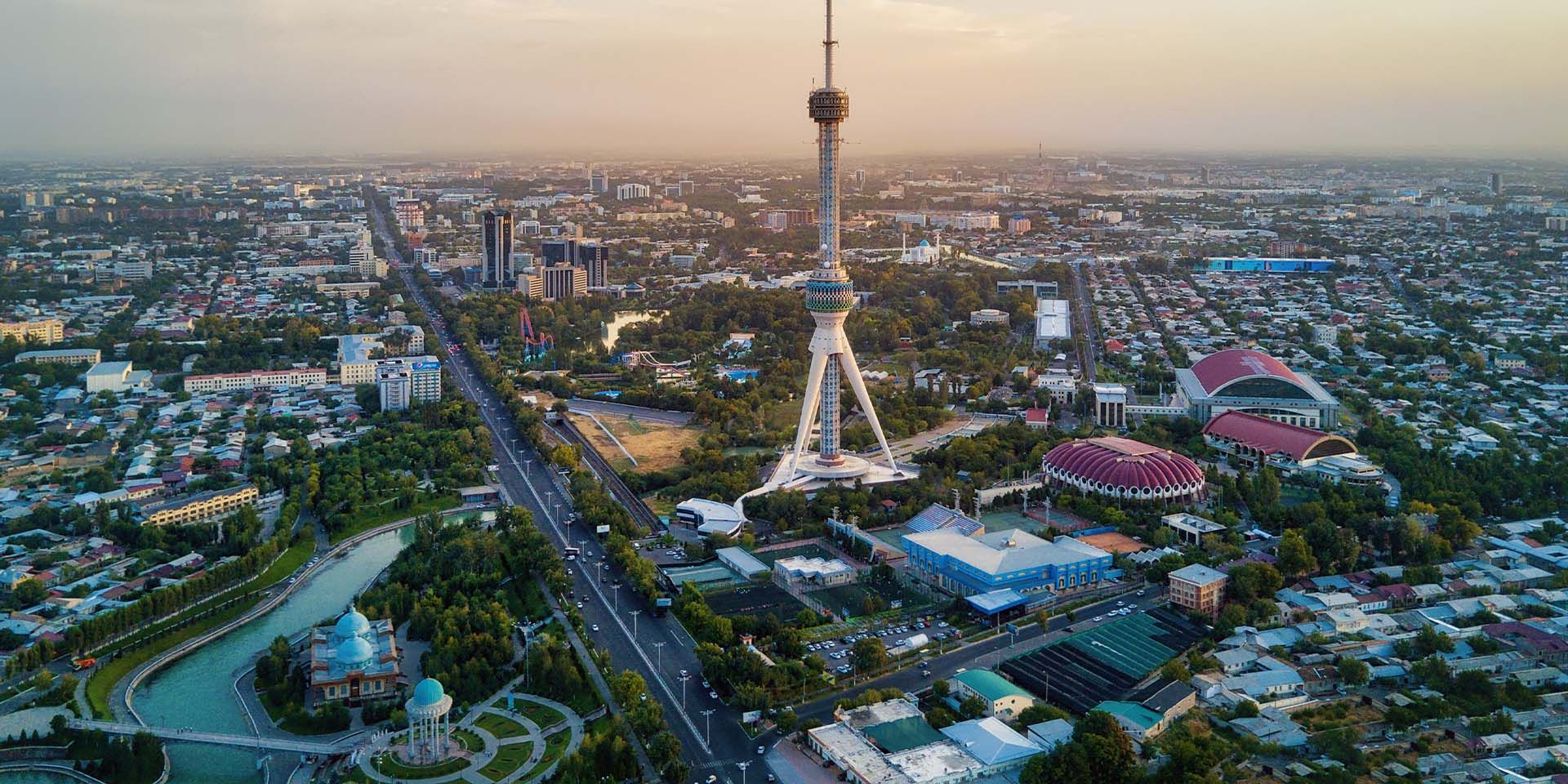
Uzbekistan’s transformation shows that disciplined leadership and vision can overcome even the harshest geographical limits. Its rise offers a striking lesson for nations blessed with resources but lacking direction.
Uzbekistan is one of only two doubly landlocked countries in the world, cut off not just from the oceans but also from the seas of its neighbors. Geography, at least in my early assumptions, condemned it to stagnation. I remember my first visit to this proud Central Asian land nearly two decades ago. As I looked out over its vast steppes, a persistent thought weighed on me: how could this country ever achieve meaningful development without a seaport? To my mind, ports were the gateways to prosperity, the arteries of trade. Without them, Uzbekistan seemed fated to struggle.
But how magnificently Uzbekistan has proved me wrong. This nation has demonstrated a resilience and discipline that has stunned even seasoned observers. It has charted a path of reform and modernisation that many coastal states, blessed with access to the seas, have failed to match. In doing so, Uzbekistan has shown that geography does not dictate destiny—leadership does.
This realisation carries a painful irony for me as a Pakistani. My country has every advantage Uzbekistan lacks. We have a 1,046-kilometer coastline, three major seaports—Karachi, Port Qasim, and Gwadar—and nine coastal cities. Pakistan should be a hub of prosperity, commanding global trade routes and ensuring growth for its people. Yet we are slipping deeper into poverty and economic fragility. According to the World Bank, more than 45 percent of Pakistan’s population now lives below the poverty line. Our foreign reserves stand at only 19 billion dollars in mid-2025.
By contrast, Uzbekistan, with no seaports at all, has surged ahead. In 2006, its reserves stood at just 4 to 6 billion dollars. Today, they exceed 49 billion. Poverty has fallen sharply, with just 8.9 percent of the population living below the national poverty line in 2024. Its GDP now surpasses 115 billion dollars, growing at an average of 5.3 percent annually since 2017. The difference is not resources or geography but leadership—steady, pragmatic, and consistent.
I am reminded of a conversation I had with Uzbekistan’s Ambassador Aybek Arif Usmanov around 2012. I asked why his country had not established a planning commission like Pakistan’s. He smiled and told me that Uzbekistan would achieve growth without it. At the time, I doubted him. Today, I must acknowledge he was right. Uzbekistan has indeed excelled, while Pakistan—with its institutions and resources—remains mired in stagnation.
Uzbekistan’s progress is no accident. Since 2016, under President Shavkat Miromonovich Mirziyoyev, the country has pursued bold reforms, transforming itself into a socially oriented market economy. It has privatized state enterprises, industrialized, and welcomed foreign investment, while protecting vulnerable citizens. The World Bank has recognized Uzbekistan as one of the world’s leading reformers, consistently outperforming other lower-middle-income economies.
The National Development Strategy 2030, adopted in 2023, is an ambitious roadmap to elevate Uzbekistan to upper-middle-income status. It focuses on empowering citizens, sustaining economic growth, protecting the environment, and strengthening public services. What is most striking is not the plan itself but the relentless monitoring and implementation by President Mirziyoyev. Unlike leaders who make announcements and then step aside, he has kept his eyes fixed on results. Even more, his vision extends to making Uzbekistan a green economic power, a particularly powerful commitment for a nation scarred by the ecological tragedy of the Aral Sea.
The country’s industrial transformation is equally telling. Manufacturing accounted for 20.19 percent of GDP in 2024, up from 16.4 percent in 2016. This shift reflects a deliberate move from low-value raw exports to higher-value finished goods. Consider the automobile industry: before independence in 1991, Uzbekistan had none. Today, thanks to plants such as UzDaewooAuto, SamKochAvto, and GM Uzbekistan, the country produces more than 200,000 vehicles annually, exporting to Russia and other regional markets. Textiles, machinery, chemicals, and food processing have followed similar paths, with industries steadily climbing the technological ladder.
Uzbekistan’s reforms have not been confined to economics. Its foreign policy has also undergone a quiet revolution. Since 2016, Tashkent has prioritized regional cooperation, pragmatic diplomacy, and constructive engagement. It has worked with neighbors on sensitive issues such as borders and water management while maintaining military neutrality and avoiding entangling alliances. It has sought to play a stabilizing role in regional discussions, including on Afghanistan, while asserting its national interests. In a region often marked by discord, Uzbekistan has chosen cooperation and pragmatism.
For me, the contrast with Pakistan is both painful and instructive. My country, with its coastline, ports, and abundant resources, should be thriving. Instead, it has fallen into poverty traps, mismanagement, and inconsistency. Uzbekistan, lacking every geographical advantage, has advanced because it pursued discipline, vision, and policy continuity. That is the real difference.
Uzbekistan, once dismissed as a forgotten corner of the former Soviet Union and haunted by the tragedy of the Aral Sea, has become a living example of what leadership and commitment can achieve. Without a seaport, it has created its own gateways to prosperity. Without natural advantages, it has built industries, stabilized its economy, and won international respect. Meanwhile, Pakistan—with every advantage in hand—remains shackled by its failures.
The lesson is unmistakable: geography may shape a nation’s contours, but it does not decide its future. Ports and resources may help, but they do not guarantee progress. What determines a nation’s fate is leadership—consistent, disciplined, and accountable leadership that keeps the people’s interests at the center.