




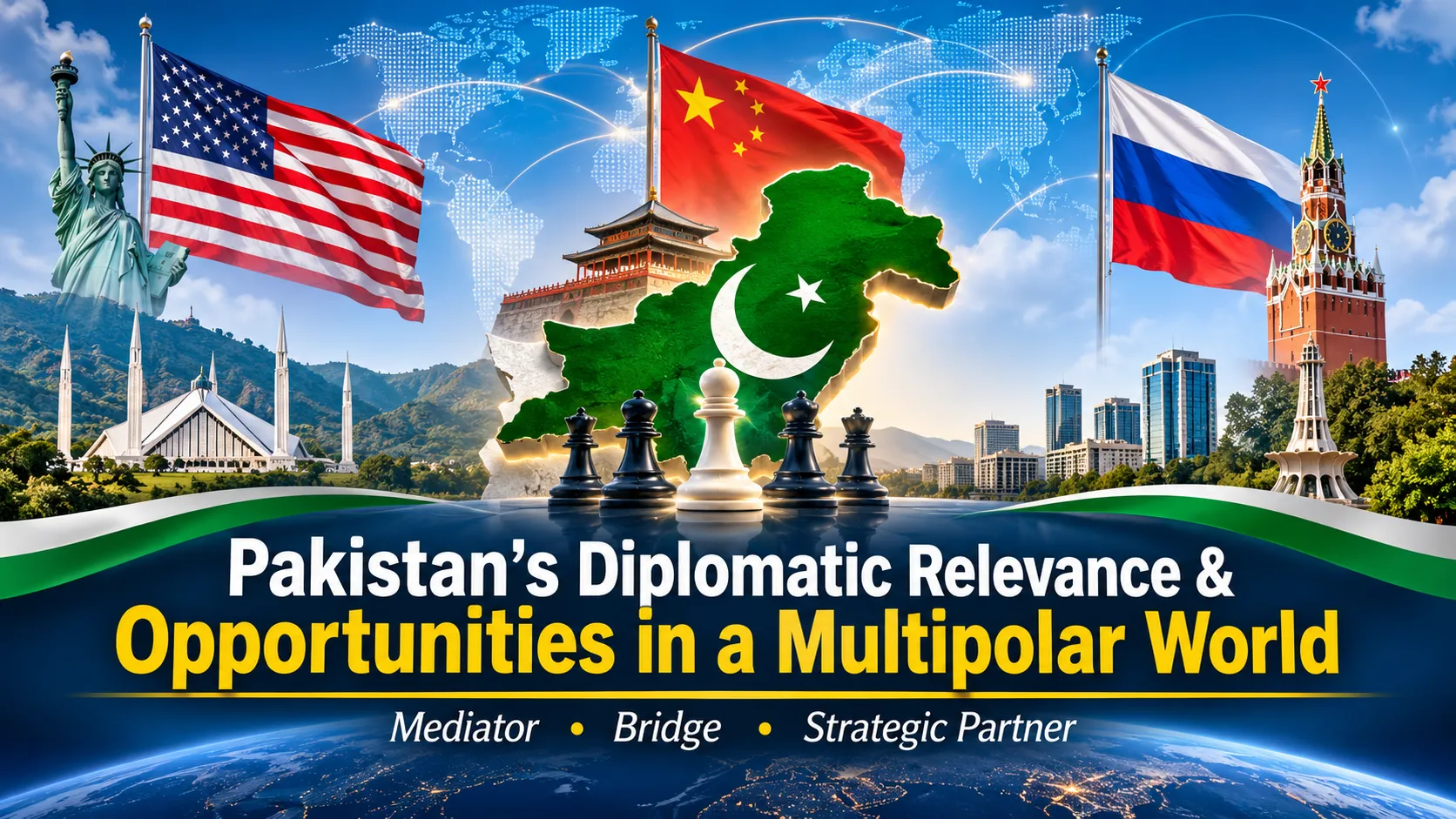
Islamabad, November 26, 2026: The emerging multipolar world order presents both opportunities and challenges for smaller and middle powers, particularly Pakistan, whose renewed diplomatic relevance and role as a mediator in international conflicts have enhanced its
global standing. However, translating this diplomatic capital into sustainable strategic and economic gains will require institutional capacity, balanced foreign relations and structural economic reforms.
These views were expressed during an online panel discussion titled “Russia, China and the United States: Strategic Convergence, Rivalry and the Changing World Order,” organised by the Center for Research and Security Studies (CRSS) on Thursday.
Speaking on the recent trilateral engagement in Shenzhen, Anton Bespalov, Programme Director and Deputy Editor-in-Chief at the Moscow-based Valdai Discussion Club, cautioned against interpreting the meeting as a “Yalta 2.0” or an attempt by great powers to divide the
world into spheres of influence. Despite their strategic differences, the willingness of the three powers to engage in dialogue was a significant diplomatic development in itself.
Bespalov argued that smaller and middle powers should not necessarily be apprehensive about emerging great-power arrangements, given their increasing ability to influence international affairs. Referring to Pakistan’s diplomatic traditions, including its historical role in facilitating the US–China rapprochement in the 1970s, he maintained that Pakistan possessed considerable strategic and diplomatic leverage.
“Pakistan’s role as a mediator, as a diplomatic hub, will always be respected and appreciated by other actors,” he remarked. Hamid Sharif, former Managing Director at the Asian Infrastructure Investment Bank (AIIB) and former Asian Development Bank (ADB) Country Director for China, observed that Pakistan’s mediation in the US–Iran conflict had brought the country from a position of perceived
diplomatic isolation to one of considerable international relevance. He stressed, however, that Pakistan’s long-term challenge would be to institutionalise these diplomatic gains rather than rely on personality-driven engagements. He noted that the transition from a unipolar to a multipolar world offered countries like Pakistan greater strategic autonomy, but also presented the challenge of balancing relations with
competing powers. While the United States remained a major export market for Pakistan and China an important source of financing, opportunities existed for diversifying investment and promoting joint ventures involving Chinese, European and American businesses.
Realising these opportunities, however, would require political will to undertake long-overdue structural reforms. On Pakistan–Russia relations, Bespalov described the existing dynamic as one of “very hot politics and very cold economics,” underscoring the need to complement growing diplomatic engagement with tangible economic cooperation.
The discussion also explored Russia’s growing engagement with Afghanistan. Bespalov attributed Moscow’s approach towards the Taliban primarily to its security interests in Central Asia, particularly concerns surrounding religious radicalism, Islamic State-linked militancy and
drug trafficking. Sharif, meanwhile, emphasised that terrorism emanating from Afghan territory and restrictions on women’s education remained major impediments to the normalisation of Afghanistan’s international relations.
The speakers also deliberated on nuclear disarmament, energy security, the Strait of Hormuz, United Nations reform and the future of international law amid shifting global power dynamics. Imtiaz Gul, Executive Director of CRSS, reflected on the challenges of upholding multilateralism in a world where national interests often take precedence over shared international principles. Drawing on several examples, he observed that the selective application of international norms by major powers continues to weaken global institutions such as the United Nations and the International Criminal Court (ICC), underscoring the need for a more equitable and inclusive international order.
The session was held as part of CRSS’s longstanding efforts to foster informed, non-partisan discourse on regional and global geopolitical developments and advance critical understanding of their implications for Pakistan and the wider region.