




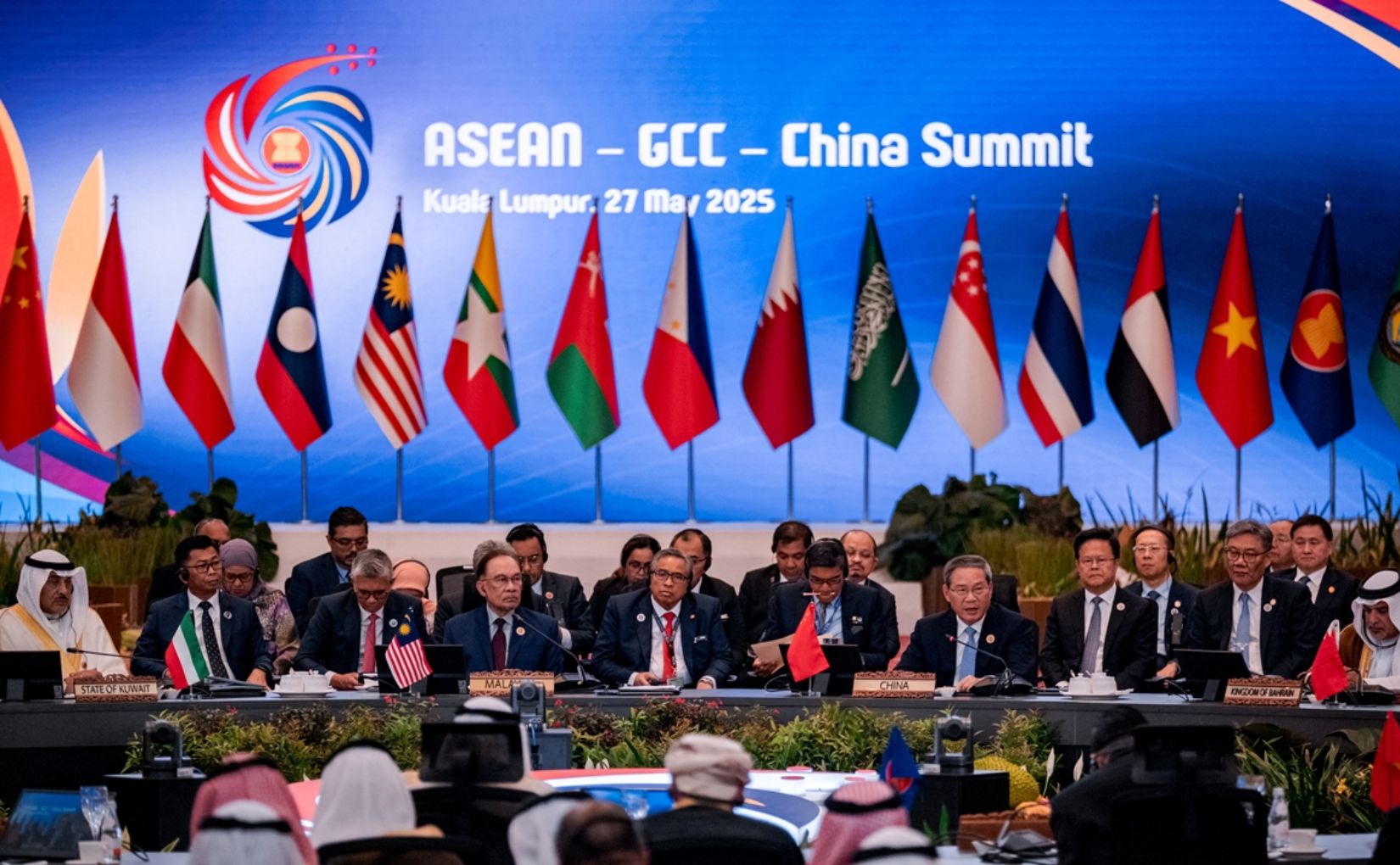
The ASEAN–GCC partnership is no longer just transactional; it is evolving into a strategic framework shaped by the dynamics of the Global South.
The growing engagement between the Association of Southeast Asian Nations (ASEAN) and the Gulf Cooperation Council (GCC) is often framed as part of the broader rise of Global South cooperation. Yet such a view understates its deeper significance. What is emerging is not merely another layer of South–South interaction, but a gradual shift toward more structured, cross-regional collaboration shaped by changing economic and geopolitical realities.
Historically, ties between the two regions were largely transactional. Energy exports from the Gulf supported Southeast Asia’s industrialization, while ASEAN economies supplied manufactured goods and labor. While mutually beneficial, this exchange remained limited in scope and ambition. Today, however, that framework no longer reflects the pressures both regions face. Supply chain disruptions, energy market volatility, technological competition, and intensifying geopolitical polarization have compelled ASEAN and the GCC to rethink how growth, resilience, and strategic autonomy can be sustained.
Their expanding cooperation reflects a broader transition within the Global South—from reactive engagement to proactive system-building. Shared characteristics, including strategic geography, outward-looking economic models, and an emphasis on stability and development, provide a foundation for deeper integration. Increasingly, the focus is shifting toward connectivity, investment coordination, and the creation of more resilient economic linkages.
Within this evolving landscape, China plays a central and catalytic role. As ASEAN’s largest trading partner and a key consumer of Gulf energy, China is deeply embedded in the economic trajectories of both regions. More importantly, it functions as a connective force, linking markets, capital, and technology across Asia and the Middle East.
China’s contribution extends beyond trade volumes. Its development-oriented approach—centered on infrastructure, logistics corridors, and digital connectivity—has helped reduce transaction costs and enhance cross-regional integration. Investments in ports, shipping routes, and industrial zones are gradually knitting together a more coherent economic space between ASEAN and the Gulf. These efforts are not occurring in isolation but are part of a broader strategy to secure supply chains, ensure long-term energy access, and expand China’s role in shaping Global South economic governance.
Rather than fostering competition, this dynamic enables a complementary alignment: Gulf capital, ASEAN markets, and Chinese technology interact to generate new forms of economic value. This is particularly visible in the energy transition, where China’s capabilities in renewable energy, electric vehicles, and storage technologies support emerging triangular cooperation frameworks. Such arrangements allow Gulf states to diversify their economies while enabling ASEAN countries to accelerate industrial upgrading.
At a time of increasing fragmentation in the global order, China’s role in the ASEAN–GCC partnership is less about dominance and more about connectivity. By facilitating infrastructure, investment, and technological exchange, it is helping to shape a more resilient and development-focused architecture across the Global South. If sustained, this evolving partnership has the potential to move beyond transactional exchange toward a more institutionalized and strategically coordinated model of interregional cooperation.