




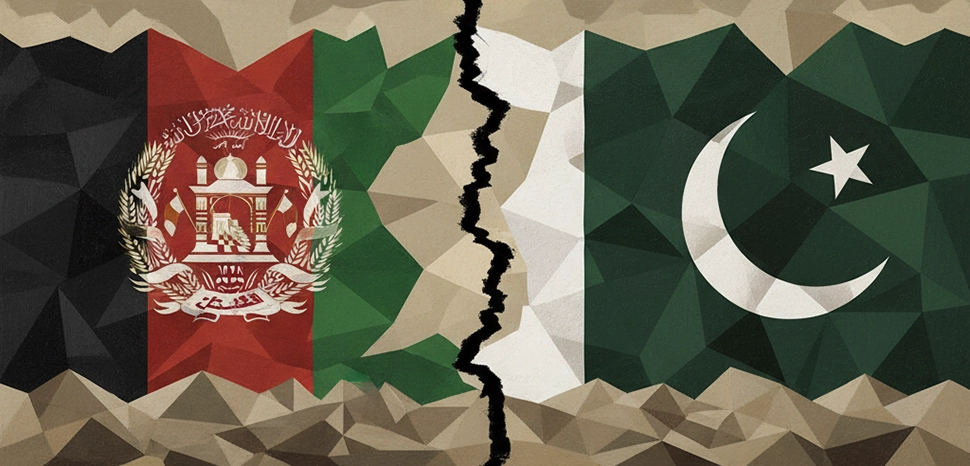
Pakistan is steadily recalibrating its trade map by expanding connectivity with Central Asia and Iran while reducing reliance on Afghan transit routes. Although new corridors point to greater diversification and deeper regional integration, the shift also raises a strategic question about how to balance emerging opportunities with the stabilising value of continued economic engagement with Afghanistan.
Pakistan has been actively reshaping its regional connectivity framework at a time when traditional transit routes through Afghanistan have become increasingly uncertain due to recurring border tensions and disruptions. Policy direction is clearly moving towards diversification, with a focus on reducing reliance on a single corridor while expanding access to multiple regional pathways.
A key milestone in this shift was the arrival of the first Kyrgyz shipment in Karachi last Thursday. The cargo travelled through China via the Khunjerab Pass and Sost Dry Port, marking the operational opening of a new overland link between Central Asia and Pakistan’s southern ports. While limited in scale, the shipment is an effort to integrate Central Asian economies more directly with Pakistan’s maritime gateways.
Under this emerging framework, Kyrgyzstan, along with Tajikistan, Turkmenistan, Kazakhstan and Uzbekistan, is expected to gain more structured access to Karachi port. The objective is to provide landlocked states with a predictable alternative to Afghan transit routes and strengthen Pakistan’s position as a regional trade conduit.
In parallel, Pakistan has formalised a significant policy shift through the Transit of Goods through Territory of Pakistan Order 2026. The order allows third country goods destined for Iran to transit through Pakistan and brings multiple routes, including Karachi, Gwadar and key western crossings such as Taftan and Nokundi under a regulated customs framework administered by the Federal Board of Revenue. This extends Pakistan’s transit footprint across both eastern and western directions.
This widening network of routes is changing Pakistan’s external trade links, but it also brings into focus the implications for its western neighbour. If Afghan transit continues to lose relevance and bilateral trade remains constrained, an important question emerges: what replaces sustained economic engagement with Afghanistan? Within policy circles in Islamabad, trade has long been viewed as an economic instrument with a stabilising function, particularly in relationships marked by mistrust. Even in strained political conditions, economic connectivity is often associated with creating incentives for cooperation, including on security concerns such as cross-border militancy.
The challenge is therefore not simply about developing new corridors, but about managing the transition in a way that avoids a total erosion of economic engagement with Afghanistan while new routes are established elsewhere. How this balance is handled will influence whether Pakistan’s evolving trade geography consolidates into a coherent regional network or fragments into corridors that develop at different speeds and with uneven reliability.
There are also questions about how dependable some of the new routes will be once they move beyond planning and early use. The Transit of Goods through the Territory of Pakistan Order 2026 places Gwadar as one of the central nodes of this emerging transit framework. However, conditions in Balochistan, where security challenges and instability continue to affect infrastructure development and day-to-day connectivity, shape how effectively this system can operate in practice. Similar concerns apply to other overland routes that pass through sensitive areas. Pakistan’s push towards alternative corridors is a clear strategic shift, but the extent to which these routes can sustain actual trade volumes will depend on regional demand as well as stability within the country itself.