




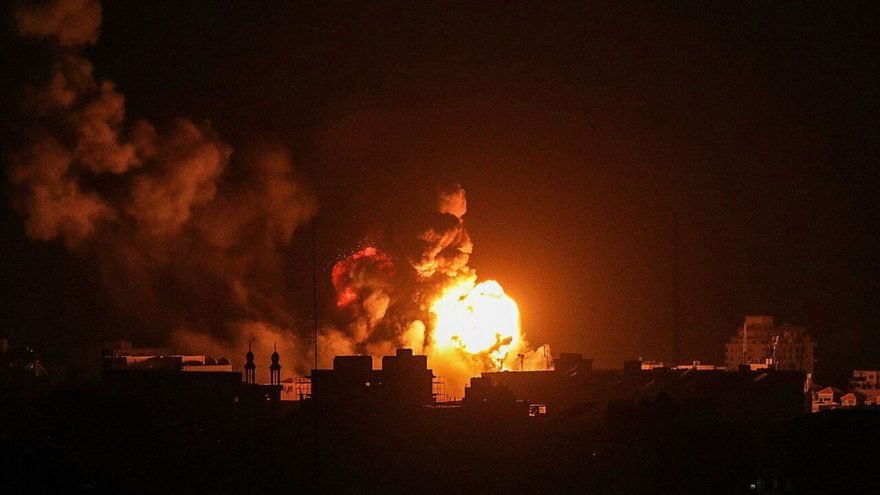
Pakistan’s airstrikes in Afghanistan target TTP leaders, but tactical gains risk fuelling cross-border tensions. The enduring question remains: why does the TTP continue to find sanctuary in Afghan territory?
Pakistan’s recent airstrikes inside Afghanistan mark a significant turn in its long struggle against militancy. Security sources report the operation killed 42 senior figures associated with the Tehrik-i-Taliban Pakistan (TTP), individuals Islamabad claims were directing violence from sanctuaries across the border. Several of those killed were described as operational masterminds behind the attacks that had shaken the northwest in the preceding weeks. Cross-border accusations are hardly new, yet the visibility, scale and timing of the strikes suggest a growing impatience in Islamabad with a security challenge that has repeatedly outlasted coercive measures and diplomatic overtures.
The airstrikes followed a surge of violence in Pakistan’s northwest. On February 6, a suicide attack on a Shia mosque in Islamabad during Friday prayers killed 36 worshippers and injured more than 170. Days later, an explosives-laden vehicle targeted a security post in Bajaur, killing 11 soldiers and a child. Two days after that, another suicide bomber struck a security convoy in Bannu, also in Khyber Pakhtunkhwa, killing two soldiers, including a lieutenant colonel. These attacks set the operational context for Islamabad’s response.
According to the military sources, the pattern of cross-border facilitation had become too entrenched to ignore, and the mounting tempo of violence demanded a calibrated but forceful response. It is within this atmosphere of renewed urgency that Pakistani officials describe the recent strikes as the culmination of months of surveillance, fragmentary intercepts and cautiously vetted human sources. The areas of Nangarhar, Paktika, and Khost have long featured prominently in Pakistan’s threat assessments, in part because militants have exploited the terrain both for protection and as a staging ground for operations. Claims of significant leadership losses point to an effort to disrupt command channels and slow operational tempo.
Islamabad maintains that intelligence-driven strikes killed around eighty militants linked to the TTP and allied factions. Kabul disputes these claims. The Afghan Ministry of Defence states that the strikes hit a religious school and residential compounds, resulting in civilian casualties, including women and children. Taliban officials describe the attacks as a violation of sovereignty and have promised a calibrated response.
Pakistan’s message is clear. Sanctuaries across the border will not be treated as beyond reach. Yet this logic carries political and strategic costs. Heightened tensions with Kabul threaten to weaken already fragile mechanisms for border coordination, refugee management and cross-border commerce at a time when Afghanistan’s economy remains precarious. Analysts note another unintended consequence. By striking inside Afghanistan, Pakistan risks tightening the bonds between the Afghan Taliban and the TTP. Pressures intended to isolate one actor may instead produce solidarity between the two, leaving Pakistan with a more entrenched and ideologically aligned adversarial bloc. In effect, Islamabad risks multiplying the very problem it seeks to contain.
At the same time, what remains conspicuously absent is any introspection within Afghanistan about why and how the TTP continues to operate with relative freedom on Afghan soil. As long as the group can recruit, train, and coordinate from Afghan territory, Pakistan retains a structural incentive to act unilaterally. Denials may serve short-term political purposes, but they do little to address the Afghan Taliban’s permissive approach toward the TTP. Without Afghan engagement and accountability, the drivers of militancy remain largely intact.
Military operations may disrupt tactics and reassert red lines, but only sustained diplomacy can prevent these lines from hardening into permanent fault lines. Repeated disruptions along the border, the loss of life and livelihoods, and the pervasive insecurity cannot be managed by force alone. Kabul must confront the uncomfortable reality of why the TTP continues to find sanctuary within its territory, while Pakistan must calibrate its responses with an eye on long-term stability. Without shared accountability and structured engagement, each strike risks remaining a temporary fix rather than a strategic solution.
The critical question is whether both sides will treat this as yet another episode in a familiar cycle or seize the moment to rethink policies, practices, and responsibilities that could finally address the chronic insecurities shaping their relationship. Any sustainable pathway requires layered measures: more credible border management, intelligence cooperation beyond episodic coordination, economic engagement to reduce incentives for armed mobilisation, and political communication that remains open even when formal channels falter. Unofficial and backchannel exchanges, historically influential, will again be crucial if both sides hope to carve even modest space for de-escalation.