




In today’s geopolitical landscape, economic leverage can speak louder than military threats.
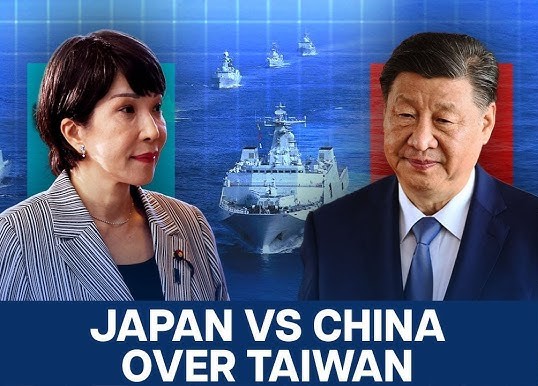
When Japanese Prime Minister Sanae Takaichi publicly suggested that Tokyo would defend Taiwan in the event of a Chinese invasion, the reaction from China was notably restrained in tone but pointed in substance. There were no dramatic ultimatums or headline-grabbing military maneuvers. Instead, Beijing signaled displeasure through economic channels — and the effects are already visible in Japan’s economic data.
Chinese tourist arrivals to Japan fell 45 percent year-on-year in December. Inbound tourist spending declined 2.8 percent in the final quarter of last year to $45.6 billion, marking the first annual drop in over four years. During the same quarter, Japan’s overall economic growth was a modest 0.2 percent — a small figure that nonetheless carries weight for a mature, slow-growing economy.
The decline is significant because Chinese travelers are central to Japan’s tourism ecosystem. In recent years, they have accounted for roughly a quarter of all foreign visitors and have consistently outspent the average tourist by about 25 percent. Department stores, where Chinese visitors are known for purchasing tax-free cosmetics, apparel and luxury goods, are now projecting double-digit declines in operating profit. Major hubs such as Kansai International Airport are witnessing the slowdown firsthand.
Beijing has urged its citizens to reconsider travel to Japan, citing public security concerns. Whether symbolic or strategic, the message has resonated. Tourism-dependent sectors — retail, hospitality and transport — are absorbing the immediate shock.
Yet tourism may represent only the surface layer of a deeper vulnerability. A more consequential pressure point lies in rare earth supply chains. China dominates global rare earth processing, providing materials essential for electric vehicle motors, semiconductors and advanced defense systems. Although Japan has sought to diversify supplies since the 2012 island dispute between the two countries, it remains heavily dependent on Chinese imports for several key materials. Current stockpiles are estimated to last between 60 and 180 days. Prolonged export restrictions could disrupt production lines across critical industries.
This episode illustrates a broader shift in economic statecraft. Rather than overt sanctions or sweeping trade embargoes, calibrated pressure is applied at strategic nodes of dependency. For Japan, the tension is structural: it is pursuing state-led semiconductor investments and fiscal measures to stimulate growth, while remaining deeply integrated with the Chinese economy, it is publicly challenging Taiwan.
The strategic dilemma is clear. Japan benefits from Chinese tourists, consumer demand, supply chains and critical minerals. At the same time, it is signaling a firmer security posture in the region. Balancing economic interdependence with geopolitical positioning is becoming increasingly costly.
The coming months will reveal whether Tokyo recalibrates its rhetoric or absorbs the economic strain. What is evident, however, is that in asymmetric economic relationships, leverage tends to favor the larger market, and both capitals are acutely aware of that reality.