




Vicious propaganda from certain Afghan and Indian social media channels are currently spewing venom against Pakistan. As part of this, even some Afghan ministers and officials are blurting out and stoking anti-Pakistan sentiment via Tolo TV and other channels.
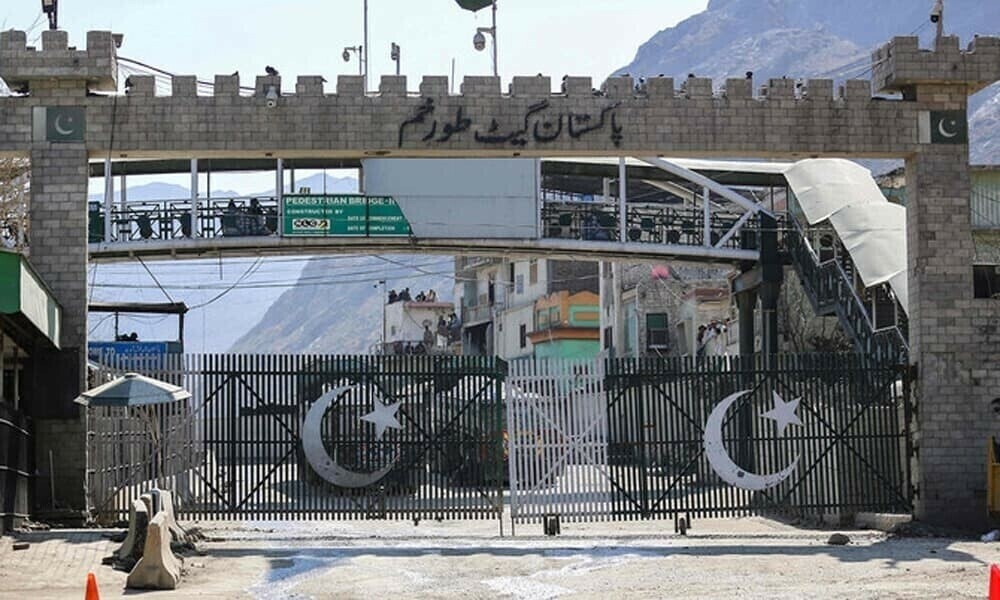
Similarly, the border has never remained sealed for so long for virtually all forms of traffic. The prolonged closure of major crossings — Chaman, Kharlachi, Torkham and Ghulam Khan — has frozen trade arteries that sustain millions on both sides.
Let us have a look at the data; Pakistan is forfeiting at least Rs2.5 billion every month in tax revenues beside obvious loss in export revenues worth hundreds of millions of dollars.
In the July-December period of 2025, Pakistan’s exports to Afghanistan plummeted by 54 per cent to $243 million as against $526 million for the same period in 2024. The FBR had earned about Rs24 billion in July-December 2024 (off-trade via KP alone) but this figure dramatically dropped to Rs13 billion in the last six months of 2025 – a major blow to exports of kinno, cement, wheat flour, construction materials and pharmaceuticals. Import tax revenue via KP also dropped by nearly 45.
Transit trade volume – through Pakistan to Afghanistan and onward to Central Asia – collapsed to 4,000 in 2025 since the border shutdown ( down from 100,000 annually until 2023. Containers via KP counted around 14000 in 2025. vehicles in the second half of 2024 and has dropped further on October 11.
Transit trade with Uzbekistan — once involving about 10,000 trucks a year — has effectively ground to a halt. Several thousand containers, including also those carrying humanitarian goods, now sit idle between Karachi and the border, tying up capital, inventory and livelihoods.
The human cost is most acute in border districts. Communities within a 70km radius on both sides — already economically vulnerable — have been hit hardest by what is now the fourth closure this year. Thousands of truck drivers and support staff remain stranded, despite having secured export documentation and paid duties to respective governments. For them, policy paralysis translates into unpaid loans, food insecurity and social stress.
If Pakistan is losing billions monthly in revenue, and Afghanistan is absorbing a far heavier proportional shock, the sustainability of such measures must be questioned.
Trade figures underline the asymmetry. Between 202 -2025, Afghan exports worth Rs156.8 billion ($611 million) transited Pakistan to India via the Wagah border and Karachi port, involving over 11,000 trucks. Even after the suspension of direct Pakistan-India trade in 2019, Islamabad kept Wagah open for Afghan cargo, recognising Afghanistan’s dependence on that route. In 2024, according to the World Bank, 45 per cent of Afghanistan’s exports were destined for Pakistan — down from 54 per cent a year earlier, but still far ahead of any alternative market. Food and coal accounted for nearly two-thirds of these shipments.
This disruption is also reshaping trade patterns. Pakistani exports — cement, pharmaceuticals, rice and construction materials — are losing ground as Afghan importers pivot to Iran, Uzbekistan, Turkey, and even India via air cargo. Iranian cement is reportedly cheaper; medicines are being sourced from new suppliers. While Pakistani pharmaceutical products still hold 60-70 per cent of the Afghan market, that dominance is under pressure. Once supply chains shift, they rarely snap back easily.
Afghanistan, too, faces hard limits. Fruits and vegetables account for 71 per cent of its exports, and viable alternative markets remain scarce. Central Asia and Iran may absorb some imports, but replacing Pakistan and India as export destinations will be difficult, if not impossible, in the short term. The question, then, is why Kabul would risk disrupting supply chains that underpin its own cash-starved economy — and why Islamabad would risk surrendering an export market exceeding $1 billion to others?
Investors, traders and markets abhor uncertainty. Traders will ultimately choose routes that are predictable, even if they are longer and more expensive.
The shortest distance — from Karachi to Kabul or Tashkent — means little if cargo is stranded for months or delivery timelines cannot be trusted.
The strategic question for both capitals is whether a middle ground exists — one that safeguards security without dismantling trade. Does the benefit of the suspension in cross-border movement outweigh the losses that Pakistani farmers, industries, traders and daily wage workers have endured since October 11? Is it the long-term response to continued cross-border attacks, which are linked more to geopolitics than to Afghanistan alone?
Other countries vie for new markets and consolidate their hold on the existing linkages, while Pakistan’s border with India remains closed since April, and with Afghanistan since October 11. At the same time, while Uzbekistan, Iran and Kyrgyzstan have opened their markets to Afghanistan, they would also reassess Pakistan’s commitment for facilitating their transit trade via Karachi and Port Qasim.
Statistical evidence suggests coercive measures can result in short-term containment of terrorist violence but enduring impact of such a move is highly questionable if viewed against impact on livelihoods, loss of revenue, export markets, transit cargo, as well as estrangement with the immediate neighbourhood.
Weaponising border – and by implication the bilateral trade – runs contrary to the logic of peaceful, inclusive neighbourhood as well as the concept of trade connectivity. Using the border as a weapon is more self-inflicting pain than punishing an “unamenable” neighbour.