




Executive Summary
In Pakistan, systematic violations of urban master plans—where parks, green belts, graveyards, and natural drainage channels are converted into commercial plots—have created significant environmental and public health risks. These breaches, often facilitated by collusion between civic authorities and developers, contribute to floods, heat stress, and declining groundwater levels, highlighting governance failures with both ecological and humanitarian consequences.
Engineer Arshad H. Abbasi argues that the National Accountability Bureau (NAB) must expand its mandate beyond financial corruption. Leveraging technology, including satellite imagery, GIS mapping, and online monitoring, NAB can conduct forensic audits of land use, identify illegal alterations, and hold officials and developers accountable. Such interventions are essential to restore public trust, safeguard urban ecosystems, and prevent further environmental degradation.
Emerging international frameworks, including the ICC’s 2025 policy on environmental harm, underscore the growing recognition of ecological destruction as a matter of accountability. Proactive enforcement and technological integration in urban governance are crucial for Pakistan to address both the environmental and institutional dimensions of urban corruption.
Analysis
The National Accountability Bureau (NAB) was conceived as the apex guardian of Pakistan’s integrity against the corrosion of white-collar crime. It was meant to be the sword and shield of public accountability, the institution entrusted to investigate, prosecute, and prevent corruption, embezzlement, and abuse of authority.1 Over two decades later, however, Pakistan stands at the 135th position out of 180 countries on the Corruption Perception Index (CPI) 2024, slipping two ranks since 2023. At the same time, poverty has climbed to nearly 45 percent, leaving half the population economically vulnerable and morally disillusioned. It is impossible to separate these two realities: corruption and poverty are two sides of the same coin, spinning endlessly in a system where impunity is the norm and transparency is the exception.
NAB’s original vision, as defined under the National Accountability Ordinance (NAO) 1999, is broad and ambitious. It mandates not just punishment but prevention — not just investigation but the creation of a culture of honesty, transparency, and integrity within public institutions. It is tasked with recovering stolen assets, dismantling networks of financial manipulation, and ensuring that public officials and private actors alike are held to account for their actions.2 Yet, twenty-six years into its existence, the Bureau remains largely reactive, surfacing when scandals erupt, and retreating into bureaucratic silence once the headlines fade. The fundamental question now is whether NAB, with its vast authority and resources, can reinvent itself to meet the changing nature of corruption in an age where deceit has gone digital and environmental crimes have become the new frontier of white-collar offenses.
In 2008, I presented a policy brief proposing that all Public Sector Development Programme (PSDP) projects be made fully online. The concept was simple yet transformative: create a real-time, web-based monitoring platform to track every development project’s progress, quality, and expenditure. This would allow the public, media, and auditors to observe whether roads, schools, and hospitals were being built according to approved specifications, budgets, and timelines. The idea was not expensive or technically complex, even then. The internet and mobile technology were already mature enough to enable such transparency. Yet, nearly two decades later, this system remains an unrealized dream, trapped in files and forgotten by those it could have held accountable. Ironically, the technology has since become cheaper, simpler, and more efficient, but the will to use it remains absent.
The failure to digitize governance is not merely a matter of inefficiency; it is the breeding ground of corruption. Each unmonitored tender, unchecked invoice, or unverifiable claim becomes a potential loophole. Real-time monitoring and online audits could have transformed Pakistan’s accountability ecosystem, making corruption traceable and, therefore, preventable. But our institutions remain mired in manual record-keeping, paper trails that can be altered or lost, and opaque decision-making that favors discretion over documentation. As a result, the nation continues to pay a staggering price in both resources and reputation.
In recent months, NAB has launched a significant digital initiative under one of its Directors General, reputedly an expert in real estate management. The initiative seeks to curb the pervasive fraud in Pakistan’s housing sector — a sector that has, for decades, served as the epicenter of organized white-collar crime. The plan is to replace manual verification systems with a centralized online portal that allows citizens to instantly verify a housing society’s legitimacy, approved layout plan, and the authenticity of a specific plot. The portal would generate QR-coded allotment letters linked directly to an official database, making the overselling of plots, forged files, and ghost memberships virtually impossible. For the first time, the Bureau is shifting from reactive investigations to proactive prevention through technology — a long overdue but welcome step.
Yet this commendable move, while innovative, touches only the surface of a much deeper malaise. The real estate sector’s corruption extends far beyond fraudulent allotments or double-selling. For decades, civic authorities and private developers have colluded to convert land originally reserved for parks, greenbelts, playgrounds, rivers, and graveyards into residential and commercial plots. These acts are not minor administrative errors; they are crimes that have reshaped the very geography of our cities and the climate that sustains them. One only has to look at the tragic transformation of Rawalpindi’s Judicial Colony, where areas once designated for green buffers and stormwater channels have been concreted.
What makes the case of Judicial Colony particularly disturbing is not only the audacity of the encroachment but the institutional silence that surrounded it. The park in front of my own residence, once a vital green lung and communal space, was quietly converted into residential plots under the supervision of those meant to uphold the law. That such an act could occur under the oversight of the judiciary itself is a dark chapter in Pakistan’s institutional history — one that speaks volumes about how deeply the rot of corruption has penetrated even the pillars of justice. When a park meant for children and community gatherings can be parcelled off into concrete under judicial supervision, it is not just an urban planning failure; it is a moral collapse of governance. The act symbolizes how greed, when sanctioned by silence, transforms public good into private profit.
Civil authorities such as the Capital Development Authority (CDA), Lahore Development Authority (LDA), and Karachi Development Authority (KDA) bear a heavy, sacred responsibility to remain vigilant over the sanctity of the master plans they approve, ensuring that the spatial allocations intended to protect human life are never compromised. Under established urban planning standards, a society’s blueprint is a delicate balance of utility and ecology: 31% of the land must be dedicated to roads to ensure circulation, 8% reserved for parks and green lungs to mitigate heat, 2% for graveyards, and 4% for public buildings and commercial areas to sustain community life. When these authorities allow developers to deviate from these essential allocations, they are not just changing numbers; they are architecting future disasters. The gradual removal of that 8% green space, playgrounds, green belts or the narrowing of natural drains into profitable plots, is not a clerical misstep but an act of ecological fraud that defies both the principles of planning and the laws of physics.
When monsoon rains now strike the twin cities of Islamabad and Rawalpindi, or any other metropolises, roads turn into rivers not because nature has changed, but because the natural drains have been deliberately blocked or narrowed to carve out extra plots. The hydrological balance of the region has been violated in pursuit of profit. In the E-11 sector of Islamabad, an area once designed with clear stormwater routes, the narrowing of natural drains led to a tragic flood in 2021 that claimed innocent lives — a preventable disaster turned deadly by human greed. The same pattern repeats across the nation: in Lahore, where upscale housing schemes sit atop what were once wetlands; in Karachi, where the Defence Housing Authority’s paved estuaries choke every monsoon; and in smaller towns, where public parks quietly vanish from the map, absorbed into private housing extensions.
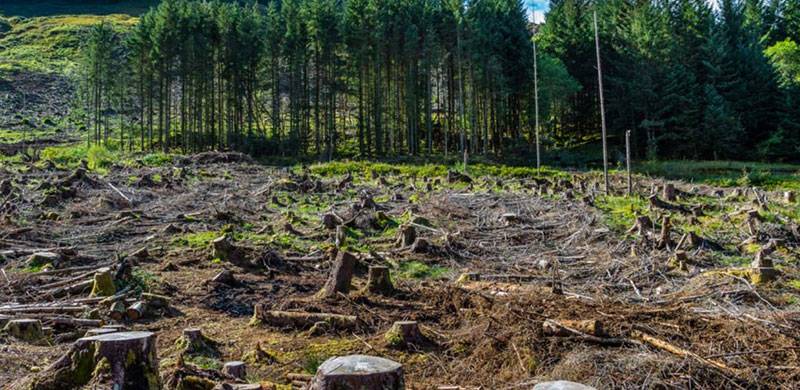
The loss of urban greenery is not a cosmetic issue; it is a crisis of survival. Parks, trees, and open spaces regulate temperature, absorb rainwater, replenish aquifers, and clean the air. Their destruction has unleashed a cascade of consequences. Ambient temperatures in Twin Cities, Lahore and Karachi have risen by an estimated three to five degrees Celsius over the past four decades due to the Urban Heat Island effect. The absence of vegetation reduces evapotranspiration, trapping heat in concrete structures that continue to radiate warmth long after sunset. Electricity consumption for cooling has soared, further straining an already fragile energy system. Groundwater levels in Islamabad are falling by nearly two meters annually as the city’s recharge zones are paved over. The cost of this ecological vandalism is counted not only in rupees but in lives — lives lost to heatstroke, respiratory illness, and urban flooding
It is in this grim context that NAB’s role must evolve. If the Bureau is truly the apex agency for white-collar crime, then it must recognize that environmental corruption is now among the most dangerous forms of economic exploitation. The theft of land allocated for public welfare — whether a park, a graveyard, or a natural water channel — is not only a violation of municipal law but a breach of the social contract. When civic authorities approve revised master plans that erase green belts or convert natural drains into plots, they are, in effect, weaponising bureaucracy to serve private greed. The beneficiaries often include well-connected developers and complicit officials whose wealth multiplies while ordinary citizens pay the price in floods, disease, and displacement.
The technology to expose these crimes already exists. Satellite imagery, drone mapping, and GIS-based analysis can detect illegal land-use changes with mathematical precision. In countries such as India, the Digital Land Records Modernization Programme (DILRMP) integrates land titles with geospatial data through the Unique Land Parcel Identification Number (ULPIN), a 14-digit digital ID assigned to every piece of land. This system, combined with the National Generic Document Registration System (NGDRS), has created a transparent framework for property transactions and ownership verification. Similar initiatives in East Asia and Europe have drastically reduced property fraud and improved land governance. By contrast, Pakistan’s land record systems remain fragmented, paper-based, and vulnerable to manipulation.6 NAB, with its investigative reach and technical capacity, could be the catalyst to bring Pakistan into the era of digital land integrity.
International legal developments now make this even more urgent. On December 4, 2025, the Office of the Prosecutor (OTP) at the International Criminal Court (ICC) announced a new Policy on Addressing Environmental Damage, expanding the interpretation of existing crimes under the Rome Statute. The policy recognizes that large-scale environmental destruction can intersect with crimes such as war crimes (Article 8(2)(b)(iv)), crimes against humanity, and even genocide. It also opens the door to recognizing “ecocide” — the deliberate or reckless destruction of ecosystems — as the fifth international crime under the Court’s jurisdiction. The moral and legal implications are profound. When the decisions of officials or developers knowingly cause environmental harm that endangers human life, they move beyond negligence into the realm of potential international criminal liability.7
This is not abstract speculation. The floods that kill citizens because drains were blocked for profit are as much a human rights issue as any act of violence. When graveyards are sold as plots and the living and the dead alike are displaced by greed, it becomes not only a moral outrage but an affront to the principles of justice. If the International Criminal Court can hold warlords accountable for destroying forests or poisoning rivers during conflict, why should civic officials who devastate cities in peacetime through corruption be beyond scrutiny? It is within this legal and moral framework that NAB must now position itself — not as a domestic enforcement agency alone, but as a participant in the global evolution of accountability.
Pakistan’s crisis of governance is no longer confined to fiscal mismanagement or political patronage. It has become an ecological and humanitarian emergency. The systematic destruction of green belts, flood channels, and parks has accelerated urban decay. It has increased public health costs, reduced property values, and driven a silent exodus from cities that are becoming increasingly unlivable. Each illegal conversion of a public space represents a transfer of wealth from the many to the few — a redistribution of life itself from citizens to profiteers. NAB’s mandate against white-collar crime must therefore expand to encompass the full spectrum of socio-environmental corruption, for the boundaries between financial crime and environmental crime are now indistinguishable.
The Bureau’s own data reveal that billions of rupees have been recovered from corrupt officials and businessmen over the years, but the amounts pale against the scale of ongoing damage. The question is not how much was recovered, but how much was lost — in forests, in clean air, in safe water, in the integrity of public planning. The housing scams of Islamabad and Rawalpindi alone have defrauded citizens of hundreds of billions, with more than 100 unauthorized housing societies and 80,000 kanals of land sold beyond approved layouts. These are not isolated cases but symptoms of a systemic collapse of regulatory oversight, where even approval authorities profit from the violations they are meant to prevent.
To its credit, NAB has begun to acknowledge the need for modernization. The proposed online verification system for plots is a valuable step toward transparency, yet it also aims to facilitate the mega housing societies, too. However, genuine reform requires more than digitizing one segment of corruption. Yet the foremost duty of the Civic Authorities must push for comprehensive technological integration across all development and land management sectors. It must work with the citizen to create an open, real-time portal for monitoring every public project — from tender to completion — accessible to citizens, journalists, and oversight bodies. This would allow the public to see, in real time, whether a school was actually built where it was promised, whether a road meets its specifications, or whether funds have mysteriously evaporated mid-project. Such openness, supported by mobile applications and satellite verification, would make corruption both traceable and politically indefensible.
The Bureau must also recognize the importance of collaboration. It cannot act in isolation. Partnerships with academic institutions, technology firms, and civil society organizations can bring innovation and transparency into its processes. The use of open-source satellite platforms like Google Earth and other engines can enable civic authorities to conduct independent verification of land use and environmental degradation. In the United Kingdom, for example, historical satellite imagery was used in a Scottish planning appeal to disprove a developer’s false claim of continuous land use. In India, NGOs like Shelter Associates have used Google Earth to map informal settlements and integrate them into urban plans. In Mumbai, municipal authorities have used time-series imagery to identify illegal encroachments, providing solid evidence for enforcement actions. These are not futuristic ideas; they are practical tools already in use worldwide.
Pakistan has no shortage of technical expertise, only a shortage of institutional courage. NAB’s leadership, under a chairman known for both integrity and scholarly understanding of Islamic and international principles of justice, is well-positioned to bridge that gap. The Bureau must lead by example — by adopting transparency, embracing technology, and expanding its understanding of corruption beyond financial misconduct to include environmental betrayal.
If NAB acts decisively, it can restore faith in the idea that accountability is not selective, that justice is not delayed until after the damage is irreversible. It can show that corruption is not only theft of money but theft of life, of health, of climate, and of the future. But if it limits itself to reactive investigations, if it continues to pursue individuals while ignoring systems, then it risks becoming irrelevant in a world where governance failures are increasingly measured in degrees of temperature and meters of floodwater.
The International Criminal Court’s evolving recognition of environmental crimes sends a clear signal: the world is redefining accountability to include those who destroy ecosystems and endanger populations through greed. Pakistan must not wait for international tribunals to tell it what its conscience already knows. The crimes of environmental corruption are visible in every flooded street, every barren park, every graveyard turned into concrete.10 They are recorded in satellite images that no file tampering can erase. The evidence is written on the earth itself.
The path forward for NAB is not to reinvent its mandate but to reimagine its purpose. Its duty to prevent corruption must now mean preventing the conditions that make corruption possible — secrecy, discretion, and technological ignorance. Its investigations must include not only who took the bribe, but who rewrote the map, who erased the park, and who approved the narrowing of a drain. Its recovery of stolen assets must include restoring the public spaces and natural systems that have been stolen from the nation.
In the cold light of this morning’s reality, our cities are suffocating. It is not just the physical traffic choking our encroached arteries, but a deep rot in our institutions. The National Accountability Bureau (NAB) must understand that a land-use audit is no longer a mere suggestion; it is a final call to save what remains of our environment and our future. If NAB truly wants to lead in real-estate management, it must stop relying on the very civic authorities that allowed this mess to happen, as these institutions have shown they lack the will to investigate themselves. This critical task cannot be left to property dealers who were recently rebranded as experts by designation. We need genuine, independent experts—urban planners, environmental scientists, and GIS specialists who have no ties to the developers they are auditing.
This audit must be a forensic investigation into the systematic theft of green belts, playgrounds, and parks. These “green lungs” of our cities were bartered away as lucrative plots in a blatant betrayal of public trust. To succeed, NAB must bypass paper trails and ignore manual records that are easily forged or lost. Instead, the Bureau must leverage temporal satellite imagery and GIS mapping to show exactly when and where green areas were murdered by concrete, while naming the officials who signed off on the illegal alteration of master plans. This is no longer just a local matter; it is a tragic race against time. If NAB fails to act, the path stands wide open for vigilant citizens to bypass local paralysis and move to the International Criminal Court (ICC).
Under the ICC’s policy launched on December 4, 2025, destroying urban ecosystems—leading to floods and heat deaths—can be categorized as an environmental war crime under the expanded interpretation of the Rome Statute. The people who sold our parks and blocked our drains are now being viewed by the world as criminals against human survival. NAB has a choice: be the hero of restoration or the silent witness to a national collapse. If these “disaster zone” architects are not punished in Pakistan today, they will face the cold scrutiny of global legal standards tomorrow.