




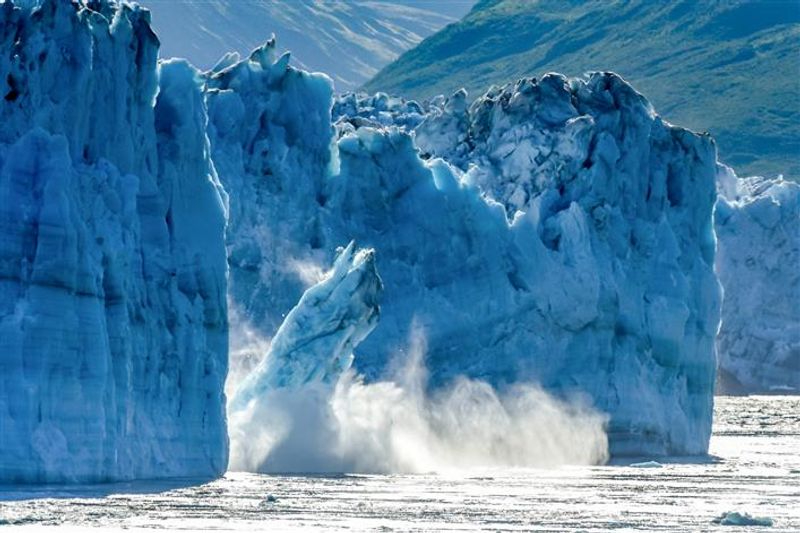
Addressed to the Deputy Prime Minister and Minister for Foreign Affairs of Pakistan, this open letter by Engineer Arshad Abbasi analyses accelerated Himalayan glacial degradation as a transboundary environmental security risk with direct implications for Pakistan’s water, food, energy, and economic systems. Drawing on climate science, judicial findings, and principles of international environmental law, it argues that continued diplomatic inaction undermines due diligence obligations and state responsibility. The letter calls for the integration of environmental security into Pakistan’s foreign policy and legal strategy as a matter of constitutional duty and international compliance.
An Open and Formal Letter to
Senator Muhammad Ishaq Dar
Deputy Prime Minister of Pakistan
Minister for Foreign Affairs of Pakistan
Subject- An Oath of Office Is an Oath of Survival: You are Custodian of Pakistan’s Water, Energy, Economic, and Food Security
Honourable Deputy Prime Minister,
There are moments in the life of a state when silence ceases to be neutral. When restraint becomes retreat. When inaction hardens into complicity. Pakistan has entered such a moment, and history will record whether its leaders recognized it in time.
I write to you not as a political adversary, nor as a theorist removed from consequence, but as a citizen bound to this land by birth, memory, and inheritance. Some inherit assets. Others inherit rivers, glaciers, and fault lines. I belong to the latter. I am a native citizen of Islamabad, rooted in this soil much like Indigenous peoples elsewhere—witnesses rather than owners, custodians rather than consumers. I document this not as a professional climate entrepreneur, but as a born environmentalist, for whom climate change and ecology are not a profession, but a lifelong obligation.
My voice is not speculative. It is grounded in the record. I was directly involved in one of Pakistan’s most consequential environmental interventions: the New Murree Development Project. When commercial and political pressure sought to convert fragile Himalayan foothills into another concrete resort city, I raised formal, technical, and environmental objections rooted in hydrology, slope stability, forest ecology, seismic risk, and climate resilience. That intervention contributed to halting what would have become one of Pakistan’s gravest hill-ecology disasters. New Murree remains an environmental case study precisely because science prevailed over speculation. I state this not for recognition, but to establish continuity: I have warned before, and the warnings proved correct.
That continuity extends to my work on the Siachen Glacier. For more than a decade, I pursued the demilitarisation of Siachen and its transformation into a Peace Park—a scientifically grounded, diplomatically viable framework for transboundary ecological protection between two nuclear states. This initiative achieved global recognition as a model of environmental diplomacy. Critically, India officially acknowledged the accelerated melting of the Siachen Glacier in forums where my work and data were cited. At one historic juncture, India even accepted the principle of withdrawal, contingent upon demarcation of the Actual Line of Control. That window later closed, but the scientific admission remains on record: Siachen was acknowledged not as permanent ice, but as a melting water tower.
My memory cannot detach from the remarkable commitment of the late Dr. R. K. Pachauri, Chairman of the Intergovernmental Panel on Climate Change (https://www.ipcc.ch) and Nobel Peace Prize laureate. Dr. Pachauri stood firmly behind the concept of Siachen as a Peace Park, recognizing it not as idealism, but as climate realism. He understood what too many policymakers still refuse to grasp: glaciers are not strategic luxuries. They are civilizational infrastructure.
The silence of a state can sometimes be louder than the calamity it refuses to confront. Today, Pakistan stands beneath the weight of such silence. Our glaciers—ancient sentinels of water, energy, and food security—are melting at accelerating rates. These are not aesthetic losses. They are structural failures. Yet for decades, the Ministries of Climate Change and Foreign Affairs have responded with hesitation, abstraction, or absence, as if the disappearance of our frozen reserves were a peripheral issue rather than an existential threat.
On December 8, Field Marshal Asim Munir, in his inaugural address as Chief of Defence Forces and Chief of Army Staff, warned that the nature of warfare has changed. Threats now arrive without tanks and without missiles. Beneath even the strongest military posture lies a neglected front more lethal than any battlefield: water security, food security, energy security, and ecological collapse. A fortress may repel armies. It cannot survive the loss of its water tower.
That neglected front has now been deliberately pierced. India has announced that the Detailed Project Report for the Bilaspur–Manali–Leh Railway Line, valued between USD 15 and 17 billion, is ready for execution. India’s Ministry of Defence has declared this project strategically essential for rapid troop deployment into Ladakh and the Siachen region. Annexures reveal possible extensions across Khardung La toward Siachen Base Camp. This is not development. It is a militarised infrastructure driven through one of the most climate-fragile regions on Earth.
Ladakh is not an empty frontier. It is a frozen reservoir system upon which Pakistan’s survival depends. The region contains over 5,000 glaciers, among the densest concentrations of ice outside the poles. In Indian-administered Jammu and Kashmir, glaciers such as Kolahoi and countless unnamed ice bodies feed the Jhelum and Chenab river basins. Scientific assessments estimate 2–3 cubic kilometres of ice in the Jhelum sub-basin alone, while the Chenab basin contains over 180 cubic kilometres. These glaciers are Pakistan’s upstream reservoir dams. When they destabilise, the damage does not stop at borders. It flows directly into Pakistan’s cities, farms, and energy systems.
What makes Pakistan’s silence indefensible is that India’s own Supreme Court has already done the work that Pakistan’s Foreign Office refuses to do. In multiple judgments and suo motu proceedings, the Indian Supreme Court has warned that ecological degradation in Himachal Pradesh threatens the very existence of the state. The Court has acknowledged deforestation, reckless infrastructure, slope destabilisation, and climate stress, and has directed regulatory restraint, environmental accountability, and corrective governance. By doing so, India’s highest court has placed ecological collapse on the judicial record. It has made Pakistan’s diplomatic and legal tasks easier, not harder. When a state’s own judiciary admits environmental breakdown, downstream harm is no longer speculative—it is foreseeable.
Tragically, while India’s Supreme Court has acted to preserve the ecology of Himachal Pradesh, Pakistan’s Foreign Office has done nothing. The institutional silence is so complete that it borders on dereliction. A heavily staffed ministry, equipped with diplomats, legal advisers, and strategic divisions, has failed to act even when the evidentiary threshold has been met for them by another state’s judiciary. This inertia is no longer bureaucratic. It is structural. And structures, too, can carry liability.
International law is unequivocal. The Rome Statute of the International Criminal Court now recognises environmental crimes as primary acts of criminal liability. Under Article 8(2)(b)(iv), acts that cause widespread, long-term, and severe damage to the natural environment, when disproportionate to military advantage, constitute war crimes. Environmental destruction itself now establishes the actus reus of international crimes. From this perspective, the systematic ruination of fragile Himalayan ecosystems in IHK, Himachal Pradesh, and Ladakh, if deliberate and disproportionate, qualifies as a war crime under international law.
Honourable Deputy Prime Minister, you are bound not only by office, but by oath. Before 250 million Pakistanis, you solemnly declared:
“As a Federal Minister, I will discharge my duties and perform my functions honestly, to the best of my ability, faithfully, and always in the interest of the sovereignty, integrity, solidarity, well-being, and prosperity of Pakistan.”
These were not ceremonial words. They were a covenant. Today, Pakistan’s sovereignty is threatened not only by borders but by vanishing glaciers. Its prosperity is undermined not only by debt, but by the loss of water no economy can replace. Its well-being is endangered not only by weapons, but by institutional silence.
The science has spoken with irrefutable finality. The international legal framework is settled. Every technical metric and satellite image confirms that we are witnessing a state-sponsored ecological genocide that threatens the biological existence of our people.
What remains is not the need for more data, but the presence of political will.
Minister, you are bound by an oath to protect this soil and the lives of those who dwell upon it. The time for hollow communiqués and diplomatic passivity has expired. You must now transform this technical indictment into a formal legal offensive. File the case in the International Criminal Court (ICC) and the International Court of Justice (ICJ) against India for this engineered environmental assault. Demand that UNESCO declare the glaciers of Ladakh, Indian-Occupied Kashmir, Himachal Pradesh, and the entire Himalayan arc as protected Global Heritage sites.
Do not mistake silence for safety. When the glaciers are gone, no carefully worded denial and no soaring speech will restore the lifeblood of our rivers. You will not be judged by the rhetoric of your office, but by whether you dared to defend our national survival before the ice turned to dust. Act now, or history will record your silence as a final, treasonous surrender.
Respectfully,
Engineer Arshad H Abbasi
ahabasi@gmail.com