




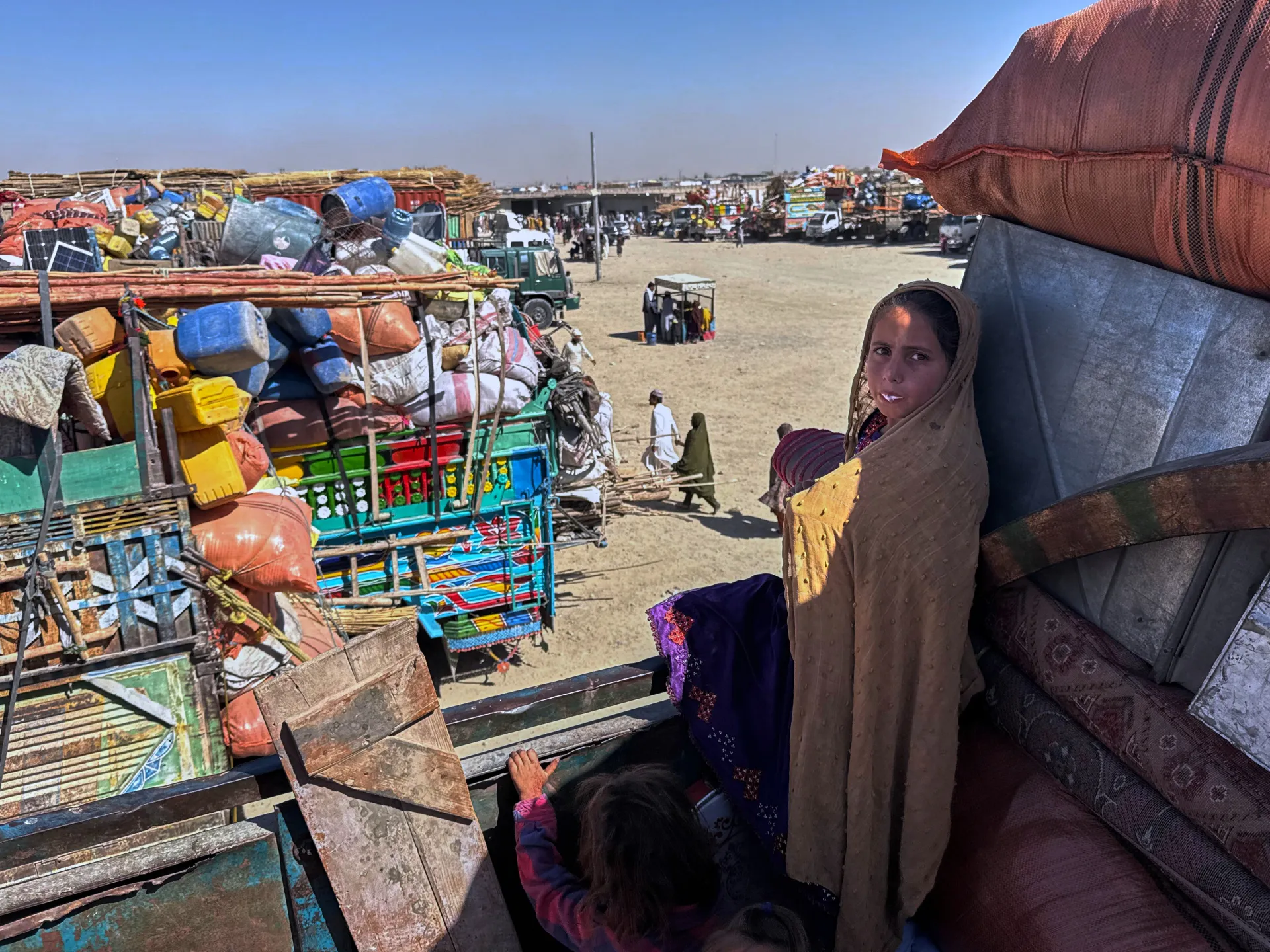
There is nothing voluntary about the so-called Afghan ‘repatriations’.
The forced return of Afghans is accelerating into one of the most consequential population movements of the decade, driven by coercion, pressure, and shifting geopolitics. Amnesty International cites over 2.6 million deportations this year from Pakistan and Iran, while the Ministry of Refugees and Repatriation in Kabul says 7.2 million Afghans have been expelled over the past four years, including 1.7 million in just eight months. The density and speed of these expulsions have produced a collision between politics and human survival.
The justifications for the deportations vary. Pakistan points to security concerns and cross-border clashes. Iran cites expiring documentation and the aftermath of regional hostilities. European states argue policy and precedent. What ties these rationales together is a reluctance to recognise the conditions inside Afghanistan as they actually are: a place where women and girls are removed from public life, where dissent is criminalised, where former soldiers and officials live in documented fear, and where an economy already frozen by sanctions is strained by mass return. Amnesty International says that 60 per cent of those sent back this year are women and children, groups now exposed to rules that profoundly restrict education, movement, and rights. The Taliban insist they have announced an amnesty for former government employees, yet UN reporting shows continuing arrests, torture, and killings, including of returnees.
Accounts from deportees describe cycles of displacement without resolution. A woman known as Shukufa, once an employee of the former Afghan government, fled to Iran and then Pakistan. She was deported twice. Back in Afghanistan, she and her husband, a former security officer, felt unable to return home or apply for documents that would reveal their identities. Another former official, Gull Agha, expelled from Iran when his papers expired, said: “I cannot go and apply for a passport… It has all my biometric data.” The fear is not abstract. In just three months, UN monitors documented dozens of arrests, torture cases, and killings of former security personnel.
It is into this environment that entire communities are being forced to return. To absorb the influx, the Taliban have approved plans for sixty townships across the country, and provincial governments have announced more. Bulldozers have cleared land on city edges, and rough grids have appeared. But the timelines are untenable, and the state’s capacity is limited. Basic services such as schools, hospitals, and food distribution struggle under ordinary conditions.
The economic picture is equally precarious. The World Bank reports a rise in GDP, interpreted at first as a sign of resilience. Experts caution that the numbers reflect returning capital, including cash, savings, and livestock, not durable growth. The effect will fade. In the coming months, Afghanistan will face unemployment pressure, inflation, land scarcity, and hunger. Many deportees arrive already in debt. A UNHCR survey this year found that 82 per cent of returnees owe money simply to finance the journey home. They return to a country where it will be difficult to earn it back.
Afghanistan’s security institutions face the task of processing high volumes of arrivals without reliable documentation. There are warnings that militants may blend into the flow. If that is the concern, the logic behind mass expulsion is flawed. As Obaidullah Baheer argues, this appears less like migration enforcement and more like geopolitical coercion aimed at the Taliban by exerting pressure on the population. He notes that humiliation and violence against refugees do not weaken militant recruitment narratives. They strengthen them, particularly in the context of the Tehreek-e-Taliban Pakistan. Its propaganda is built on grievance and displacement and thrives on the idea of home under threat.
Europe is adjusting its posture as well. Germany, Austria, and others are reportedly negotiating deportations with the Taliban, despite non-refoulement prohibitions that outlaw sending individuals back to places where they face serious harm. Afghan women and girls, recognised internationally as a systematically persecuted group, are being sent back to a system that denies them school, work, movement, and speech. Human rights defenders, journalists, and former soldiers are being returned to the very state structures they fled.
The consequences are already visible on the ground. In an attempt to demonstrate progress, the Taliban have begun distributing small residential plots to returnees in several provinces. Officials from the Ministry of Urban Development and Housing say land allocation is underway in Kandahar, Kunduz, Balkh, and Laghman, with several hundred families receiving parcels so far. Thousands more are expected. According to Ministry spokesperson Mohammad Kamal Afghan, the process will accelerate as provinces verify lists and forward names for approval.
The numbers are modest relative to need. Over 800 families in Kandahar have received land; 45 in Laghman; 303 in Balkh; nearly 400 in Kunduz. For the state, the programme provides a visible tool: evidence of action. For families, it offers small footholds in uncertain terrain. But returnees describe the limits of the effort. Many have no shelter, food, or income. “We returned empty-handed,” said Rahmatullah, a deportee recently sent back from Pakistan. “We have no home and are lost, not knowing where to turn.” Land alone does not constitute a livelihood. The majority of returnees arrive in provinces where they have not lived for years, and informal settlements are forming faster than services can be built.
Land distribution may offer a start, but it does not resolve the central dilemma. Afghanistan is being asked to absorb millions it cannot support. The international system is moving people toward the country as though capacity exists, while the domestic system is constructing evidence of response as though success is near. Both are illusions, masking the structural impossibility of reintegration on this scale.
The deportations continue because the political calculus has shifted. Afghanistan has slipped from global priority, and the Taliban remain entrenched. Most importantly, the people most affected – the returnees – lack the leverage to halt the crisis.
The question is no longer whether Afghanistan can absorb millions. It cannot. The more pressing question is whether the world will continue to insist that it must. Forced return has become a political tool that serves neither Pakistan nor the Taliban in the long term. For Pakistan, it should serve as a reckoning: the Taliban, long considered a “trusted” ally, have not transformed into a reliable partner but remain unpredictable actors whose interests diverge sharply from Islamabad’s. For the Taliban, the choice is clear: either sustain support for transnational militant networks, risking regional isolation and conflict, or pursue constructive engagement with Pakistan to secure political and economic stability. Refusing that choice carries consequences that neither party can afford.