




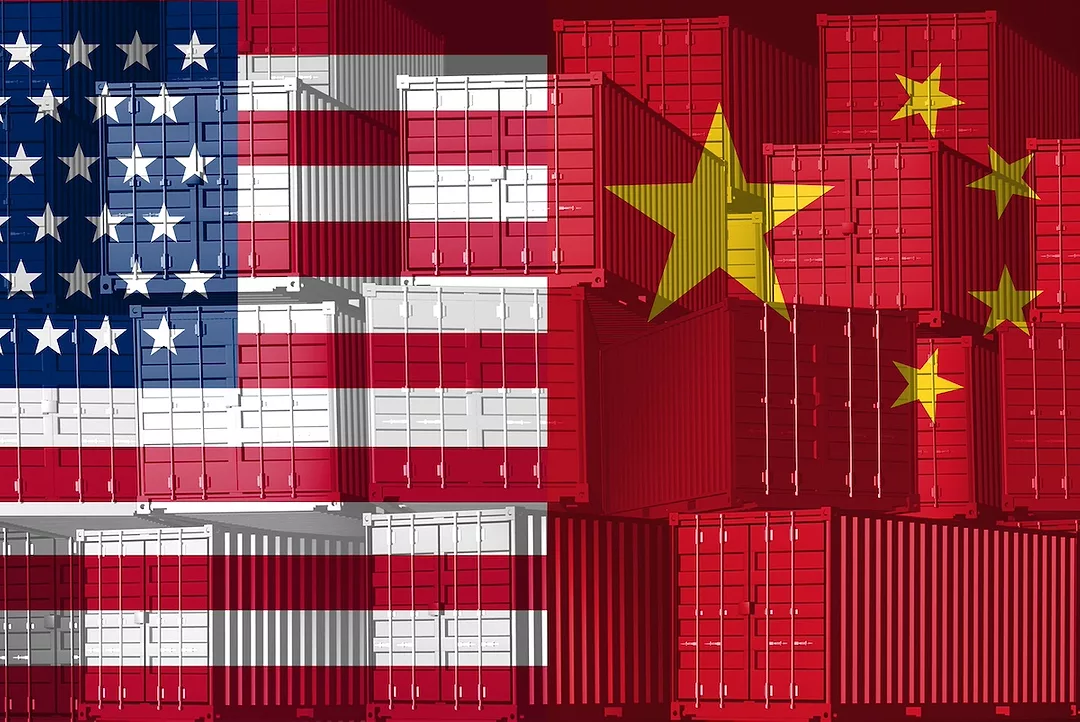
Since the Second World War until the first decade of the 21st century, the Global Political landscape has been shaped by the US-led world order, tariffs, sanctions, and defense pacts; all these were the tools of Washington to influence the world. Somehow, it has been successful in this regard. But now it is no longer happening, although the play board is the same; but the US is not experiencing the same compliance throughout the world that it was enjoying for previous decades. Due to the emergence of multipolarity, in which other great powers are in a position to compete and challenge the US dominance. One event, 30 October, the meeting between the leadership of China and the USA in South Korea, has proved that world dynamics have shifted. President Xi converted Trump’s tariff into China’s leverage, as it was imposed to punish China. Both Trump and Xi are different leaders; they have their own strategies and patterns to control power. Trump believes in tariffs, so he tried to use tariffs on China to penetrate it. However, China survived and did not penetrate. Because President Xi believes in strategic patience, this strategy consequently pushed President Trump to drop tariffs on China.
Analysis
By referring to China’s strategic patience when the US was engaged in fighting the war on terror in Afghanistan for two decades, meanwhile, China was developing its supply chain of rare earth minerals. This is how China has shown strategic patience towards the world. That has boosted China’s rare earth minerals industry. So when Washington imposed tariffs on China, it did not make any louder noise, no fiery statements, and no threats in response. But it withdrew smoothly from the American marketplace by making zero purchases of US Soybeans, suspending the delivery order of Boeing aircraft, and cancelling LNG cargoes. And shifted its course to buying soybeans from Brazil, purchasing LNG from Qatar, and for aircraft, it moved towards Airbus. Another essential move to hint at Washington to limit rare earth minerals to the US. These 17 critical minerals are used in smartphone chips to fighter jet chips. Consequently, China did not surrender but rather became resilient against the US tariffs.
As a result, those tariffs intended to pressure China began to hurt the US’s own market and consumers. In the agriculture sector, the US farmers faced huge losses due to soybean import deals being cancelled by China, which is the largest export market for US soybeans, whereas soybeans account for 14 per cent. Since May, China has not imported a single shipment of US soybeans; instead, it has diversified its purchase of 12 million metric tons of soybeans from Argentina and Brazil. Resultantly, the US farmers were most affected because their soybeans were wasted, and factories shut down. The US is dependent on the 17 rare earth minerals in the production of electric vehicles, aircraft engines, and military equipment. China holds control of 92% rare earth minerals. The US is dependent on rare earth minerals. Beijing’s control over these critical minerals provides strategic leverage to restrict the supply of rare earth minerals to Washington, giving it a position to influence Washington’s stakeholders. Finally, Trump got back his decision to hold tariffs on Beijing and conducted a meeting with President Xi in South Korea, in which he agreed to reduce 10% tariffs on China from 57% to 47% imposed this year in exchange for ramping up efforts to normalize trade relations. As a result, China postponed the restriction of rare earth export to the US and announced to purchase 12 million metric tons of soybeans from the US by the start of next year. Also secured the US agreement to hold a new policy according to which an expanded number of Chinese companies would be blacklisted for buying sensitive American technology.
Conclusion
Consequently, it is clear that President Xi has turned the US tariffs into China’s leverage through his strategic patience with the US and successfully handled the Trump 2.0 era tariffs. Whereas Trump’s tariffs were designed to make nations comply, however, the global economy of 2025 responded by rerouting and diversifying towards different options, as China proved. Now it is no longer possible in this multipolar world, when new powers are emerging, and the US tries to influence the world economies. Washington discovered that the pain that it exported towards China to punish it, vice versa, came back to its own country by hitting back at its own market and consumers. By the way, President Trump is a follower of the former US President Reagan, and he has hung Reagan’s picture in his office because Reagan is the only ideal for Trump among Republican leaders. But what he doesn’t understand is that on many occasions, President Reagan had expressed his statement that tariffs had never benefited the US economy; in contrast, it had hit back at its consumer market and products.
Key Points
- The US is no longer in a position to influence and dominate the world through its previous tactics.
- China has emerged to challenge the US dominance, led by President Xi’s leadership.
- Trump believes in tariffs through which he tries to influence the world economies.
- President Xi has a strategic patience.
- China turned the US tariffs into its advantage through its strategic patience.
- The US is dependent on Beijing for rare earth minerals and the agricultural export market.
- Beijing’s control over 92% critical minerals provides strategic leverage to restrict the supply of rare earth minerals to Washington, giving it a position to influence Washington’s stakeholders.