




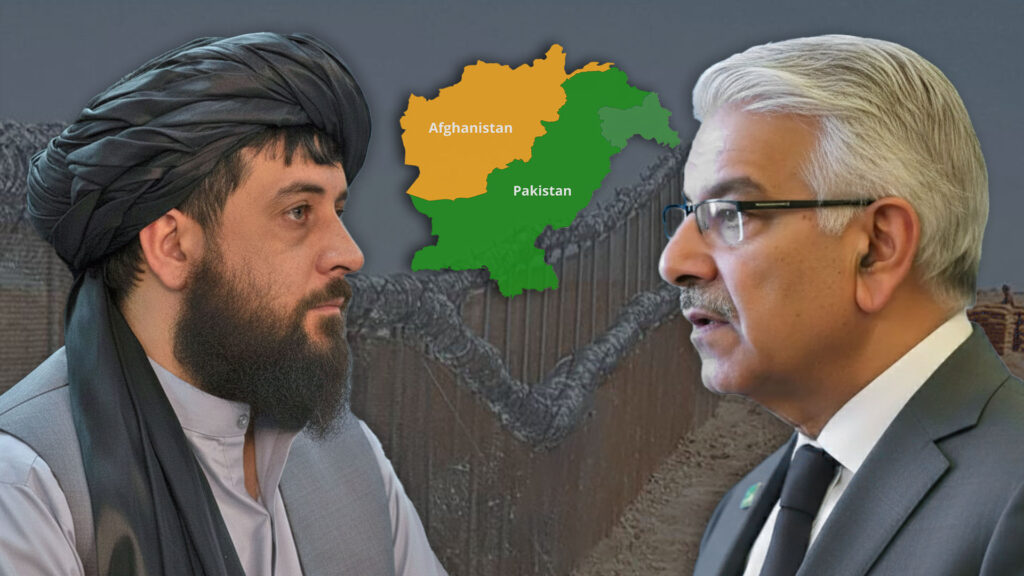
Decades of mistrust have left Pakistan and Afghanistan trapped in a cycle of reactive politics. Breaking free requires pragmatism, dialogue, and a recognition that stability is a shared responsibility, not a zero-sum game.
Another round of Pakistan–Afghanistan talks has ended where so many before it have, in disappointment. The recent Istanbul dialogue, despite high-level representation from both sides, yielded little more than an extension of the ceasefire. The Taliban’s refusal to acknowledge cross-border militancy or provide written guarantees has again left Islamabad questioning whether dialogue with Kabul has any meaningful purpose.
But this diplomatic fatigue is not new. It is merely the latest symptom of a relationship that has long substituted reaction for strategy. For decades, Pakistan and Afghanistan have mismanaged their shared geography through mistrust and miscalculation, allowing history to dictate their politics and insecurity to define their diplomacy.
Pakistan’s Afghan policy remains trapped between crisis management and complacency. Each episode of violence or diplomatic breakdown is met with familiar tools: border closures, expulsions or public censure. These actions may offer temporary relief but reveal a deeper policy vacuum. Islamabad has never fully resolved whether to treat Kabul as a security liability or a strategic partner. The result is a pattern of coercion without conversation and enforcement without engagement.
Such reflexive responses have also narrowed Pakistan’s strategic imagination. Focusing on tactical containment has prevented the development of political, economic and cultural instruments that could build resilience. As long as decisions remain shaped by short-term pressure rather than long-term planning, every dialogue will start from zero.
Kabul, for its part, continues to view compromise as capitulation. The Taliban’s insistence that Pakistan’s concerns are “unrealistic” betrays not just denial, but a deliberate posture of defiance. The regime equates resistance with legitimacy, mistaking obstinacy for sovereignty. This narrative may serve domestic politics but it isolates Afghanistan regionally and diplomatically. By refusing to engage constructively with Pakistan, Kabul is closing off access to trade corridors and markets essential for its economic recovery. In a country already struggling with international isolation, defiance has become a substitute for governance.
Both states derive political comfort from their mutual blame. In Islamabad, citing Afghan non-cooperation deflects attention from internal failures, weak institutions, inconsistent counterterrorism frameworks and fragmented governance. In Kabul, vilifying Pakistan offers a convenient enemy to rally support and mask internal dissent. This mutual dependence on grievance has made mistrust self-sustaining. Each side’s insecurity validates the other’s fears. Both talk of sovereignty but act out of suspicion. The result is a bilateral relationship that exists almost entirely in the language of accusation.
A genuine reset will require courage on both sides. Pakistan must recognise that its external security depends on internal reform, a coherent political system, institutional coordination and an evidence-based foreign policy that privileges governance over geopolitics. The habitual militarisation of diplomacy has reached its limits. For Afghanistan, pragmatism must replace posturing. Its survival depends no more on symbolic independence but practical interdependence – access to Pakistani ports, trade routes and energy infrastructure could anchor its fragile economy. Continued intransigence, however, will only entrench isolation at a time when international recognition already hangs in the balance.
The path forward lies in de-escalation and dialogue. Back-channel communication, economic cooperation, and people-to-people exchanges are not diplomatic niceties but strategic necessities. When official negotiations stall, informal engagement must fill the vacuum. Both nations also need a narrative reset. Defining ties solely through the prism of security ignores the dense social, linguistic and cultural bonds that outlast governments. Geography has already made them partners; the challenge is to act like it.
Estrangement is not destiny. It is the result of deliberate choices, reinforced by pride and political expediency. Peace will not emerge from hardened borders or louder rhetoric. It will come when both states understand that strength lies not in resisting each other, but in resisting the urge to repeat the past.