




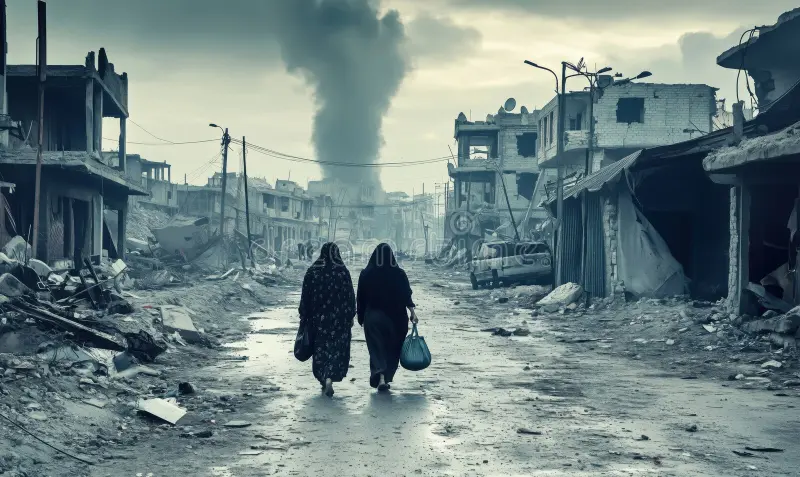
As wars multiply, the global agenda for women’s inclusion in peace processes is losing both ground and purpose.
The United Nations Secretary-General’s 2025 Report on Women, Peace and Security estimates that 676 million women now live within fifty kilometres of active conflict. It is a geography of exclusion – a measure of how many women live close enough to the architecture of conflict to bear its consequences, yet remain distant from the rooms where peace is conceived.
Twenty-five years after the adoption of UN Security Council Resolution 1325, the ambition to place women at the centre of peacebuilding remains largely unrealised. The resolution was meant to change not just who sits at the table, but how peace itself is negotiated and sustained. Yet between 2020 and 2024, women accounted for only seven per cent of peace negotiators, while nearly ninety per cent of peace processes excluded them altogether.
The persistence of this imbalance lies in the structure of modern peace processes. Decisions continue to be shaped by those who control weapons, territory, or political authority. Negotiation rooms remain occupied by the same actors who prosecuted the war, while those who preserved social order amid collapse – the mediators, aid workers, and community leaders – wait outside.
The 2025 report documents a widening gap between conflict and participation. Civilian casualties among women and children have quadrupled in just two years. Women-led organisations – often the first to provide relief and the last to leave – are shuttering as insecurity deepens and resources shrink. The networks that once stitched together fragile communities are quietly disappearing.
UN Secretary-General António Guterres warns that the modest progress achieved over the past quarter-century is eroding. The women, peace, and security agenda – once envisioned as a transformative framework – now struggles against competing crises and waning political attention.
Yet there are places where inclusion changed outcomes. In Colombia, Liberia, and the Philippines, women negotiators expanded peace agreements beyond ceasefires, addressing land reform, justice, and social reintegration. These settlements endured because they reached those most affected by war. But such examples are treated as exceptions, not models.
In South Asia, the struggle is familiar. In Afghanistan, women who once spoke for their communities have been erased from public life. In Pakistan, women peacebuilders continue to operate in constrained spaces – facilitating dialogue, building networks of coexistence, and supporting communities after violence. Their work persists without the policy backing or security guarantees that could sustain it.
The failures of implementation go deeper than a lack of political will. They expose a conception of peace that prioritises elite bargaining over civic reconstruction. Inclusion is treated as an accessory rather than a foundation. The process ends once the agreement is signed, even when the conditions for stability do not exist.
Peace cannot be engineered by those who have mastered war. It requires the insight of those who bore its weight. When half the population is excluded from decisions on recovery and governance, peace remains incomplete – fragile in form, narrow in scope.
The UN’s report leaves the reader with questions that cut across institutions and borders:
If women continue to be excluded, can peace claim legitimacy?
If the logic of war continues to dictate who speaks for reconciliation, can peace ever belong to those who lived through it? And if inclusion remains conditional, how long can the very idea of peace endure?
This piece draws on the UN Secretary-General’s 2025 Report on Women, Peace and Security (S/2025/556).