




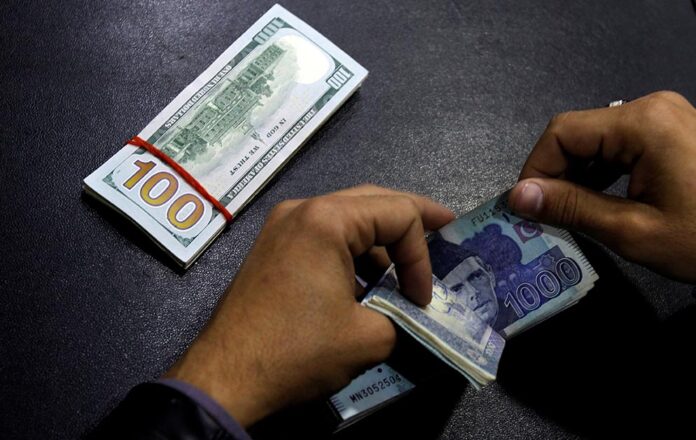
I live in Bahria Enclave, Islamabad, where daily life reflects the realities of global trade. This is most visible in the three “Dollar-One” shops near my home. Each time I step inside, the shelves tell the story of how the world economy works. Hundreds of items are on display, from kitchen gadgets and extension cords to children’s toys and decorations. Yet only three of these products are made in Pakistan: the plastic shopping bag, the humble lota, and a broom. Everything else carries the same label—Made in China.
The realization became even clearer during my recent visits to the mosque. There, the Janamaaz or prayer mat, the Tasbih or prayer beads, and even the prayer cap were all manufactured in China. It struck me deeply that from the most ordinary items of daily use to the most sacred objects tied to worship, access depends on the output of one powerful economic force.
As a consumer, this raises a question that matters to millions: how can the 250 million people of Pakistan, and countless others in the developing world, afford these goods more easily? The answer does not lie in our local markets. It lies instead in the cost of natural gas in China.
The secret behind the overflowing shelves of dollar stores is China’s unmatched manufacturing efficiency, and at its core is energy. Natural gas is a primary fuel for industry. It generates electricity, powers machinery, and serves as a raw material for plastics and chemicals. The price of gas directly shapes the cost of nearly everything I saw in those shops—the plastic of a child’s toy, the filament of a bulb, the wire in a charging cable, and the fabric of a prayer cap.
China secures its energy supply through a combination of strategies. It imports large quantities of liquefied natural gas, or LNG, from countries such as Australia and Qatar. LNG offers flexibility but is expensive because liquefaction and shipping add heavy costs. More critical, however, is China’s access to pipeline gas from Central Asia. Turkmenistan sends 30 to 40 billion cubic meters per year, while Uzbekistan contributes up to 10 billion. This pipeline gas is cheaper and steadier than LNG, giving China a reliable foundation for its industries.
Yet there is an even greater opportunity ahead. Russia, with the world’s largest gas reserves, is eager to expand exports to Asia. The proposed Power of Siberia 2 pipeline could supply vast amounts of natural gas directly to China at costs far below LNG. If China secures such a deal, it would gain the world’s most affordable energy stream for its industries.
This would not be a symbolic diplomatic win, but an economic transformation. Lower gas prices mean lower production costs across entire sectors. Plastic products, from household containers to children’s toys, would become cheaper. Synthetic fabrics for clothing, carpets, and prayer mats would cost less. Electronics, including chargers, extension cords, and cables, would be produced at lower expense.
For families in Pakistan, the effect would be immediate. Our rupees would stretch further. An extra charging cable could be bought without worry. A better-made kitchen tool could be afforded more easily. Even spiritual necessities, such as prayer mats and caps, would cost less. What looks like an energy contract signed far away directly changes the price tags in our local markets.
The contrast with Pakistan’s own situation is painful. Manufacturing in the country is shrinking at a rapid pace. Spaces once reserved for factories are now turning into housing societies. Local industries that once produced electrical equipment have nearly disappeared. The days when Pakistan made its own sanitary fittings and ceramic tiles are gone. Energy prices, both for gas and electricity, have made it nearly impossible for factories to survive. And this wreckage is the grand outcome of those “game-changer” policies, the ones deafeningly trumpeted between 2014 and 2018 by the Minister of Planning, the Minister of Petroleum, and later Prime Minister—each beating the drum as if they were unveiling miracles, when in reality they were only orchestrating a circus. Government policies have only deepened the crisis. Poor planning, mismanagement, and corruption have crippled the local industry. The much-criticised long-term LNG deal with Qatar locked Pakistan into paying prices that were far higher than global averages. That deal alone has cost the country over 50 billion dollars, a sum that has become a symbol of poor governance and corruption. As a result, industries that could have provided jobs and self-reliance are now shut down, and shelves are filled with imports instead.
China, however, approaches energy negotiations very differently. Known for its skill in bargaining, it is unlikely to repeat the mistakes made by Pakistan. When it deals with Russia, it will likely demand long-term contracts indexed to global pricing hubs such as the Henry Hub. Such indexation ensures that gas prices remain tied to transparent international benchmarks, rather than leaving one country trapped in unfavourable fixed-rate contracts. This is why Chinese manufacturing remains so competitive while Pakistan continues to struggle.
The global chain of cause and effect becomes clear. A pipeline in Siberia may seem distant, but it determines the affordability of goods in Islamabad. When China reduces its production costs, consumers in Pakistan buy cheaper products. When Pakistan mismanages its energy sector, industries collapse and imports rise. Energy strategy abroad shapes daily life here at home.
For consumers like me, this issue is not an abstract policy. It is personal. The affordability of daily goods in Pakistan depends on China’s ability to secure long-term, cheap gas supplies. At the same time, Pakistan must learn that no industrial recovery is possible without solving its own energy crisis. Factories cannot compete on expensive fuel. Jobs cannot be created if production is priced out of reach. Imports cannot replace the dignity that comes from self-reliance.
The journey from a gas field in Siberia to a prayer cap in Islamabad may be invisible, but it is real. Energy costs drive industrial output. Industrial output drives global trade. And global trade shapes the lives of millions of ordinary families. In Pakistan, every visit to a dollar store reveals this truth. The shelves lined with goods stamped “Made in China” are proof of China’s pragmatic strategy and of our own decline.
The choice before us is stark. Either Pakistan reforms its energy sector, reduces costs, and revives its manufacturing base, or it resigns itself to permanent dependence on imports. For now, the future affordability of goods in our markets depends less on Pakistan’s factories and more on pipelines stretching from Russia into China. China’s pragmatism secures relief for consumers around the world. Pakistan’s failure leaves its citizens dependent, vulnerable, and struggling to keep pace.
The story begins with gas and ends with affordability. A contract signed in Beijing may decide whether a family in Islamabad can buy an extra charger, a better kitchen utensil, or a new prayer mat without financial strain. Energy shapes economies. Economies shape lives. And for ordinary people like me, dignity and affordability are now linked to decisions being made in faraway capitals. So perhaps the real secret of Chinese wisdom is not just pipelines and energy contracts. It is knowing exactly what not to manufacture. They will flood the world with chargers, prayer mats, and toys, but never touch the sacred Pakistani domains of the lota and the broom. On the lota, we are proudly self-sufficient, and if the world ever runs short, Pakistan could become a global exporter overnight. As for the broom, our ministers have perfected its use—not for cleaning streets, but for sweeping entire fortunes into Swiss banks and other safe havens abroad. In that art, even China cannot compete.