




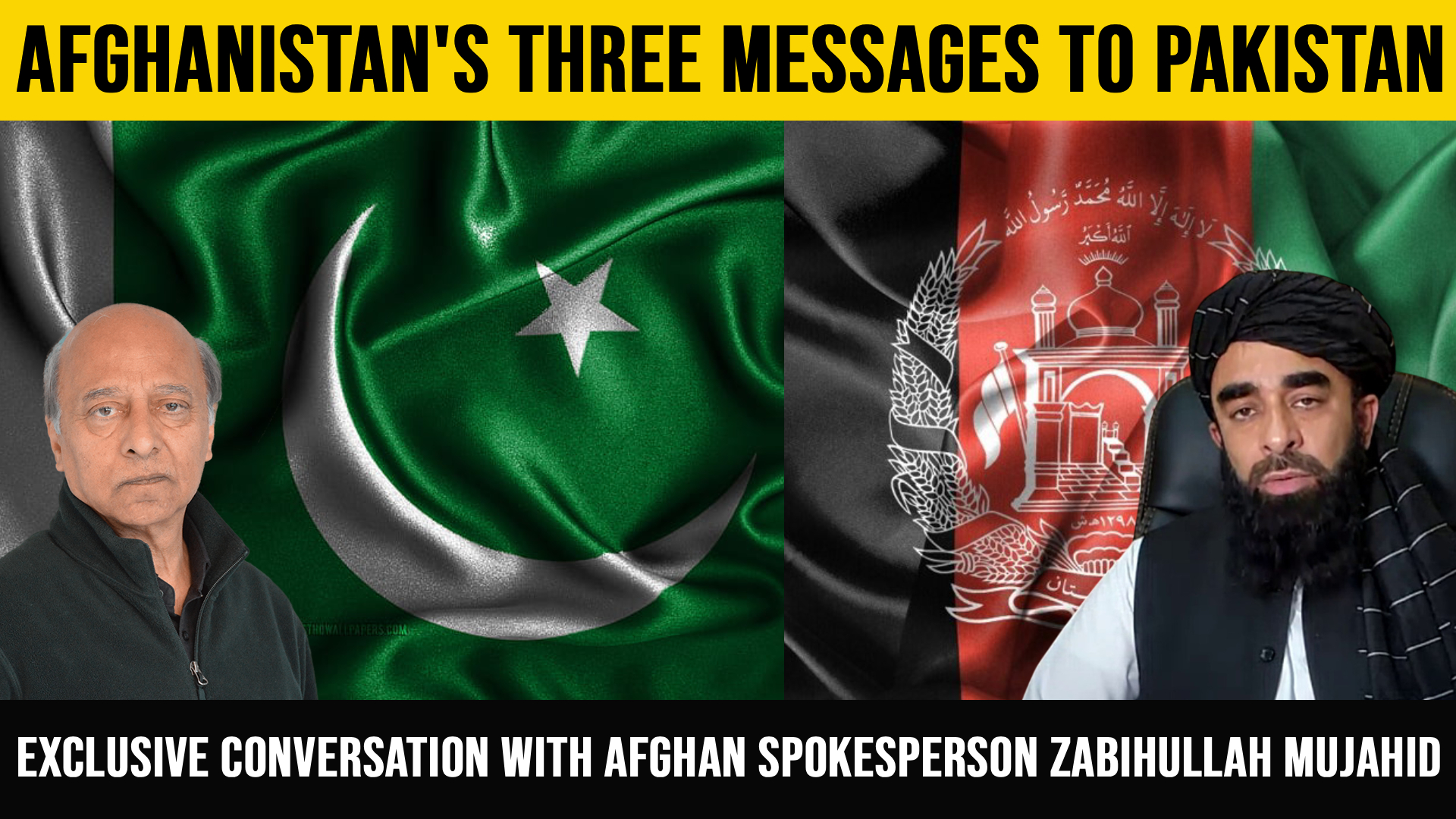
In an exclusive conversation with Mr. Imtiaz Gul, Afghan Spokesperson Zabihullah Mujahid shared the Islamic Emirate’s perspective on relations with Pakistan. He delivered messages to the government, scholars, and people of Pakistan, urging dialogue, brotherhood, and peace instead of hostility. The discussion covered sensitive issues such as mistrust, the role of the TTP, media propaganda, and recurring border tensions. Mujahid emphasized that Afghanistan does not wish insecurity upon Pakistan and calls for joint mechanisms to resolve disputes. He underscored unity, mutual respect, and cooperation as the foundation for lasting regional stability.
Here is the transcript of the interview:
Question:
What is your message for Pakistan?
Answer:
In the name of Allah, the Most Merciful, the Most Compassionate. We praise Him and send blessings upon the Prophet (PBUH).
My message to Pakistan is multi-faceted. To the Government and responsible officials: Afghanistan wishes to maintain brotherly relations with Pakistan. Any arising issues should be resolved through dialogue, not accusations, force, or hostile rhetoric. We believe problems can be addressed in a spirit of cooperation and mutual respect.
My second message is to the religious scholars, teachers, and institutions in Pakistan. They have an important role in promoting peace and better relations with the Islamic Emirate.
Afghanistan and Pakistan share deep cultural, religious, and social ties. The people of both countries have many commonalities. Scholars, especially in Pakistan, should help raise awareness and promote closeness and understanding between the two nations. This will benefit everyone.
My final message is to the people of Pakistan. Afghans do not want insecurity or harm for Pakistan. We want friendly and peaceful relations to grow stronger, based on trust and mutual respect. This will be in the best interest of both countries.
Question:
Relations between Afghanistan and Pakistan seem worse now than in the past. In Pakistan, it’s said the TTP issue is a red line. What is your response?
Answer:
It shouldn’t be like this. Afghanistan and Pakistan have shared interests. The TTP issue is not something new—it has existed in Pakistan since 2003. Pakistan has conducted operations against them; this is an internal matter.
Afghanistan is doing its part to ensure its soil is not used against Pakistan. Our position is clear: we do not support any group causing harm to Pakistan. If incidents occur in border or tribal areas, they should not be used to assign blame. These are shared challenges that require joint solutions through dialogue.
Question:
What kind of proposals could help prevent recurring issues—such as TTP or media propaganda? Should there be a joint mechanism?
Answer:
There should be policy reforms. Leaders and officials should avoid making provocative statements. If high-level officials speak of war or threats, it becomes difficult to reduce tensions.
Before any public statements or military actions, both sides should talk and seek practical solutions. This builds trust and eases tensions.
Currently, media narratives and propaganda are damaging relations. Sometimes, after incidents in Pakistan, reactions come without proper investigation or communication. For example, an explosion in a town is not automatically Afghanistan’s responsibility. Pakistan’s security agencies should respond appropriately, and if there’s a genuine threat from Afghanistan, inform us—we will act.
We have taken serious measures: we do not allow anyone to use Afghan soil against Pakistan. If such individuals are found, we arrest and punish them.
Question:
In four years, trust hasn’t been restored. What is the main reason?
Answer:
There have been efforts, but they’ve often been undermined. Trust can’t be built if one side talks peace while the other takes military action. This shows a double policy.
We believe there should be a clear and united approach. Afghanistan has a consistent position: none of our leaders hold hostile views toward Pakistan, nor do we seek conflict.