




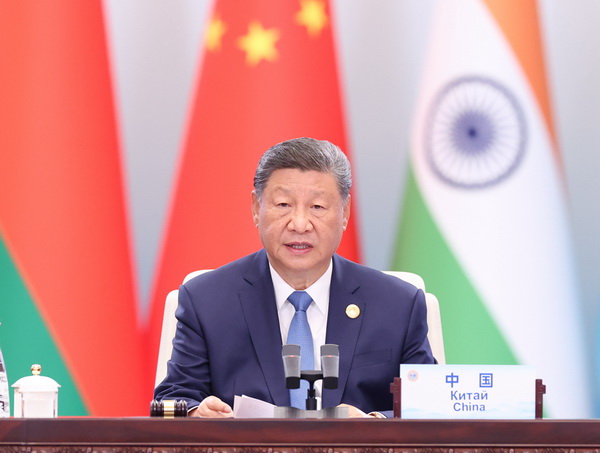
Xi Jinping’s SCO vision casts China as the driver of global trade and governance, leaving Pakistan to confront its own failings.
The 25th meeting of the Shanghai Cooperation Organization (SCO) Heads of State Council, held in Tianjin, China, from August 31 to September 1, 2025, reinforced the organization’s growing role as a platform for shaping regional governance and cooperation. At that time, the eyes of major world powers, including the United States, were on this meeting, as Washington believed it was losing influence in the region—a process that had already been set in motion by China. This time, the SCO meeting focused on an issue that all countries are facing in crisis: governance. In Pakistan’s case, beyond the economic crisis and political instability, poor governance remains a serious challenge. In fact, many of the country’s problems are directly linked to weak governance.
A key aspect of this year’s SCO meeting was the recognition that the organization’s scope is not limited only to security and economics; good governance is also considered a fundamental element for the common development and stability of member countries. Good governance is the foundation upon which nations of the region can build sustainable development, mutual trust, and public prosperity.
China’s President Xi Jinping, the leader of an emerging global power, is determined to bring developed, developing, and less-developed countries together, not only to strengthen his country’s leadership position but also to help others stand on their own economically. This approach reflects a positive and far-sighted vision. Recognizing the fragility of the current moment, China is seeking to unite nations while also stressing the need for better governance systems.
Among the five key points raised at the Tianjin meeting on governance, one notable emphasis was: “We must uphold sovereignty and equal rights in the world.” Another was the promotion of trade through multilateralism, which is a constructive idea.
The most important positive aspects of governance are transparency and institutional strength. When policymaking and decision-making are carried out openly and fairly, public trust increases, and a country’s reputation improves internationally. Likewise, reducing corruption and upholding the rule of law fosters economic growth and attracts foreign investment. Another vital element of governance is public welfare, which includes education, health, and the provision of basic services. These directly improve people’s quality of life and strengthen social stability.
But in the past, Pakistan’s elites have been less inclined toward better governance, as the majority of the leadership has been the beneficiary of weak governance. If Pakistan implements transparency, institutional reforms, and the rule of law, it will not only gain the trust of its citizens but also play a more prominent role within the SCO. The results of such measures could include:
Improved regional reputation for Pakistan.
Increased interest from Chinese and Central Asian investors in Pakistan as a secure and attractive market.
A reduction in internal problems such as corruption, unemployment, and inequality, which fuel extremism.
The emergence of Pakistan as a leading player in the region, strengthening its diplomatic and political influence.
Ultimately, good governance guarantees both public welfare and national development. It can also position Pakistan as a central pillar of stability and cooperation in the region. By adopting this approach through the SCO platform, Pakistan could unlock new opportunities, strengthen trust, and achieve meaningful progress.