




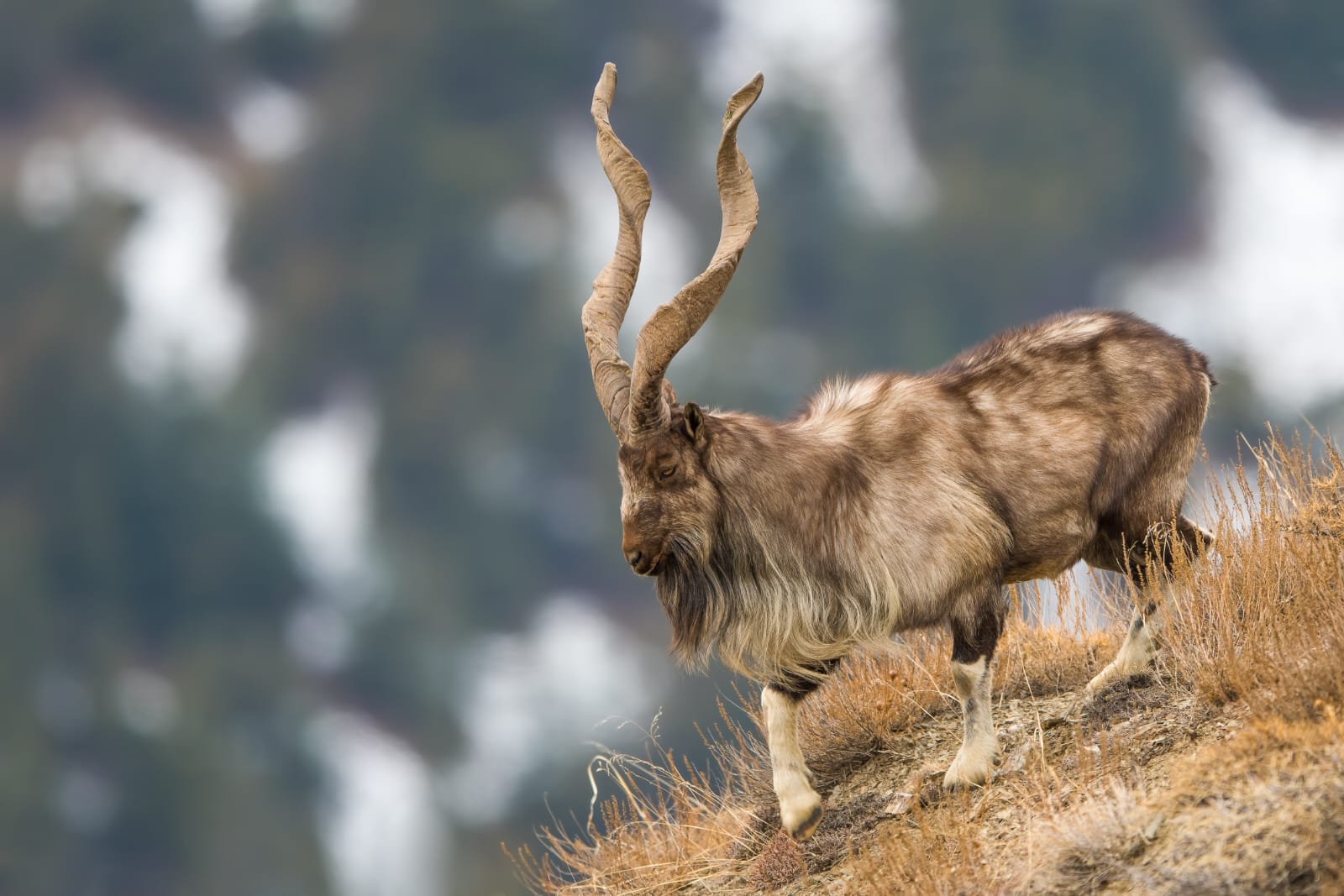
High in the rugged mountains of Gilgit-Baltistan lives the Markhor, Pakistan’s national animal and one of the world’s most striking wild goats. Distinguished by its majestic corkscrew horns, the markhor has long captured the imagination of hunters, conservationists, and locals alike. Its name, derived from Persian, means “snake-eater,” a reflection of its legendary status. But not long ago, this animal faced extinction due to relentless poaching and habitat loss.
In the 1990s, Pakistan introduced a bold conservation strategy: community-based trophy hunting. The idea was simple yet revolutionary—allow a very limited number of hunting permits each year, auction them internationally, and channel most of the revenue back into local communities. This approach gave villagers, who once hunted the markhor themselves, a strong incentive to protect the animal instead.
The program has since become a remarkable success story. In the 2025–26 trophy hunting season, the permit for the rare Astore markhor shattered records, selling for US $370,000, the highest ever paid worldwide for such a license. Other permits for the same species fetched between $240,000 and $286,000. Even licenses for ibex and blue sheep attracted tens of thousands of dollars.
Why would hunters pay such staggering sums? Beyond the prestige of pursuing a rare species, there is also the assurance that their money is directly contributing to conservation and rural development. Under the system, 80% of the proceeds go to local communities, while 20% is retained by the government. This revenue has been transformative. Villages have built schools, established healthcare facilities, constructed roads, and even created welfare programs for emergencies and small loans. Locals have also taken on the role of wildlife protectors, working as anti-poaching rangers and conservation monitors.
The impact on the species has been just as dramatic. Once classified as “Endangered,” the markhor population has rebounded to more than 5,000 in Pakistan, prompting the International Union for Conservation of Nature (IUCN) to downlist it to “Near Threatened” in 2015. Communities now see the animal as a valuable, renewable resource rather than a target for unregulated hunting.
What was once a story of decline has become a story of revival. The markhor’s spiraling horns no longer symbolize loss but resilience—proof that when conservation aligns with community interests, both wildlife and people can thrive together in Pakistan’s remote mountain landscapes.