




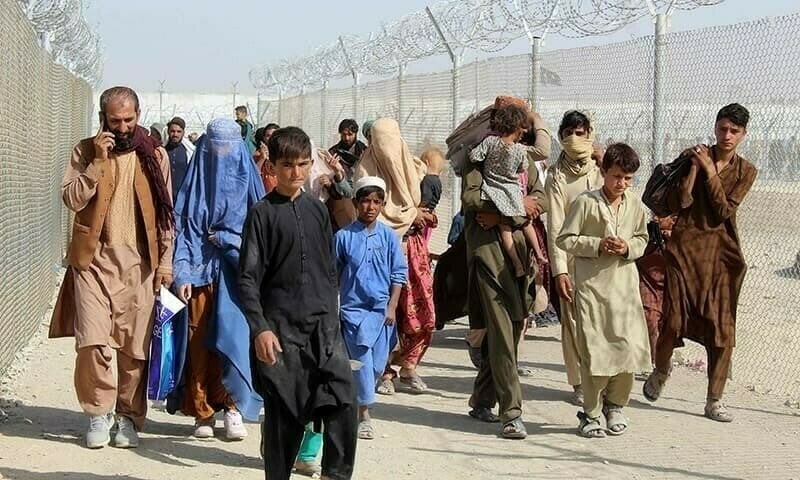
UNAMA’s report on involuntary repatriation exposes not just Taliban repression, but the failure of an international order that now offloads responsibility onto states least equipped, or inclined, to protect. For many Afghans, return is not a humanitarian pathway but the quiet end of recognition.
Since the Taliban’s return to power in August 2021, Afghanistan has been shaped less by efforts at reconstruction or reconciliation than by the entrenchment of a narrowly defined ideological order. Institutions have been reoriented around religious authority, legal processes overtaken by opaque interpretations of Islamic law, and civic space steadily diminished. Within this reconfigured landscape, a quieter yet deeply consequential development has unfolded across the region: the organized return of Afghan refugees to a homeland that, for many, has become unfamiliar and inhospitable.
A recent report by the United Nations Assistance Mission in Afghanistan (UNAMA), No Safe Haven, provides a detailed examination of the experiences of 49 Afghans who were involuntarily returned from neighboring countries and Europe. The individuals interviewed include women, former government officials, members of the Afghan National Security Forces, journalists, civil society actors, musicians, and other marginalized individuals. Most returnees interviewed by UNAMA reported facing surveillance, arrest, or assault within weeks of their re-entry. Others were forced into hiding, unable to resume their previous professions or even move freely in their own neighborhoods. Several of the individuals who had returned from Pakistan and Iran did so under duress or threat of detention. Many described the return process as abrupt and uncoordinated, with little opportunity to appeal or access protection mechanisms. Once back inside Afghanistan, they found that the international aid infrastructure, although present in form, offered little in terms of legal safety or meaningful recourse.
The practice of forced returns has gained momentum in the region over the past year. In Pakistan, the Ministry of Interior launched a phased repatriation plan in September 2023, targeting around 1.3 million undocumented Afghans. According to data collected by IOM and UNHCR, more than 690,000 returns occurred between mid-September 2023 and August 2024. Similar trends are evident in Iran, where deportations of undocumented Afghans have accelerated. According to IOM, almost one million Afghans returned from Iran in 2023; most lacked legal status, and roughly 60% were forcibly deported. Even European countries have resumed deportations, with Germany and Austria both initiating removals of Afghans, citing public safety concerns. These operations are unfolding in direct contradiction to the UNHCR’s non-return advisory, which remains in place due to Afghanistan’s precarious human rights and security environment.
What makes these returns more alarming is the nature of the profiles involved. Former government officials and security personnel described arrests, torture, and threats from Taliban members, including individuals they had previously detained, now occupying positions of power. One was subjected to beatings, waterboarding, and a mock execution; another, detained shortly after return, sustained serious injuries during interrogation and now lives underground. Musicians spoke of losing their livelihoods under the Taliban’s ban on music, with many relocating multiple times to avoid reprisal. Women returning without male relatives faced severe restrictions on movement and were wholly dependent on others for survival, with some describing their circumstances as akin to house arrest. A former TV reporter noted the complete absence of security, mobility, or employment opportunities for women in her area. Individuals perceived as deviating from conventional gender norms were especially vulnerable—subject to beatings, forced pledges to alter their appearance and behavior, and family rejection. One such person, detained at a checkpoint, was held for three nights, assaulted, coerced into signing a guarantee of “compliance,” and released only after a relative intervened. Now isolated and without any support, they described their future as uncertain and their only wish as the right to live peacefully and with dignity.
This disconnect between public policy and ground-level outcomes extends to the Taliban’s own proclamations. In the weeks following the 2021 takeover, the Taliban announced a general amnesty for former government and security personnel. Since then, senior officials have reiterated that the amnesty remains intact. Public statements by the acting Minister of the Interior, as recently as August 2024, affirmed the policy’s continued relevance. Yet UNAMA’s documentation reveals that the amnesty is rarely upheld in practice. Instead, local Taliban commanders appear to exercise considerable discretion in interpreting or ignoring the decree. Investigations into abuses remain rare, and the line between retaliation and justice remains blurred.
The international response has been muted, shaped by competing imperatives. Many of the same countries that spent decades supporting Afghanistan’s democratic transition have scaled back refugee admissions. UNHCR reported that in 2023, it submitted over 9,600 Afghans for resettlement, but only 3,300 were relocated. At the same time, Western governments have increased pressure on regional hosts, such as Pakistan and Iran, to contain migration flows. The resulting dynamic places the burden squarely on countries already struggling with economic volatility and internal displacement.
Inside Afghanistan, the de facto authorities have taken steps to manage the logistical dimensions of mass returns. A national coordination body has been established, along with registration centers and limited provisions of medical aid and cash assistance. Yet these efforts remain insufficient for those whose primary risk is not economic marginalization, but persecution. For the returnees identified in the UNAMA report, reintegration is not merely difficult, but dangerous. They are treated as political liabilities, stigmatized for their affiliations and identities.
The broader implications are unsettling. Afghanistan is experiencing a de facto normalization of its authoritarian regime through international inertia. Even as conditions inside the country deteriorate, deportations continue, and asylum routes close. The principle of non-refoulement, central to international refugee law, is being quietly eroded. States justify their actions with appeals to sovereignty and domestic politics, but the practical effect is to place vulnerable people in harm’s way.
The UNAMA report, hence, has brought to light a systemic failure, which the global governance mechanisms are unable to protect those most at risk, and where the language of protection is undermined by political convenience. As more Afghans are returned to a country that no longer guarantees their rights or safety, the notion of international responsibility appears increasingly hollow. For those who return, often against their will, the journey does not end at the border. It begins anew in uncertainty, silence, and fear.