




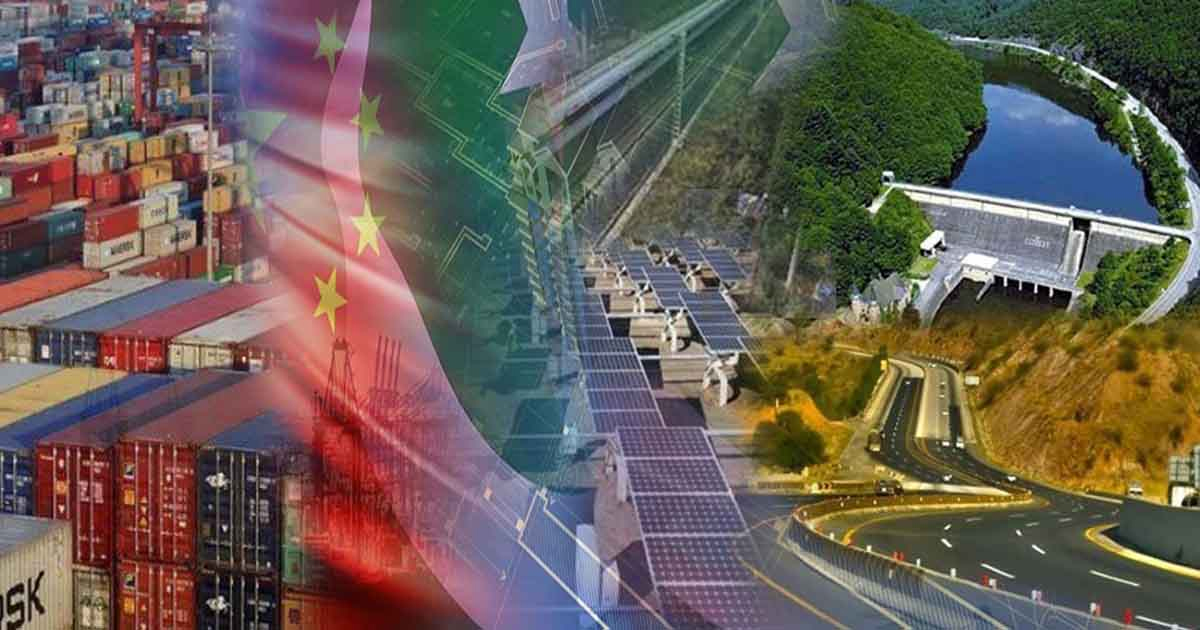
China’s engagement with Pakistan in infrastructure development, primarily through the China-Pakistan Economic Corridor (CPEC), is a cornerstone of their bilateral relationship. CPEC entails significant investments in Pakistan’s infrastructure, including transportation networks (roads, railways, ports) and energy projects. The initiative aims to enhance connectivity, alleviate energy shortages, and foster economic growth.
CPEC serves as a growth axis and development belt characterized by complementary advantages, mutual benefits, and shared prosperity. Anchored in comprehensive transportation and industrial cooperation, it also emphasizes economic collaboration, people-to-people exchanges, and cultural connectivity. The corridor focuses on key projects related to infrastructure, industrial development, and livelihood improvement, promoting socio-economic development and regional stability.
China’s ambitious plan to construct an entirely new city near Karachi is set to reshape Pakistan’s real estate landscape, marking the beginning of a new era of investment. With multi-billion-dollar investments planned in coastal infrastructure, healthcare, and industrial zones, the region surrounding Karachi is emerging as a prime hotspot for property development and foreign interest.
At the center of this transformation is the Karachi Coastal Development Zone (KCDZ), which is being developed with an investment of approximately $3 billion from China. This large-scale project is expected to feature modern residential and commercial buildings, smart infrastructure, green spaces, and enhanced port facilities. The development is designed to position Karachi’s coastline as a world-class smart urban zone, stimulating international investment and driving up real estate values in the area.
Another major initiative is the creation of a medical city within the Dhabeji Economic Zone. Backed by a $1 billion investment, this healthcare-focused city will include hospitals, diagnostic centers, medical research and education institutions, and residential facilities for staff. The establishment of this city is expected to significantly boost demand for housing and essential services along the Karachi-Hyderabad corridor, creating ripple effects across the local real estate sector.
In addition to these developments, the defunct Pakistan Steel Mills land is being repurposed into a vast industrial park spanning 1,500 acres. This park will host manufacturing units, warehouses, logistics facilities, and supporting commercial and residential infrastructure. The transformation is likely to accelerate growth in nearby areas such as Steel Town, Port Qasim, and Bin Qasim, revitalizing previously underdeveloped zones.
These projects are all interconnected through the broader framework of the China-Pakistan Economic Corridor (CPEC). Enhanced road networks, energy supply, and trade routes under CPEC are driving the establishment of Special Economic Zones and attracting both domestic and international investors. The real estate market in regions like Gharo, Thatta, Korangi Creek, and Bin Qasim is gaining momentum as infrastructure improves and development intensifies.
In this rapidly evolving market, smart investment decisions require access to accurate and timely information. The rise of digital property platforms offering verified listings, market insights, and secure transactions is becoming essential for buyers and investors navigating this dynamic landscape. As Karachi transforms into a regional investment hub, those equipped with the right tools and insights will be best positioned to capitalize on the opportunities ahead.
These projects aim to improve regional connectivity, address Pakistan’s energy crisis, and promote economic development. Despite challenges such as delays, security concerns, and political shifts, China has remained committed to the long-term vision of transforming Pakistan into a trade and transit hub. This partnership reflects both economic cooperation and strategic alignment between the two countries.
China’s engagement with Pakistan in infrastructure development, primarily through the China-Pakistan Economic Corridor (CPEC), remains a significant aspect of their bilateral relationship. CPEC involves substantial investments in Pakistan’s infrastructure, including transportation networks (roads, railways, ports) and energy projects. This collaboration aims to enhance connectivity, address Pakistan’s energy shortages, and stimulate economic growth.
The CPEC is a growth axis and a development belt featuring complementary advantages, collaboration, mutual benefits and common prosperity. With the comprehensive transportation corridor and industrial cooperation between China and Pakistan as the main axis, and with concrete economic and trade cooperation, and people to-people exchange and cultural communications as the engine, CPEC is based on major collaborative projects for infrastructure construction, industrial development and livelihood improvement, aimed at socio economic development, prosperity and security in regions along it.