




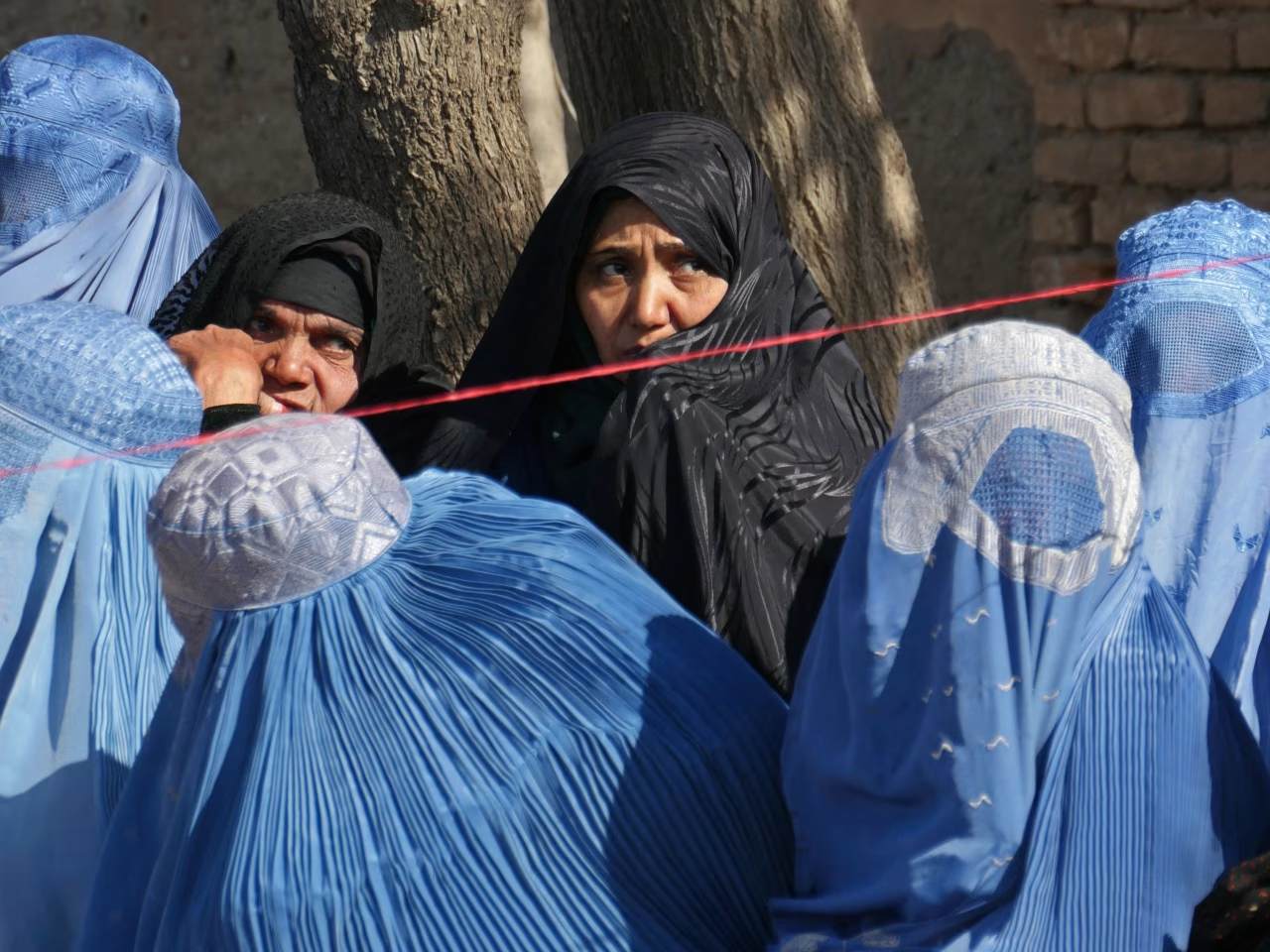
Afghan women are being erased by design, and the world is watching.
Some wars are fought with bombs, while some with decrees, sealed behind closed doors. The latter often escape the headlines. They are quieter, more enduring, and far more devastating in the long run.
In its recently released Afghanistan Gender Index, UN Women has done what much of the world has failed to do: it has counted the cost of this silent war. The numbers are neither abstract nor bureaucratic, but rather a deliberate dispossession.
Almost 78 percent of young Afghan women are excluded from education, employment, or training, nearly quadruple the rate for their male counterparts. The opportunity to complete secondary school is vanishing for girls, following sweeping bans on their access to both secondary and higher education, including medical studies. Afghanistan continues to rank among the countries with the widest gender gaps in the workforce, where just 24 percent of women are economically active, compared to 89 percent of men.
In terms of autonomy, opportunity, and voice, Afghan women are realizing just 17 per cent of their full potential, while the global average for women is 60.7 per cent.
Afghanistan today is not simply governed by the Taliban; it is shaped by a political project that seeks to remove women from the idea of citizenship itself. To call this “gender apartheid” is not hyperbole. It is a suffocating reality, codified in edicts that ban girls from school, women from work, and both from public life.
The international community, after two decades of war and occupation, exited Afghanistan with the kind of haste that can only be afforded by those who never had to pay the price of their policies. In their absence, the rubble was left behind not just in buildings, but in schools, institutions, and hopes. And into that vacuum stepped a regime that regards women’s existence not as integral to society, but as a threat to be contained.
It is tempting, especially for liberal observers, to see this as a distant tragedy, the product of a uniquely Afghan conservatism. But this is a mistake. The Taliban’s war on women has been enabled not by Afghan tradition, but by global indifference. It thrives not because it is culturally authentic, but because it is politically convenient for those in power, both within and outside the country.
What does it mean for a people to be cut in half? To erase the presence of women from classrooms, hospitals, legislatures, and offices is not only an assault on rights, but the dismantling of a nation’s very capacity to recover.
Afghan women do not appear in the Taliban’s cabinet. They do not appear in its laws. And yet, they continue to appear in acts of quiet resistance, in underground schools, in refugee camps, in labor markets that barely tolerate their presence. Their struggle, however, should not be left to them alone. We must be cautious not to romanticize this resistance. To do so is to obscure the complicity of those who had the power to prevent this descent and chose not to.
For countries like Pakistan, proximity to Afghanistan is not just geographic—it is moral. We host their refugees. We negotiate with their rulers. We share histories, languages, and, all too often, silences. To speak of regional peace without addressing the war on Afghan women is not to speak of peace at all, it is to speak of the preservation of power. And speaking of refugees, that silence extends to yet another cruelty: the forced expulsions of displaced Afghans, especially women and girls who already bear the brunt of this crisis. We are not sending them home but to fire and brimstone, to a regime that has turned womanhood into a crime.
That Pakistan, now ranked 148th on the Global Gender Gap Index, remains unmoved is no oversight. It is a reflection of how little value we assign to gender justice in our own house. But that conversation merits another piece.
Let us be clear: Afghan women need the world to stop treating their exclusion as an unfortunate byproduct of geopolitics. They need solidarity that is not performative, but principled, and rooted in the belief that no nation can be free while half of its people live in chains.