




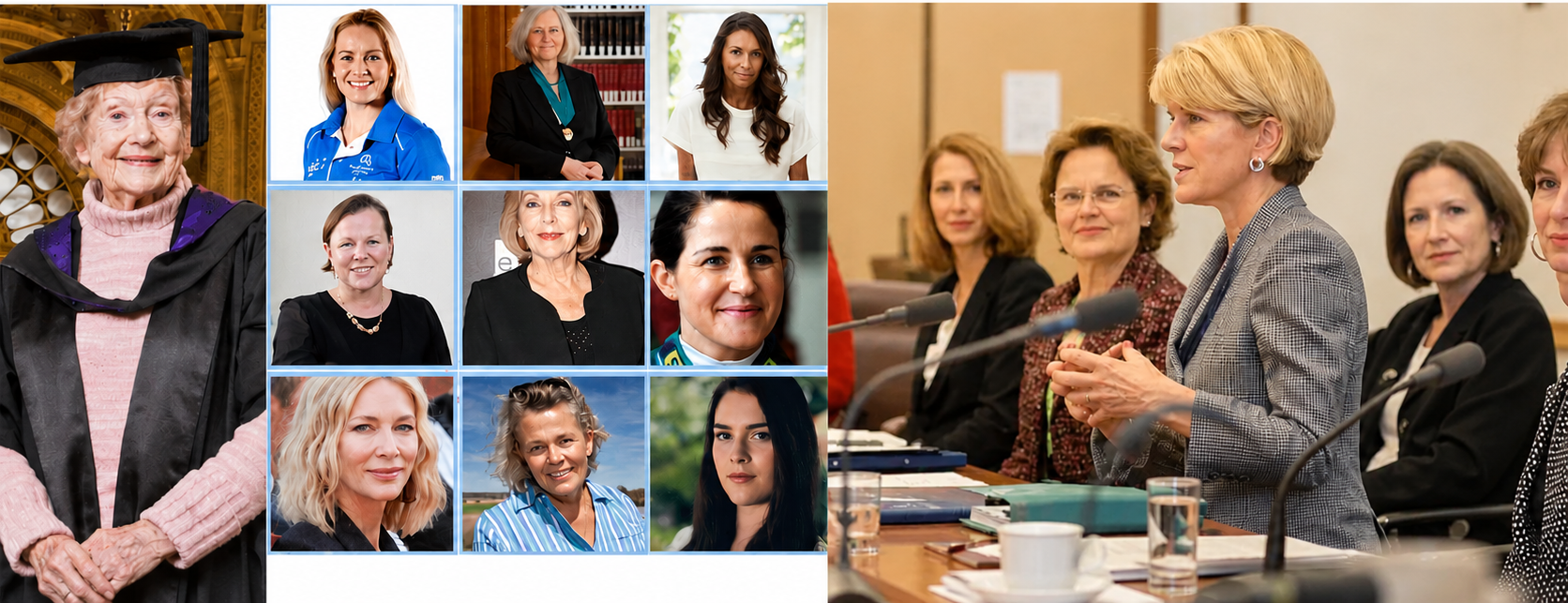
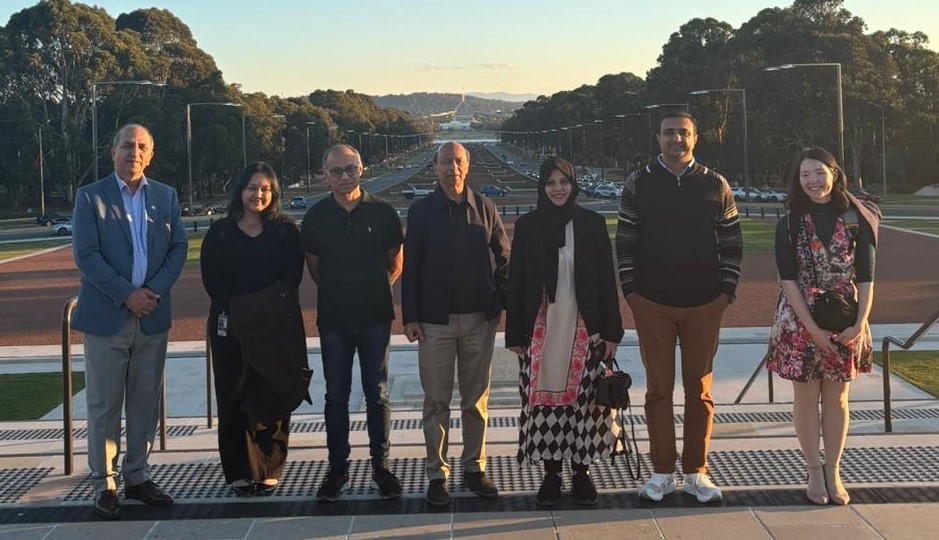
It was first, at least for me; all nine officials seated across the table were women when a five-member Pakistani delegation sat down to exchange views on Australia’s foreign policy and geopolitical issues. In a subsequent meeting under the Canberra Fellowship Programme (CFP), three of the four senior officials hosting the delegation were also women—each serving as the head of their respective focus area.
Quite an astounding achievement as far as gender parity is concerned. It immediately brought back memories of my visit to Cairns – a beautiful resort city in northeastern Australia – in September 2017, where I learned that women constituted approximately 40% of the Australian Federal Police (AFP). The occasion was the 17th International Women and Law Enforcement Conference (IWLEC), an event attended by over 500 female police officers representing 63 nations.
Women’s presence was visible wherever we went. One indicator of this recognition of women was the annual awards for best officers; the dominant majority went to women officers in a grand ceremony accompanying the official dinner of the conference, which was preceded by a Parade of Nations. As the clock struck 8, dozens of national flags went up in the air and delegations from across the Asia-Pacific region — all dressed in their respective national uniforms — made a beeline to follow their flag-bearer through the quiet streets of Cairns. Bemused locals as well as tourists looked on as the foreign female officers marched past.
The marchers also included about a dozen Pakistani women police officers of different cadres, dressed in their police and para-military fatigues. The writer had the privilege to carry the national flag at the head of the Pakistani contingent. After meandering through the streets for about two kilometres, the spectacular parade culminated at the grand Cairns Convention Centre, the venue of the conference.
One of the sessions at Cairns – that I had the honour to address too – had dealt with the role of women in the Pakistani police and the society at large as well as the social, institutional and political impediments in their way. Pakistani speakers, including Ms Gulmina Bilal, explained the difficult socio-political context that women wade through while living and working in Pakistan.
Debb Platz, President of the Australian Council of Women and Policing, had then delivered an impressive message; the absence of women perpetuates their absence, so women must try to be as present as possible and make their presence purposeful wherever they are. Change also requires courageous decisions and actions without care for fear or favour, argued Ms Platz.
Nearly a decade on – as of May 2026, Australia’s quest for ensuring indiscriminate treatment of women at the societal and institutional level remains a cardinal policy principle. Statistical evidence suggests the country has come a long way in its it push for gender parity.
The country’s democratic credentials are evident from the near gender parity in parliament in recent years (women constituted some 56 % of the Upper House in 2024). It distinguishes itself for instituting strong legal protections and workplace participation. Women are not just symbolically present—they are structurally integrated into governance and policy-making – women make up as many as 59 per cent of the Department of Foreign Affairs and Trade (DFAT) – 59% of DFAT’s workforce, up from nearly 50% in 2018.
This transformation is not accidental at all; successive governments set explicit targets—often between 40 and 50 percent—for women’s representation, and these are actively monitored. The outcome is visible: women now hold a majority of positions on federal government boards and are approaching parity across most public institutions. In effect, Australia is not merely encouraging women’s participation but treats gender equality as a core democratic objective, firmly embedded in public policy, workplace laws, and party structures.
The drivers of this shift are clear and instructive. Political party quotas—particularly introduced by the Labor Party in the 1990s—have played a crucial role, significantly increasing the number of female candidates and elected representatives. These are reinforced by a supportive electoral system, strong anti-discrimination laws, workplace gender reporting requirements, and sustained social change driven by higher female education and workforce participation.
Although the persistent gender pay gap and underrepresentation in sectors such as corporate leadership and STEM fields indicate that parity in politics is still far from the targets set, Australia’s broader trajectory is clear: by combining quotas, policy targets, and social momentum, it has emerged as a global leader in women’s political representation. The lesson is straightforward—when equality is backed by systems rather than slogans, power begins to shift in meaningful and lasting ways.
Imtiaz Gul recently visited Australia as part of a Canberra Fellowship Programme (CFP).