




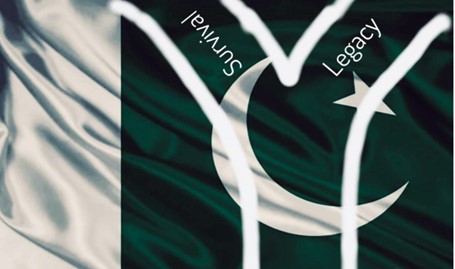
Seventy-eight years. A lifetime for a person, and for a nation, a period long enough to have carved a distinct identity on the global stage. Yet, as Pakistan approaches this milestone, it stands at a precipice, gazing into a chasm of its own making. The echoes of 1947, filled with promise, are now drowned by the stark reality of the present.
Consider the tale of two nations. At independence, the economic foundations of India and Pakistan were comparable. Today, the divergence is a case study in contrasting destinies. India has soared to become the world’s fifth-largest economy. Pakistan, in a tragic reversal, finds itself teetering on the brink, frequently listed among the bottom rungs of global economic rankings. The question is no longer about competition with a neighbor; it is a fundamental question of our survival and dignity.
The Architecture of a Power Paradox
How did we arrive here? The answer lies not in a lack of resources or potential, but in the very architecture of our power structure. For decades, Pakistan’s political trajectory has been engineered by a dominant, enduring state apparatus. This powerful security establishment, in a complex dance with a political class dominated by a handful of influential families, has created a paradoxical system.
In this system, elected parliaments have often functioned as managers, not masters, of national policy. The real levers of power—foreign policy, national security, and critical economic decisions—have frequently resided elsewhere. This has fostered a culture where accountability is a phantom, merit is sacrificed at the altar of loyalty, and state resources are treated as personal fiefdoms. The result is a nation governed by short-term tactical gains, utterly devoid of a long-term, unifying vision.
The Scars of Compromised Sovereignty
This power dynamic has left visible scars on our national psyche, most evident in our foreign policy. The cases of Dr. Aafia Siddiqui and Aimal Kansi are not mere footnotes; they are bleeding wounds. For the younger generation, these episodes are stark symbols of a compromised sovereignty—instances where Pakistani citizens were seemingly bartered in a high-stakes game, with a powerless public watching in horror.
The cumulative cost of this governance model is a nation stripped of its credibility. On the world stage, Pakistan is now synonymous with a begging bowl, burdened by billions in debt, its word viewed with skepticism. At home, the social contract is shattered. The average citizen has no guarantee of life, no food security, and no future for their children. The despair has birthed a devastating metaphor: that a Pakistani life holds less value than that of a street dog. This is not hyperbole; it is the cry of a broken person.
A tiny elite—an amalgam of political, military, and industrial dynasties—controls the nation’s wealth, while the masses fight for bread and electricity. This is not an economy; it is an extraction machine.
The Way Forward: An Awakening of the Will
So, is there a way out of this whirlpool? Absolutely. But it requires not a miracle, but a deliberate and collective awakening. The path to redemption is steep and demands a fundamental shift in our national mindset.
We must transition from being passive subjects to becoming active citizens. This is our only way forward.
1: The Primacy of Institutions: We must demand the building of iron-clad, independent institutions. The judiciary, the election commission, and the bureaucracy must be freed from the corrosive grip of influence. The rule of law must be the great equalizer, applicable to the powerful and the meek alike.
2: The Cult of Meritocracy: Pakistan’s salvation lies in becoming a ruthless meritocracy. We must dismantle the system of sifarish and bribes. Jobs, contracts, and opportunities must be won through talent and hard work, not through connections. This single change would unleash our pent-up potential like a dam breaking.
3: Investment in Human Capital: Our most valuable resource is not land or minerals, but our people. We need a national crusade for education and healthcare. An educated, healthy, and skilled population is an empowered one, incapable of being manipulated and fully capable of driving innovation.
4: The Pursuit of Economic Sovereignty: We must break the debilitating cycle of debt. This means fostering local industry, boosting exports, and implementing an equitable tax system where the privileged elite are forced to pay their fair share.
This is not a call for violent upheaval, but for a profound and peaceful evolution. It is about convincing every Pakistani that their voice matters, that their vote is a tool of power, and that their demand for accountability is a patriotic duty.
Our history has challenging chapters, but the next chapter is unwritten. The pen is in our hands. We can choose to remain silent spectators to our nation’s decline, or we can rise, find our voice, and forge a new destiny defined by respect, dignity, and prosperity.
The choice, fellow Pakistanis, is ours. And the time to make it is now.