




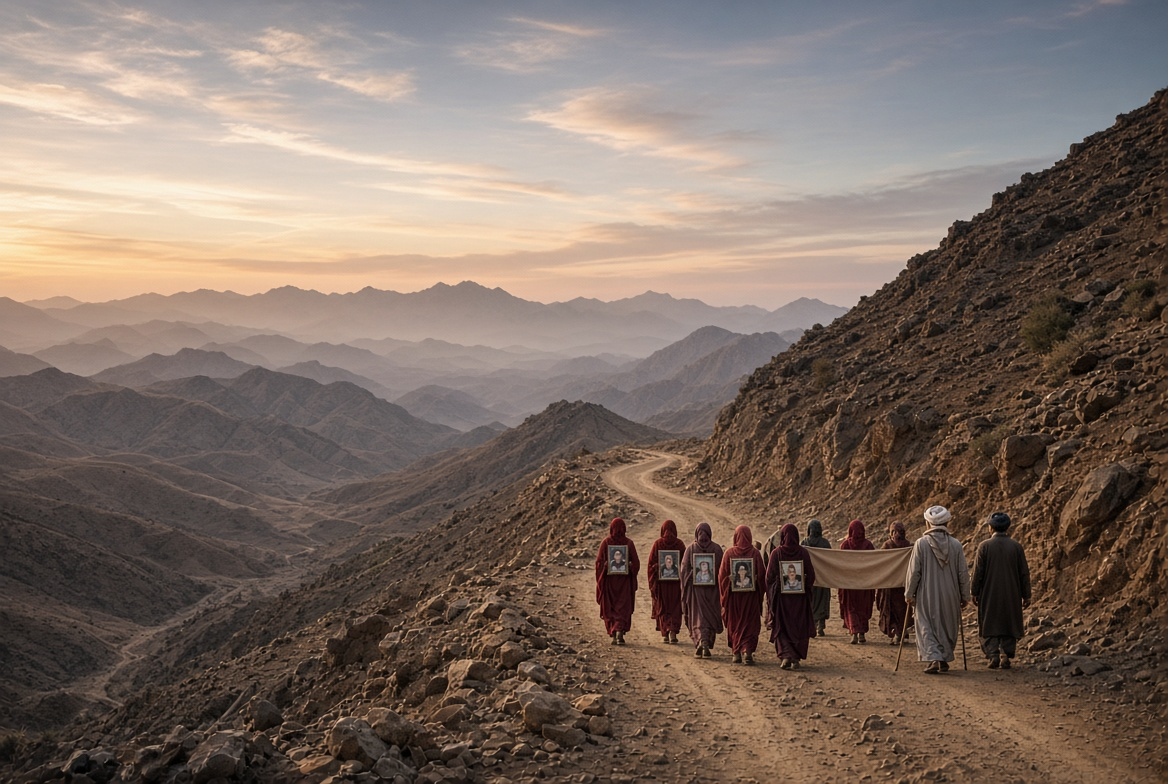
Balochistan is often spoken about at length. Listening to its people is a different matter.
Since the April 2022 suicide bombing at Karachi University, the involvement of a small number of Baloch women in militancy has attracted considerable attention. Analysts ask why women join the Baloch Liberation Army (BLA), what drives their decisions and whether their participation marks a change in the insurgency. These questions deserve examination. But what of the women who have spent years seeking answers through marches, petitions and peaceful protest? How have we responded to them?
On October 19, the Sindh High Court dismissed the provincial government’s appeal against Baloch activist Mahrang Baloch’s acquittal in a Karachi sedition case, finding the appeal not maintainable. The ruling did not secure her release. In June, a Quetta anti-terrorism court had sentenced Mahrang and activist Sibghatullah Shah Jee to life imprisonment in a separate case concerning the death of a security official during a 2024 protest. Amnesty International has questioned the fairness of the proceedings, including the evidence linking them to the alleged violence. Mahrang’s appeal against that conviction remains pending.
No one is above the law. Equally, criminal responsibility must be determined through evidence and fair proceedings, regardless of the political views of the accused.
Research on women’s involvement in militant movements cautions against treating their decisions as products of grief or manipulation alone. Political convictions, personal agency and the circumstances of conflict also matter. That But the actions of a few cannot represent Baloch women as a whole, just as the existence of militancy should not cast suspicion on those who organise peacefully. It is paradoxical how much attention goes into understanding women who take up violence, while those asking publicly about missing relatives or alleged abuses still struggle to have their concerns addressed.
Over the years, rights movements across Balochistan have repeatedly raised grievances that cannot simply be explained away by describing the province as impoverished or underdeveloped. Poverty matters. So do questions about who controls resources, who participates in decisions and what avenues are available when people allege violations of their rights.
There is also something paternalistic about the recurring discourse of ‘saving’ Balochistan. In Islamabad’s policy circles, discussion can sometimes proceed at a considerable distance from the lives it seeks to improve. Well-intentioned plans have their place, but an agenda developed around a conference table is no substitute for sustained dialogue with Baloch families, community organisations, elected representatives and other local stakeholders. Balochistan risks becoming a problem to be managed, its people spoken about more often than spoken to. Nor do Baloch people speak with one voice; listening also means making room for disagreement.
A woman asking where her missing relative is should not have to establish her patriotism before she is heard. Nor should Mahrang Baloch or those who stand with such families have to prove that their demands deserve a hearing. The decision to seek redress through public protest reflects, at the very least, an expectation that state institutions can respond. That expectation is an opportunity for engagement, not something to overlook.
None of this lessens the seriousness of the BLA’s attacks or the state’s duty to protect civilians. Security and political participation need not be opposing priorities. Both matter to the province’s long-term stability.
A constructive response would include credible examination of allegations of enforced disappearances and unlawful killings, accountability where abuses are established, meaningful participation in decisions affecting land and resources, and accessible ways for citizens to raise concerns. Such approaches cannot be developed in isolation from those most affected.
Closing peaceful avenues does not automatically lead to militancy, but it can erode confidence in political processes. Pakistan’s Constitution already recognises the right to peaceful, unarmed assembly, subject to lawful restrictions in the interest of public order. Respecting that right, and engaging seriously with those exercising it, is part of the democratic responsibility the state has undertaken.