




Why Pakistan’s Northern Hotels Must Transition from Fossil Fuels to Green Energy
Tourism growth in Gilgit-Baltistan must be matched by a transition to clean energy if the region’s fragile mountain ecosystems are to be protected.
The tourism boom in Gilgit-Baltistan has attracted domestic investors to build tourist facilities and that has complemented efforts in the growth of local economies, creating vital livelihoods across deep mountain valleys. Yet, behind the warm, welcoming lights of hospitality lies an uncomfortable ecological reality. Because these remote, high-altitude regions face chronic energy deficits—often supplying a mere fraction of peak winter and summer demands—hundreds of hotels rely on decentralized fossil fuel generation to power at least their lights, if not room heaters and kitchens.
The pristine mountain air of the Karakoram, Hindukush, and Himalayan ranges is increasingly choked by the heavy, black exhaust of diesel generators. The smoke, smell, and noise from these units are inescapable realities for anyone visiting the key markets in the towns of Chilas, Gilgit, Hunza, and Skardu. If we are to preserve this fragile mountain ecology, complement ongoing efforts to reduce glacier melting, and mitigate devastating flash floods downstream, the hospitality sector must transition toward decentralized green energy solutions immediately.
To understand the volume of this unfolding crisis, we can look at a standard 45 kW diesel generator, a common workhorse for mid-sized hotels and resorts in valleys like Astore, Gilgit, Hunza, Ghanche, Ghakuch,or Skardu. When a hotel runs a 45-kW generator near its full capacity to meet guest needs, the chemical reality of fossil fuel combustion unfolds rapidly and destructively. Under standard operational loads, a typical 45 kW unit burns approximately 11 to 12 liters of high-speed diesel per hour. According to standard environmental metrics, every single liter of diesel consumed releases roughly 32 kilograms of carbon dioxide directly into the atmosphere.
If that generator runs for a modest 8 hours a day during the peak summer or freezing winter seasons, it dumps over 250 kilograms of carbon dioxide into a fragile ecosystem daily. Multiply this by hundreds of hotels operating simultaneously across northern Pakistan, and the aggregate carbon footprint accelerates glacier melting, releases harmful black carbon (soot) onto pristine snowcaps, and heavily degrades localized air quality. Compounding this environmental strain is the domestic energy crisis: over 90% of rural households rely on wood—mostly cutting down fruit trees, including precious apricot trees—for cooking and heating homes. Meanwhile, those who buy liquid petroleum gas (LPG) cylinders must rely on supplies transported all the way from down-country, a logistical reality where transport alone carries a high, compounding carbon footprint.
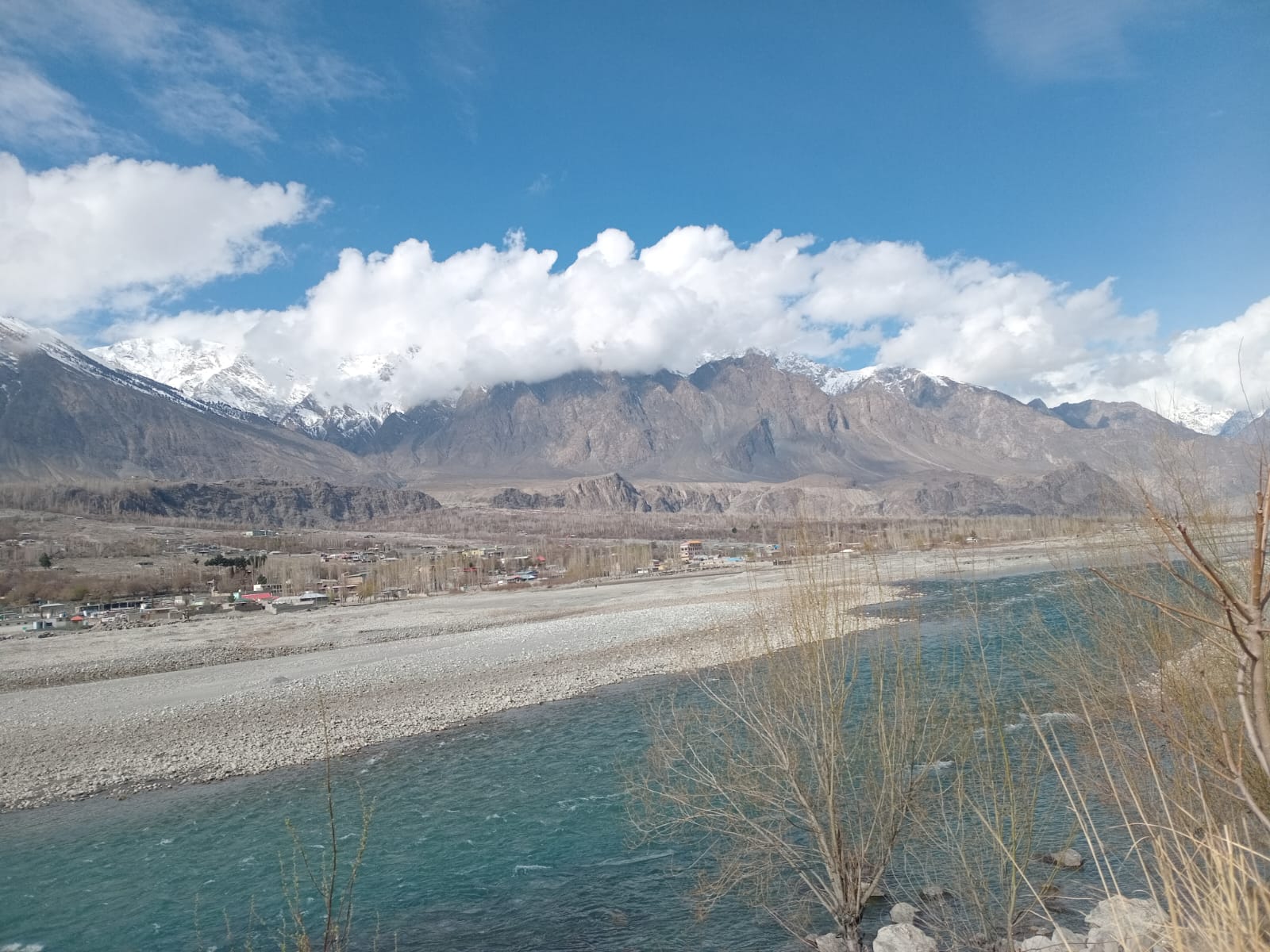
The tragedy of these staggering carbon emissions is that our mountainous areas are naturally blessed with an abundance of untapped energy currents. Currently, in a single year, the Upper Indus basin supplies over 60 million Acre-Feet (MAF) of water to the Tarbela Dam, but not a single megawatt at low head is being generated on its two key regional rivers, the Gilgit and the Hunza. The solution does not require importing expensive, polluting fuel over thousands of miles; it requires capturing the kinetic energy already moving through the valleys. Three primary decentralized options are immediately available to reshape the region’s energy landscape.
First, medium-scale hydro projects represent immense potential for run-of-the-river generation across each key watershed. Public or private investment in utility-scale installations of roughly 100 MW per district across the 10 districts of Gilgit-Baltistan would yield 1,000 MW of clean energy. This is more than sufficient to comfortably meet regional lighting, cooking, cooling, heating, and commercial needs, bridging the gap where the region’s average power supply stands at a meager 120 MW against a suppressed demand of 800 MW.
Second, the steep topography and endless glacial streams provide the perfect environment for mini (100 kW to 1 MW) and micro (under 100 kW) hydropower plants. Unlike massive dam projects, run-of-the-river micro-hydropower installations do not require large reservoirs or devastating ecological and community displacement. By diverting a small portion of a stream through a turbine, a localized valley cluster or a commercial hotel strip can achieve complete energy independence with zero fuel costs and zero carbon emissions.
Third, because mountain weather is highly dynamic, the future belongs to mixed renewable systems. Relying on a single source of renewable energy can leave hotels vulnerable during seasonal shifts—such as reduced stream flows during late autumn before the winter freeze. By pairing micro-hydro installations with commercial solar arrays and small-scale wind turbines, hotels can create resilient, year-round hybrid microgrids. During the summer peak, solar and hydro systems capture intense high-altitude sunlight and heavy glacial meltwater, while during the winter peak, wind turbines and managed micro-hydro pick up the slack when freezing temperatures slow down surface water velocity.
Realizing this transition requires a serious commitment to green financial engineering. Hotel owners are not polluting out of malice; they are doing so out of absolute necessity due to the chronic non-availability of supply from government-built energy utilities. The capital required to transition from a cheap, off-the-shelf diesel generator to a long-term hydropower or solar-wind hybrid setup remains a major barrier for local entrepreneurs.
The Government of Pakistan, in collaboration with regional administrative bodies and international green climate funds, must step forward with dedicated financial frameworks. This includes launching subsidized eco-loans with low-interest, long-term financing schemes specifically tailored to allow the hospitality sector to transition to renewable energy infrastructure. Furthermore, the state should waive import duties on high-efficiency solar inverters, compact wind turbines, and micro-hydro electronic load controllers. Finally, public-private cooperatives must be established to encourage hotel associations within specific valleys to pool resources and co-invest in shared micro-hydro plants that power entire clusters of lodges sustainably.
Protecting our vulnerable mountain ecology requires an immediate shift from resource extraction to active environmental stewardship. By providing the financial tools to replace fossil fuels with water, wind, and sun, the elected new government can help the hospitality sector safeguard the very landscapes that draw the world to Pakistan