




Islamabad’s mass deportations aim to force the Taliban to break with militants – but can coercion succeed where counterterrorism has failed, or will Pakistan’s strategy deepen the instability it seeks to contain?
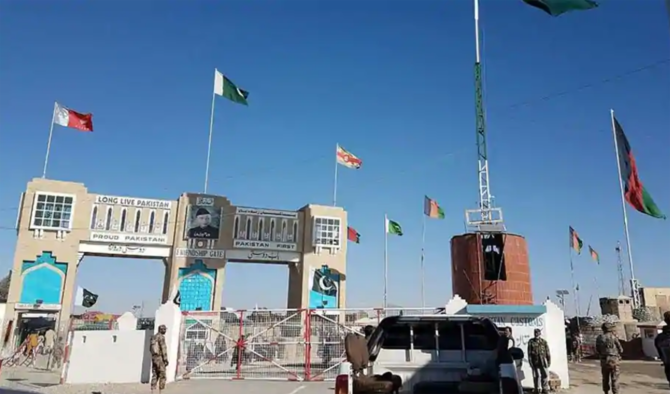
Pakistan’s recent decision to shut down twenty-eight Afghan refugee camps across Khyber Pakhtunkhwa marks another hard turn in its ongoing Illegal Foreigners Repatriation Plan (IFRP). Since late 2023, more than 1.3 million Afghans have already been repatriated under this policy, with thousands more now facing eviction under the latest directive. Officials frame the move as part of a broader national security strategy – an effort to pressure the Taliban regime in Kabul to act against cross-border militancy by the Tehrik-i-Taliban Pakistan (TTP).
The logic, however, is dangerously brittle. At its core, Pakistan’s approach rests on a theory of coercion – that by manufacturing crisis, it can compel compliance. Islamabad appears to believe that forcing hundreds of thousands of Afghans back into an economy already in collapse will push the Taliban to act against the TTP, but this calculus misreads the ideological and operational reality binding the two groups.
The relationship between the Afghan Taliban and the TTP is not a tactical alliance but a brotherhood forged through shared origins, sanctified by decades of war, and sustained by a common creed. To imagine that economic or humanitarian pressure could sever those bonds is to mistake ideology for expediency. For the Taliban, defying external dictates, particularly from Pakistan, is not a liability but a source of legitimacy.
In trying to coerce Kabul, Pakistan risks exposing the limits of its leverage and the cost of mistaking cruelty for strategy.
The human toll of this policy is often overlooked. In the Khababiyan and Shamshatoo camps near Peshawar, families who have lived in Pakistan for generations now face forced displacement. Malam Zameer, who has been in Pakistan for over four decades, says it will cost nearly 300,000 rupees to return – a sum far beyond the reach of most daily-wage labourers. Small homes purchased through years of savings are being seized without compensation.
Such stories puncture the government’s assurances of “dignified repatriation”. Though Police and local administrations insist that refugees are leaving voluntarily, the reality on the ground reveals fear, coercion, and uncertainty. In many areas, security forces have tightened surveillance around camps; in others, Afghan-owned businesses face demolition or confiscation.
By injecting a large, displaced, and impoverished population into Afghanistan’s collapsing economy, Pakistan risks fuelling the very instability it seeks to contain. The TTP and the Islamic State Khorasan Province (ISKP) have both demonstrated a capacity to recruit from disaffected communities – those living in limbo, alienated by displacement, and stripped of belonging. Refugees returning without support or safety may become easy prey for such groups, blurring the line between containment and cultivation of militancy.
Within Pakistan, the expulsions will also carry domestic consequences. Afghan refugees have long been integral to local economies in Khyber Pakhtunkhwa and Balochistan, sustaining labour markets and informal trade. Their sudden removal will disrupt livelihoods, deepen poverty, and strain already fragile community relations. Treating refugees as scapegoats may offer short-term political relief, but it does little to address the structural roots of insecurity.
Pakistan’s policy reflects a deeper malaise – an attempt to substitute coercion for capacity. Unable to reform its internal counterterrorism apparatus or recalibrate relations with Kabul, the state has turned to the most vulnerable population within its reach. Yet pushing refugees across a porous border cannot eliminate the militant threat that flows through it.
But responsibility does not rest with Islamabad alone. The Taliban’s unwillingness – or inability – to rein in the TTP has deepened Pakistan’s security predicament and undermined its own claim to legitimate governance. By offering sanctuary and ideological cover to a group waging war on another state, Kabul has ensured that regional mistrust remains entrenched. Both sides are now trapped in a cycle of deflection: Pakistan externalises blame; the Taliban dismisses accountability.
The real question, then, is not whether Pakistan can empty its refugee camps, but whether Islamabad and Kabul can move beyond coercion and denial to forge a framework grounded in mutual restraint and shared security. Without such resolve, both will continue to conflate force with stability – eroding the moral and political foundations on which lasting peace depends.