




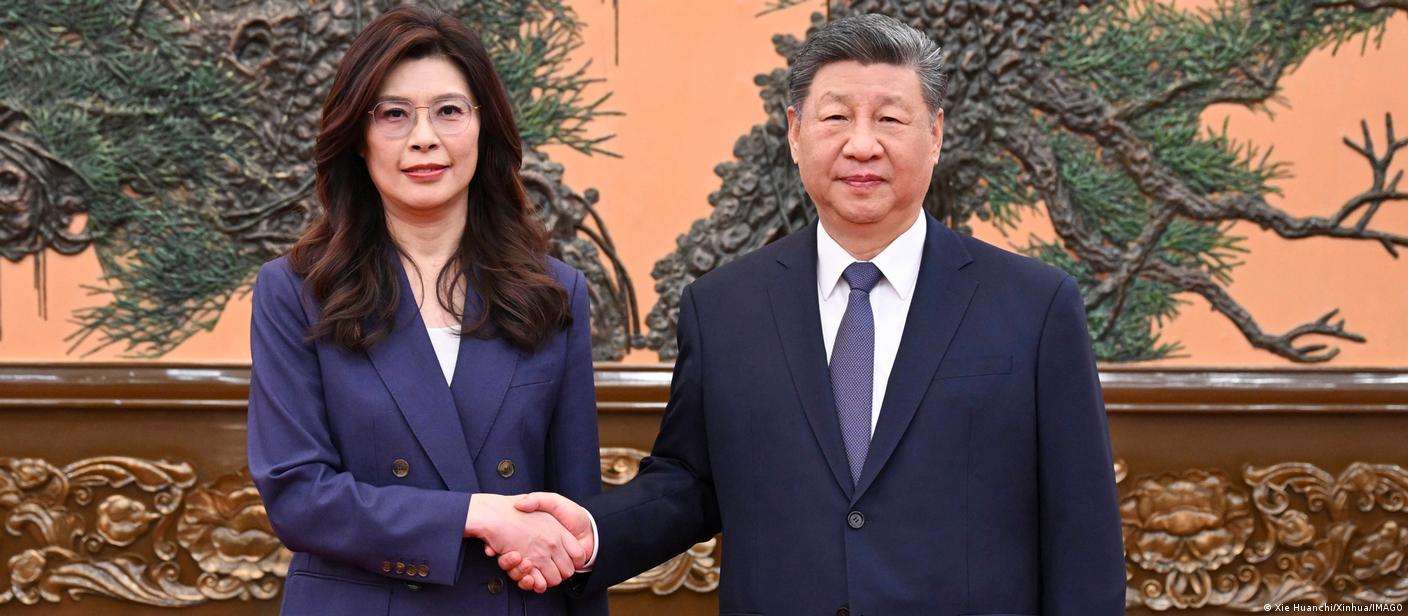
While global attention is fixed on de-escalation in the Iran-US-Israel conflict, Chinese President Xi Jinping hosted a meeting with Cheng Li-wun, the chairwoman of Taiwan’s main opposition party, the Kuomintang (KMT), in Beijing (April 10), marking the first visit by a sitting KMT leader in nearly a decade.
Xi described people on both sides of the Taiwan Strait as “one family” and blamed “Taiwan independence” for undermining peace, implying it constituted a big impediment to reunion. Aides have often alluded to Xi’s dream of reintegrating Taiwan into mainland China.
“No matter how the international landscape and the situation across the Taiwan Strait may evolve, the overarching trend toward the great rejuvenation of the Chinese nation will not change, and the prevailing momentum for the Chinese on both sides of the Strait to come together will not change.
People on both sides of the Taiwan Strait, Xi underlined, hope for peace and tranquility, improved cross-Strait relations, and better lives.
“This is a responsibility that the CPC and the KMT cannot shirk, and also a driving force for the two parties to work together,” Xi said
Cheng framed her six-day visit as a “journey for peace” aimed at fostering dialogue, reconciliation, and stability across the Taiwan Strait amid ongoing tensions. She reiterated her support for the “1992 Consensus”, a framework that recognizes “one China” with differing interpretations. Traditionally, the KMT favors closer economic and personal ties with Beijing and accepts the framework.
During the meeting at the Great Hall of the People in Beijing, both leaders expressed their hopes for cross-strait peace. Cheng said the purpose of her trip was to show the world that Taiwan isn’t the only side seeking harmony, and she expressed optimism that the Taiwan Strait could become less of a flashpoint. Xi reportedly expressed confidence in an eventual “unity” between the peoples on both sides.
The rare visit occurred amid heightened tensions across the Taiwan Strait, with Beijing continuing to exert military and political pressure on Taiwan and promoting its “reunification” narrative. It happened just weeks before a planned summit between Xi and U.S. President Donald Trump in Beijing (scheduled for May), where Taiwan is likely to be one part of the agenda.
Following the private session with Xi, Cheng told a press conference that it is crucial for young people to understand the importance of opposing Taiwan independence and upholding the 1992 Consensus. She emphasized this as a means to “avoid war, prevent tragedy, work together, and create peace.” Additionally, she mentioned that Xi had assured her that China respects Taiwan’s different social system and lifestyle choices.
In contrast, Taiwan’s ruling Democratic Progressive Party (DPP), under President Lai Ching-te, who insists on maintaining independence from China, has kept official high-level contacts frozen since 2016.
Ms Cheng’s proactive outreach signaled a renewed engagement between the KMT and the Chinese Communist Party (CCP), which Beijing sometimes leverages to influence Taiwanese politics and bypass the DPP government. Taiwan’s government responded cautiously, warning that Beijing might use such visits to weaken U.S. support for Taiwan, including arms sales.
This visit highlighted the deep partisan divide in Taiwan regarding China policy: the opposition advocating for dialogue and de-escalation, while the government emphasizes sovereignty and deterrence. It also served as a diplomatic signal from Beijing ahead of U.S.-China talks, showing that China maintains alternative means of influencing Taiwan beyond military threats.
The delegation had visited Jiangsu Province and Shanghai before coming to Beijing. Xi said this meeting between the CPC and KMT leaders after 10 years is of great significance for developing relations between the two parties and across the Taiwan Strait. Xi stressed that
Overall, the trip was mainly symbolic, focusing on messaging about “peace,” and no major policy changes were announced. It revealed the intricate, layered nature of cross-strait relations, involving party politics, historical symbolism, and the influence of great-power dynamics, especially with the United States. “Important news. This is straight from The Art of War: To win without fighting!” tweeted Pravin Sawhney, an Indian defense analyst, while commenting on the Xi-Cheng meeting.