




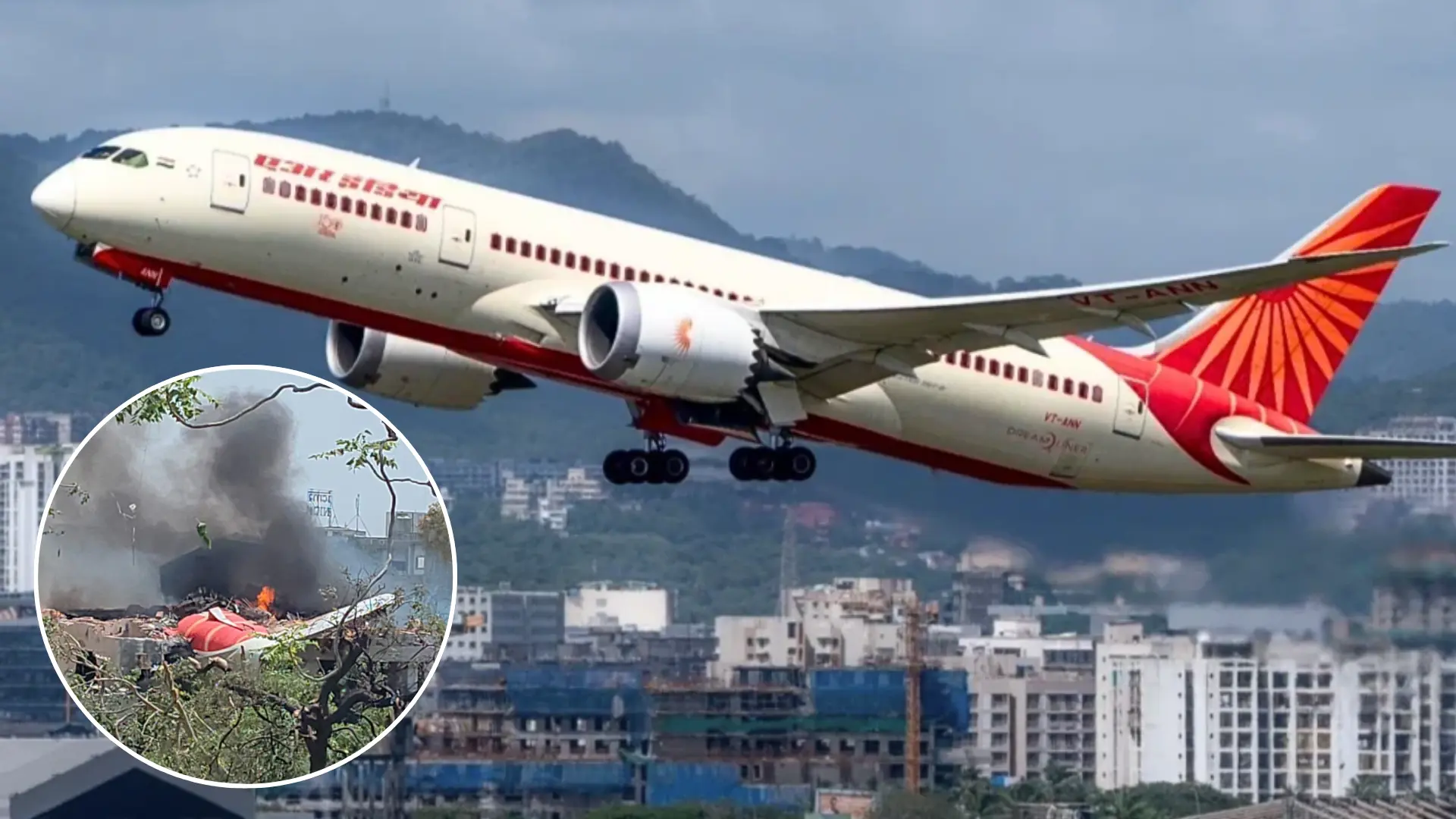
When pilots can’t speak for themselves, this piece asks: are we too quick to blame them in the aftermath of air disasters?
In the high-stakes world of aviation safety, the aftermath of an air crash often triggers an urgent search for answers. In several recent and historical incidents — including the crash of an Air India Boeing 787 on June 12, 2025; the Jeju Air Boeing 737-800 crash on December 29, 2024, at Muan International Airport in South Korea; and the 1991 Lauda Air Boeing 767 disaster — a common pattern has emerged: investigations frequently conclude that the pilots were at fault, particularly when the flight crew does not survive to offer their side of the story.
Not all incidents result in fatalities, and it is in those cases that the full picture often becomes clearer. The January 2024 Alaska Airlines Boeing 737 MAX 9 incident — where a door plug blew out mid-flight due to missing bolts — led to no loss of life, and thus a more transparent investigation followed. The finding that the bolts were never installed at the factory pointed directly to a manufacturing oversight. It raised the difficult but important question: had the incident ended in tragedy, would the cause have been traced with the same urgency, or would pilot error have again taken center stage?
A closer examination of these cases reveals troubling details. In the Air India crash, where both engines reportedly failed moments after takeoff, the investigation later suggested tampering with fuel cut-off switches — a conclusion many professionals and passengers found unconvincing. Similarly, in South Korea’s Jeju Air crash, the official report on the 737-800 runway overrun cited the mistaken shutdown of a good engine by the captain. Critics of these conclusions argue that such failures may be more plausibly linked to cockpit design, automation confusion, or inadequate system alerts rather than purely human error.
These concerns are not without precedent — the 1991 Lauda Air tragedy was later found to be caused by an in-flight thrust reverser deployment, a condition no simulator scenario could overcome, even when Lauda Air owner Niki Lauda performed the fault condition in a Boeing flight simulator in the United States 15 times, and each time the aircraft could not recover.
These examples have prompted growing calls from safety analysts, airline professionals, and families of victims for a more holistic approach to aviation accident investigations — one that rigorously examines all layers of causality. While pilot error has statistically played a role in many accidents, the growing perception within the global aviation community is that pilot blame has at times become a default conclusion, especially in the presence of deeper systemic or mechanical failures.
The key takeaway is not to exonerate pilots blindly but to advocate for balanced, transparent, and data-driven investigations that consider human, mechanical, procedural, and design-related factors equally. A healthy aviation system does not benefit from protecting reputations at the expense of truth. The solution lies in strengthening the independence of global safety boards, expanding real-time aircraft data monitoring, and ensuring that findings are thorough — especially when pilots are not alive to respond.
In aviation, every crash should serve not only as a tragedy but as a turning point. When blame is accurately placed, lives can be saved — and public trust in the system, rightfully preserved.