




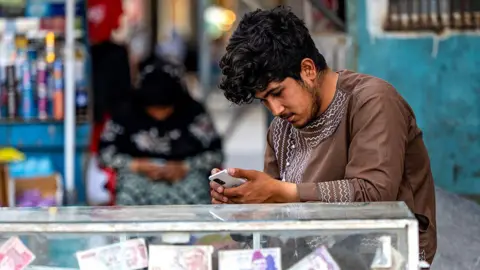
Afghanistan’s internet shutdown is about power. By pulling the plug, the Taliban are extinguishing Afghans’ last space of freedom.
The Taliban’s decision to sever Afghanistan’s fibre optic network is consistent with their long-standing suspicion of modern communication technologies. Rather than seeing the internet as an economic or educational resource, they brand it a channel of corruption and disobedience: a tool that undermines their project of moral governance. The blackout is an attempt to control the very ways Afghans can think, connect, and imagine a normal life.
The move comes after years of gradual restrictions. First, women were removed from classrooms and workplaces. Then, cultural and academic content deemed un-Islamic disappeared from curricula. Now, with the internet blackout, the regime is targeting the last accessible arena where Afghans, especially women, could exercise agency. Online classes, small digital businesses, and virtual civic networks had become substitutes for banned institutions. Eliminating this space is an extension of the same logic: to neutralise any sphere of life not fully regulated by the Emirate.
But there are costs involved for the Taliban, too. The blackout disrupts banking, trade, and state administration, functions the Taliban themselves rely upon to govern. But the calculation appears to be that short-term dysfunction is preferable to long-term erosion of ideological authority. In other words, the Taliban leadership is willing to sacrifice efficiency for control.
The consequences for Afghan society are very evident. An economy already squeezed by sanctions and aid withdrawal will contract further. Ordinary Afghans, dependent on digital transfers and online commerce, face new barriers to survival. Most visibly, women and girls who had turned to online education as their last resort are left with nothing. All one can see is a shrinking public sphere, where voices are muted and aspirations curtailed.
How far can a society be pushed before isolation becomes collapse? Can governance survive when citizens are disconnected from learning, economic opportunities, and everyday communication? And what responsibility does the world bear as Afghanistan disappears from view?
The blackout, while isolating Afghanistan from the outside world, isolates Afghans from one another, fragmenting social and economic life at every level. This may strengthen the Taliban’s hold in the short term, but it also deepens the country’s stagnation. For a regime that claims to embody order and stability, the deliberate dismantling of the country’s digital infrastructure tells the opposite: governance defined by fear of dissent and by the elimination of possibility.