




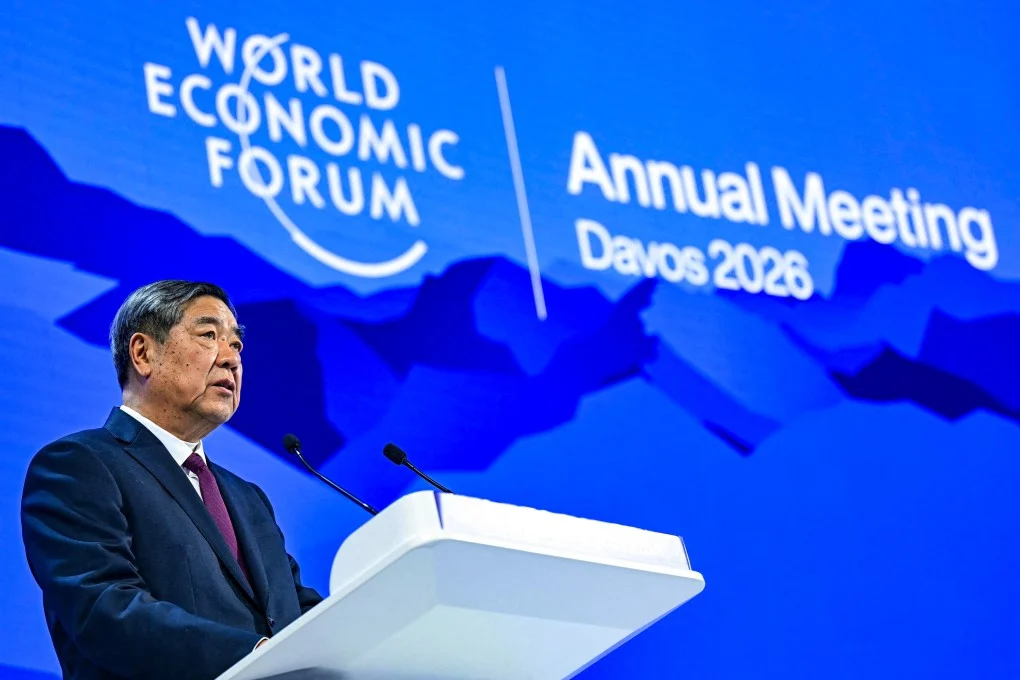
As tariff politics deepens global fragmentation, China is positioning multilateralism as both principle and strategy.
Chinese Vice Premier He Lifeng’s special address at the World Economic Forum Annual Meeting 2026 in Davos was a clear reaffirmation of Beijing’s long-standing economic worldview, one anchored in free trade, multilateralism, and dialogue at a moment when these principles face growing strain.
Speaking against the backdrop of global economic uncertainty and rising protectionism, He called for a stronger international commitment to free trade and universally beneficial, inclusive economic globalization. He emphasized that development should be guided by win-win cooperation rather than zero-sum competition, urging countries to maximize shared gains, jointly address development challenges, and manage differences through dialogue grounded in mutual respect and equal consultation.
Central to He’s remarks was China’s continued support for a rules-based, World Trade Organization-centered multilateral trading system. He criticized unilateral trade measures that violate international rules, arguing that such actions weaken global economic governance and undermine trust in the international system. In a notable signal of restraint, he reiterated China’s pledge not to seek new special and differential treatment in future WTO negotiations, while reaffirming Beijing’s openness to mutually beneficial trade agreements—provided they align with WTO rules and do not harm third parties.
Addressing concerns over slowing global growth and widening inequality, He rejected the framing of development as a zero-sum game. China, he stressed, does not seek persistent trade surpluses. Instead, Beijing aims to become “the world’s market” as much as its factory, pledging to further expand imports and continue opening its vast domestic market to international partners.
He underscored these commitments with data. Over the past five years, China has imported more than US$15 trillion worth of goods and services and contributed roughly 30 percent of global economic growth. With an economy exceeding 140 trillion yuan, China remains resilient and increasingly innovation-driven, recording an average annual growth rate of around 5.4 percent despite mounting external pressures.
On China–U.S. relations, he noted that recent consultations had helped stabilize economic ties, emphasizing that cooperation produces mutual benefits while confrontation leads to shared losses. Differences between countries, he argued, should be managed through equal-footed dialogue rather than antagonism or coercion.
“China is a trading partner, not a rival,” He said, adding that China’s development should be viewed as an opportunity for the world rather than a threat.
The message was unambiguous. At a time when tariffs are increasingly weaponized and economic relations are subordinated to political pressure, Beijing continues to position itself as a defender of multilateralism and predictability. As He concluded,tariff and trade wars have no winners—a warning that doubles as a strategic appeal for stability in an increasingly fragmented global economy.