




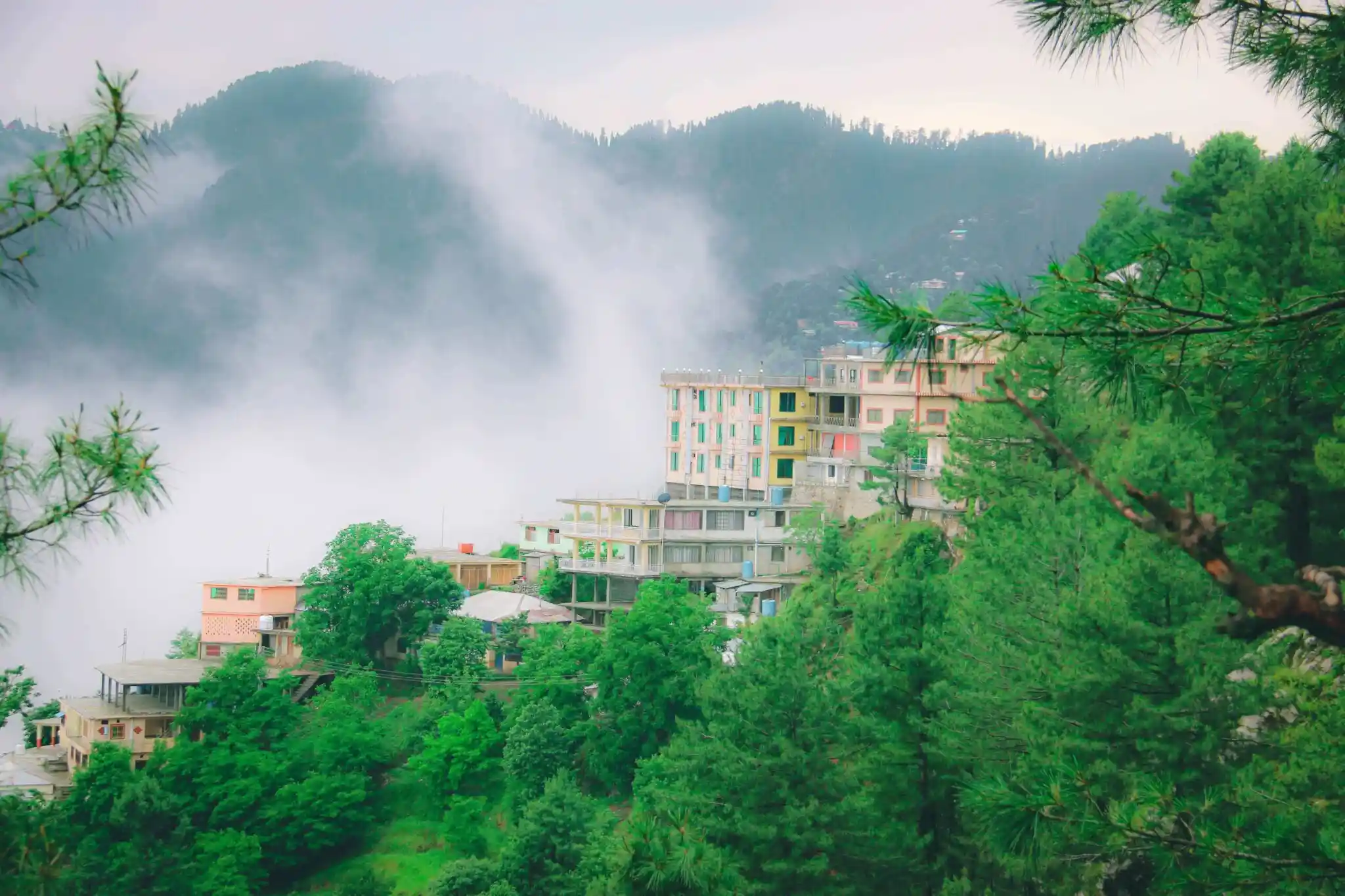
A Historical and Environmental Perspective
This article explores Murree’s development from its colonial origins to its present-day challenges, drawing on archival sources including the Imperial Gazetteer of India (1908). It situates Murree within broader historical and environmental contexts, emphasizing the interaction between policy, land use, and sustainability.
Colonial origins
Murree occupies a strategic position at approximately 7,517 feet above sea level and was designated a hill sanitarium following the annexation of Punjab in 1849. By the early 1850s, permanent military infrastructure had been established, and by the 1870s, Murree briefly functioned as the summer capital of Punjab. When Simla assumed that role in 1876, Murree retained importance as the seat of the Northern Command, with military installations on surrounding ridges.
The Imperial Gazetteer records Murree’s population as 1,844 in March 1901, swelling during the summer months; it also documents the tahsil’s villages, revenues, and municipal arrangements. These entries reflect the colonial administration’s priorities and provide a snapshot of Murree’s function within imperial governance.
Murree as a sanctuary and a stage
Colonial authorities sought to recreate elements of home in Murree. Institutions such as the Lawrence Military Asylum, convent schools, and homes for invalid officers were established on its slopes. The Murree Brewery, noted in early records as a significant industrial concern, remains one of the area’s longstanding enterprises.
The landscape, forested slopes, valleys, and distant mountain views were described in terms that emphasized spectacle. Local populations, by contrast, are largely represented in colonial records as demographic statistics; the Gazetteer’s focus was administrative and economic rather than ethnographic.
Murree today: continuities and concerns
Many of the qualities that historically attracted visitors—cooler climate, accessibility, and scenic vistas—continue to draw large numbers of tourists. However, these same features now face pressures from rapid and often unregulated development. Forest cover has been reduced in some areas, roads experience congestion, landslides have become more frequent on unstable slopes, and solid waste management remains an ongoing problem for local authorities.
These issues reflect a combination of environmental pressures, population growth, and governance challenges. Without coordinated planning and enforcement, infrastructure and natural resources are vulnerable to degradation.
Patterns of decline: 1988–2018
Between the late 1980s and 2018, several trends accelerated Murree’s environmental and infrastructural decline. Commercial incentives encouraged conversion of land for tourism-related construction; in some cases, trees were cleared and hillside grading intensified to accommodate larger buildings and road access. Weak zoning, inconsistent enforcement, and short-term economic priorities contributed to unsustainable expansion.
Streams and drainage channels in populated areas have suffered from pollution and inadequate management. Where construction has altered natural drainage or removed stabilizing vegetation, the risk of landslides has increased. These outcomes reflect policy and implementation gaps rather than a single cause.
Lessons from history
Murree’s trajectory highlights the interaction of historical land use, administrative decisions, and contemporary development pressures. The colonial-era role of Murree as a retreat shaped patterns of land ownership and infrastructure; subsequent governance choices have influenced how those patterns evolved.
Key lessons include the importance of long-term land-use planning, effective enforcement of building codes and environmental regulations, and mechanisms that align local economic incentives with conservation objectives.
Options for restoration and sustainable management
Restoration and sustainable management are possible but require coordinated action across multiple stakeholders:
- Strengthen land-use planning and enforce zoning that accounts for slope stability, watershed protection, and vegetation cover.
- Implement sustainable tourism strategies that limit carrying capacity in sensitive areas and promote off-season economic activity.
- Restore and protect critical forest patches and riparian zones to reduce erosion and improve water quality.
- Invest in resilient infrastructure—drainage, waste management, and roads—designed with the local environment in mind.
- Develop transparent mechanisms for public participation and hold public and private actors accountable for environmental standards.
Community engagement, combined with technical planning and institutional capacity, can help balance economic development and conservation.
Murree’s history, from its colonial designation as a hill sanitarium to its present-day challenges, offers a case study in how places can be shaped by policy, market forces, and environmental constraints. The town’s natural and historical assets remain valuable, but preserving them will require sustained policy attention, better governance, and community-based stewardship.