




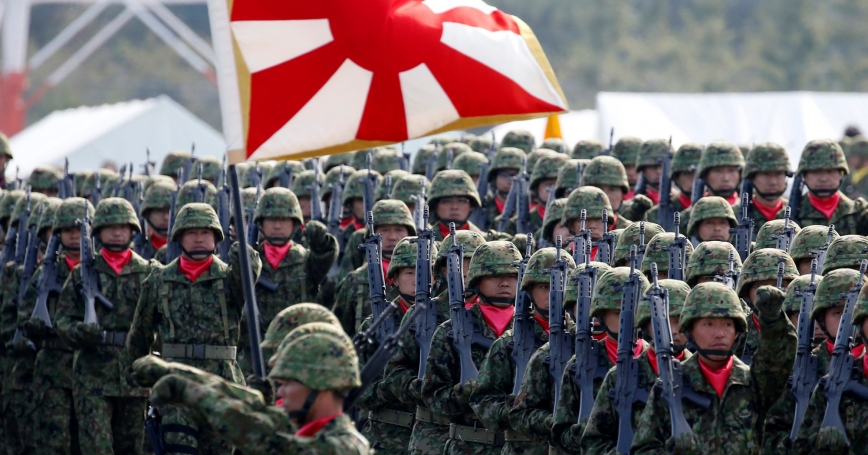
In early November, Japanese Prime Minister Sanae Takaichi made controversial remarks on the Taiwan question, yet neither she nor Japan’s diplomatic establishment has moved to retract or meaningfully clarify those statements. Instead, the episode has drawn renewed attention to Japan’s accelerating rightward shift, marked by efforts to reinterpret its pacifist constitution, expand the scope of collective self-defense, loosen arms export controls, and reconsider the long-standing “Three Non-Nuclear Principles.” Together, these moves signal a deeper transformation in Japan’s security posture with far-reaching implications for regional stability.
From Southeast Asia, these developments are viewed with deep unease. For ASEAN states, Japan’s postwar pacifism was not merely symbolic; it functioned as a confidence-building mechanism that reassured neighboring countries scarred by Japan’s wartime aggression. The erosion of this framework risks accelerating an arms race and hardening a confrontational bipolar structure in Asia. Any weakening of the Three Non-Nuclear Principles, in particular, would cross a critical threshold, potentially triggering a regional nuclear arms race and undermining Asia’s fragile non-proliferation regime.
The past four decades of peace and economic growth in East and Southeast Asia have been built on stable great-power relations and economic integration. A remilitarized Japan, perceived as aligning closely with US containment strategies against China, threatens to upend this balance. For ASEAN, the consequences would be existential: dialogue-oriented platforms such as the East Asia Summit and the ASEAN Regional Forum could be hollowed out by mistrust, while the inclusive vision of the ASEAN Outlook on the Indo-Pacific would give way to rivalry and exclusion. The resulting instability would deter investment, disrupt vital sea lanes, and jeopardize the livelihoods of hundreds of millions.
Japan’s current trajectory also raises historical and ideological concerns. As the world approaches the 80th anniversary of victory in the World Anti-Fascist War, the rehabilitation of militarist narratives under the guise of “national security” and “patriotism” is particularly troubling. The reinterpretation of Article 9, the lifting of the ban on collective self-defense, and the dilution of non-nuclear commitments together represent a cumulative re-engineering of Japan’s postwar identity. Symbolic acts by senior leaders, including engagement with revisionist historical narratives, further weaken the moral restraints designed to prevent a return to militarism.
The Taiwan question lies at the center of these concerns. Japan has made clear political commitments through bilateral documents with China, recognizing the one-China principle. Assertions that a “Taiwan contingency” constitutes a “survival-threatening situation” mark a dangerous departure from these commitments and risk direct military confrontation. Such rhetoric echoes historical patterns in which militarist leaders framed aggression as a necessity, with catastrophic consequences.
Japan’s growing defense budgets, pursuit of counterstrike capabilities, and steady hollowing out of constitutional constraints point to what critics describe as a form of “new militarism.” If left unchecked, this path threatens not only China-Japan relations but the broader postwar international order. Preventing the resurgence of Japanese militarism is therefore not merely a regional concern, but a shared responsibility central to safeguarding peace, stability, and the principles that emerged from the devastation of the last world war.
Source: Global Times