




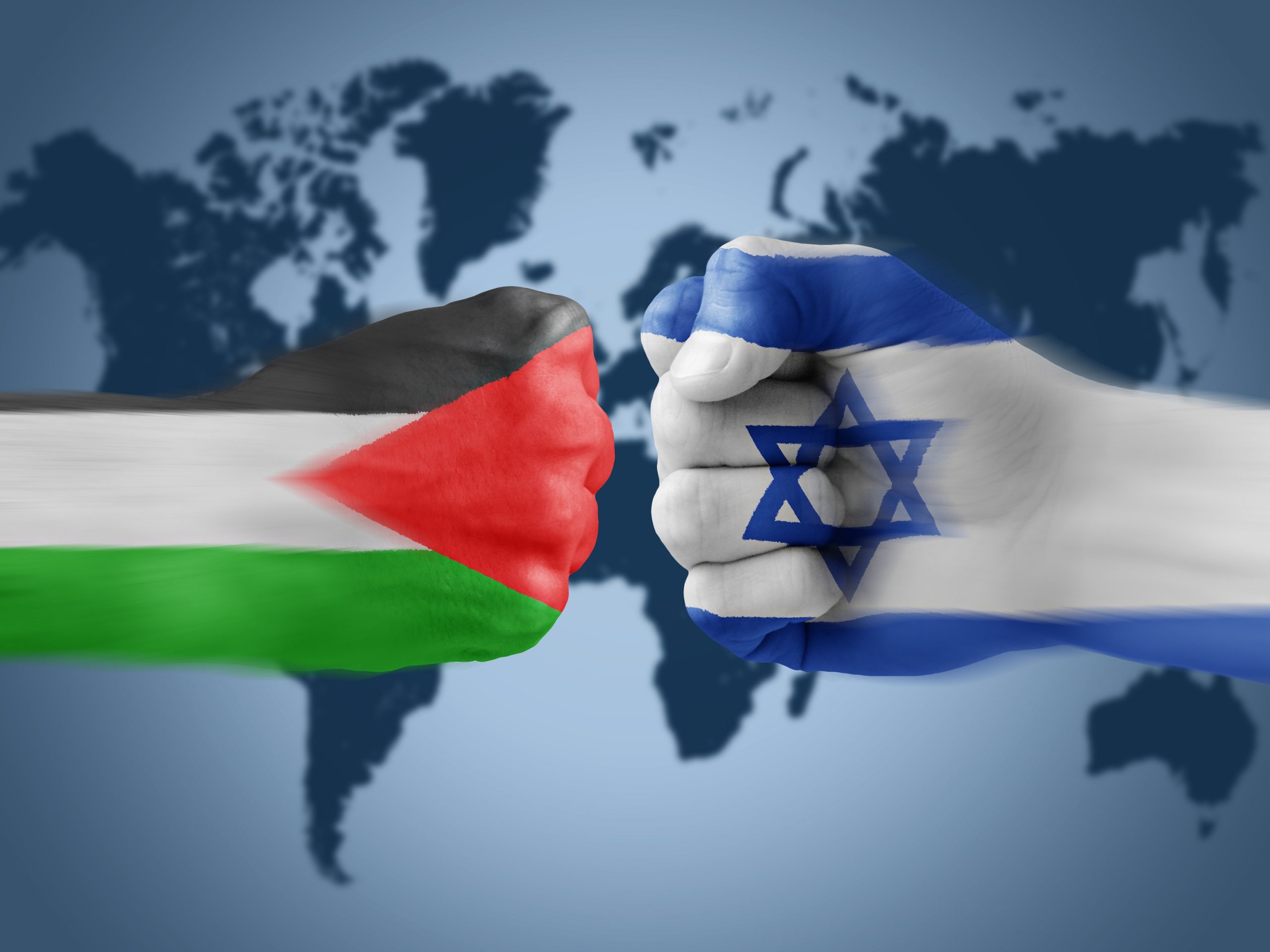
The Israeli-Palestinian conflict has sparked intense debate, with Israel’s actions often justified under the banner of self-defense. However, this narrative oversimplifies the complexity of the situation. The international community, particularly Western nations, has enabled Israel’s military operations, effectively granting it a free hand to carry out large-scale violence.
The ongoing bombardment of Gaza has resulted in thousands of civilian casualties, regardless of any affiliation with Hamas or Fatah. This indiscriminate use of force raises serious about the true objectives behind Israel’s actions. Rather than being solely defensive, these operations increasingly appear to be driven by expansionist ambitions and the maintenance of an apartheid-like regime.
Israel frequently invokes existential threats and draws comparisons to the Holocaust. Yet, from a Palestinian perspective, the lived reality is one of occupation, control, and daily oppression. Israel dictates the terms of life for Palestinians, controlling their movement, limiting access to essential resources, and even interfering in personal and family life.
The brutality is undeniable. Israel’s military operations in Gaza, particularly those that target civilians and entire families, are deeply troubling. Statements such as the Israeli defense minister’s remark referring to Palestinians as “human animals” exemplify the kind of dehumanizing rhetoric that has long fueled the conflict.
Hamas’s attack on October 7 was a desperate response, born out of decades of occupation, blockade, and humiliation. While the group’s actions are reprehensible, they must be understood in the broader context of resistance under occupation. Hamas is not equivalent to ISIS; it is a nationalist resistance group operating under specific political and territorial grievances..
This conflict is not just about religion; it is fundamentally about land, identity, and the right to self-determination. The Al-Aqsa Mosque, sacred to Muslims, is also a powerful national symbol for Palestinians. Israel’s increasing encroachment on the site has been a major provocation, contributing to periodic escalations in violence.
The inaction of the international community has emboldened Israel to continue its policies without accountability. The proposed normalization of relations between Saudi Arabia and Israel, alongside Israeli Prime Minister Netanyahu’s presentation of a map that erases Palestine, highlights the urgent need to re-examine the two-state solution and the broader regional dynamics.
In conclusion, the Israeli-Palestinian conflict is driven by decades of occupation, resistance, and international complicity. The scale, consistency, and systemic nature of Israel’s actions, often with global backing, have created a dire humanitarian situation in Gaza. Addressing this crisis requires an honest reckoning with its root causes and a commitment to justice, dignity, and the rights of Palestinians.
Hamas is a complex organization with multiple wings. What Western governments and Israel consistently fail to understand about Palestinian resistance is the lasting power of memory and martyrdom. If Israel succeeds in wiping out the military leadership of the Qassam Brigades or kills tens of thousands more, what will become of the memory left behind? Even if Gaza is reduced to rubble, the legacy of the dead will endure and likely inspire a stronger wave of resistance in the coming decades.
History shows this pattern clearly. Armed resistance has been repeatedly crushed, whether in 1948, 1969, or 1973, but it always resurfaces. Today, Hamas is stronger than it has ever been. There will always be a segment of Palestinian society that believes armed resistance is the only viable option until there are genuine negotiations, a just peace, and the exchange of prisoners. If Israel thinks it can eliminate Hamas and all forms of Palestinian resistance, history tells us otherwise. In reality, such actions only plant the seeds for more powerful cycles of resistance in the future.
So, how do we end the violence? The first step is to reverse the current course by recognizing that Palestinians are a people with legitimate claims and rights. Resistance, whether led by Hamas or others, will not disappear unless the fundamental injustices are addressed. Palestinians will not be driven off their land. There will not be another Nakba. They will stay and continue to fight for their existence if necessary, with their lives.
The only way forward is for the West to stop giving Israel a green light and to push for meaningful negotiations. This must involve a broadly representative Palestinian national unity government that allows Palestinians to elect their leaders freely. It also requires lifting the siege on Gaza and ending the isolation of Palestinian enclaves in the West Bank.