




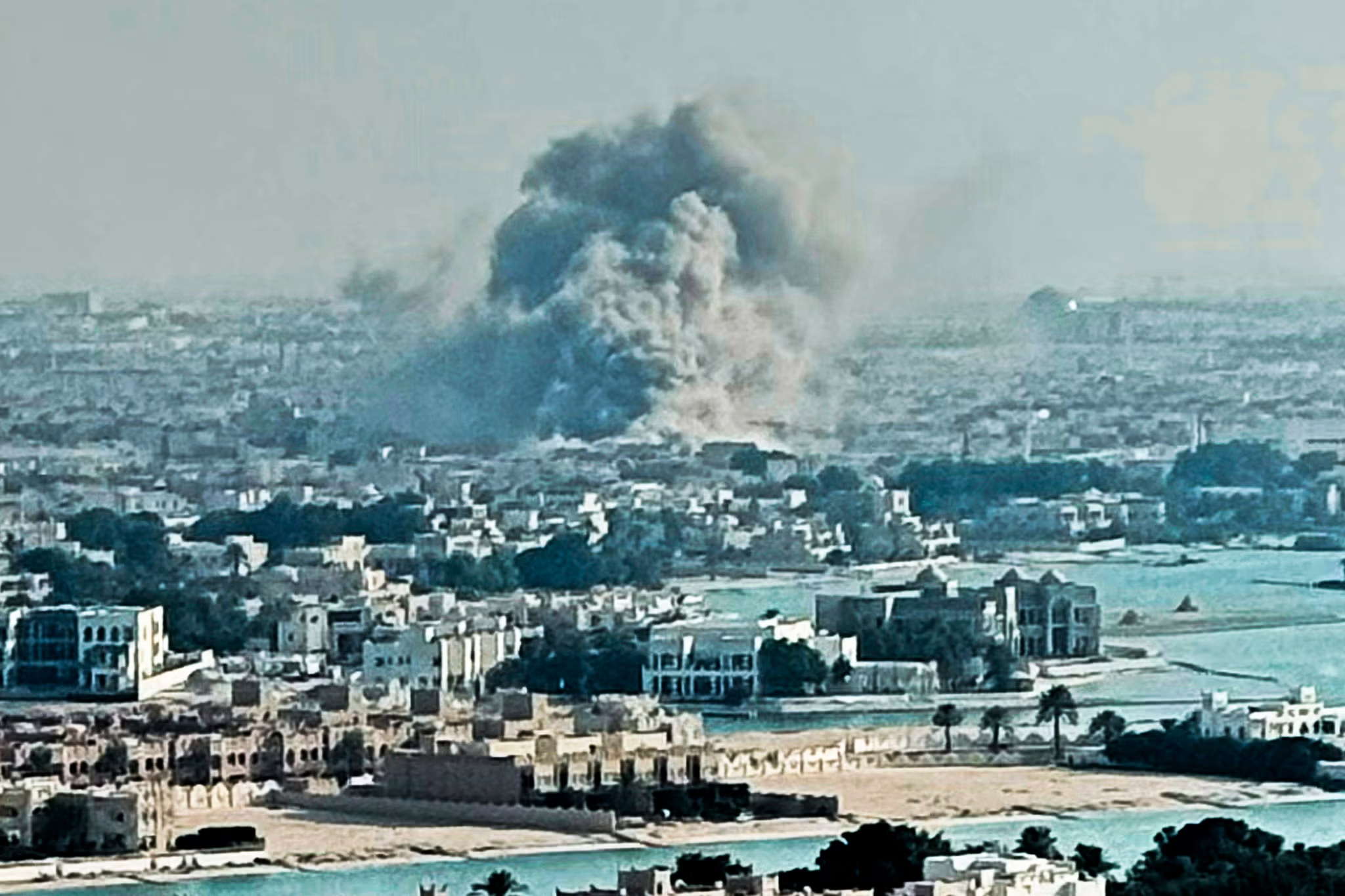
A botched Israeli strike on Hamas in Doha exposes the folly of targeting negotiators and shatters the illusion of relying on US security guarantees in the Middle East.
Every time PM Netanyahu tries to kill Hamas leader Khalid Mish’al, it ends in humiliation for Israel. The first time was back in 1997. Mossad agents entered Jordan posing as Canadian tourists. Two of them waited by the entrance to Khalid’s office in Amman. Their target walked in; one held a device to his left ear that transmitted a fast-acting poison. Khalid’s bodyguards caught the two agents, but six others took refuge in the newly installed Israeli embassy in Amman. Khalid was a Jordanian citizen at the time, and King Hussein was angry. He demanded that Israel turn over the antidote and threatened both to put the Mossad agents on trial and to pull out of the historic peace agreement he had signed only three years earlier in Wadi Araba, recognizing Israel. Former US President Bill Clinton forced Netanyahu to comply. Humiliatingly, Danny Yatom, the head of Mossad, flew to Amman with the antidote. Khalid, who was by then in a coma, survived.
But that was not the end of the affair. King Hussein said he would only let the other six Mossad agents go free if Netanyahu released the leader of Hamas, Sheikh Ahmed Yassin, from prison along with a large number of other Palestinians. The whole affair proved a big blow to Israel. The Sheikh began a victory tour of the region. Khalid’s career in Hamas was launched. He had been, prior to that, relatively junior in the organization, and Hamas itself gained in prestige as a movement that could stand up to a regional bully.
Whether the same scenario plays out today is quite another matter. Netanyahu tried again to kill his arch-nemesis Khalid Mish’al by ordering an air strike on a meeting Hamas was convening in Doha to discuss Donald Trump’s later ceasefire proposal. Only a standard security procedure—moving the venue after the participants had arrived and separating them from their mobile phones—saved Mish’al and the entire Hamas negotiating team from extinction in Doha on Tuesday. The building they were in was very close to the one that Israel’s planes hit, and the timing was right, but they got the wrong building.
As the truth began to emerge, the Israeli reaction turned quickly from jubilation that they had wiped out the leadership of Hamas in the same manner as they had dispatched the leadership of Hezbollah and the Iranian Revolutionary Guards, to recrimination initially. Yair Lapid, leader of the opposition, congratulated the Israeli air force and its forces for delivering another coup. But quickly, he had to delete that post and replace it with a plea to release the hostages. Trump also swerved rapidly from admitting that he had green-lighted the operation to saying he was very unhappy—not about the choice of target but about the city they decided to attack them in. Netanyahu has since dug in, threatening that if Qatar does not expel Hamas, Israel will hit them there again. Both Egypt and Turkey are also on full alert due to constant fear of attack.
It would be a mistake to think Netanyahu had not thought through what he was doing by ordering a strike on Hamas in Doha. He wanted to send a message to Qatar and other Arab states that Israeli war planes are free and capable of roaming the skies and striking anyone and anything they deem to be a target. This was an act of a Jewish supremacist state that is supremacist not just in Palestine but throughout the region as a whole. Netanyahu’s campaign to re-engineer the region has huge implications not just for Israel’s immediate neighbours but for all states, near and far, from the country’s borders, for GCC states and for those who had normalized relations with Israel by signing the Abraham Accords.
In the short term, bombing Hamas meant bombing the negotiators. Had the attack succeeded, this would have become one kept in immortal memory. Israel would have had nothing to tell any of the remaining guards in Gaza to release prisoners. Not only that, but had the air strike succeeded, Operation Summit of Fire on the Israeli callous in Doha would have meant the end of all attempts to get the remaining hostages back alive. Israel was bombing the negotiation process itself. Egyptian mediation has already ended, and it’s hard to see how Qatari mediation can continue. So even now, with the Hamas negotiating team still alive, all negotiations to release the hostages are probably over. The only remaining avenue is for US envoy Steve Wilkov to take over the process and negotiate directly with Hamas itself over Israel’s head. But that would mean Trump having to enforce it, having to force Israel to stop its ground operation in Gaza, which he shows no signs of doing so far.
Besides, if Trump knew of Israel’s Doha operation in advance, what value is there in any future guarantee he could give Hamas that if they release all the hostages, the war would stop and Israel would withdraw? This is the second time that Israel has used an active negotiation process as cover to launch a surprise attack. The first was its June assault on Iran, which began days before Iranian and US negotiators were due to meet in Oman about Iran’s nuclear enrichment program. In this case, the Hamas negotiation committee had convened to discuss a ceasefire proposal written by Trump himself. It should be clear to all that Trump’s guarantees are worthless. It should be equally clear that US security guarantees to Qatar, which hosts the biggest US base in the region, or to any other Gulf State, are worthless too.
So in the longer term, the implications of this failed air strike are much more worrying for Arab heads of state. Let’s be under no illusion. The new generation of Army autocrats who have taken over regimes in Saudi Arabia, UAE, and Bahrain hate Hamas, the Muslim Brotherhood, and Hezbollah even more than Netanyahu does. But they have their own sovereignty and their standing as leaders to think about, and Israel is trampling all over both. That is why nations that in living memory led the siege of Qatar are now going to convene in it and meet to hash out a collective response. Israel’s aggression is forcing them to unite.
Apart from boosting the stock of Hamas in the eyes of the Arab streets, Israel is also reinforcing Hezbollah’s message in Lebanon, where the government is attempting to get the party to disarm. There is also no disguising the fact that Netanyahu is losing credibility at home as he keeps driving to launch a major ground offensive against Gaza City. Hamas is fighting ferociously today as it did on day one, and Israeli civilians and troops are dying in ever-increasing numbers. On Monday, 10 Israelis died in one day alone: six in a shooting attack in Jerusalem and four in a tank in Gaza. Both operations were claimed by Hamas on Tuesday.
Israel fancied it was fated to wipe out the Hamas leadership, but instead could have wiped out all attempts to end the 2-year conflict by negotiation. Hamas, on the other hand, has only gained in reputation. Trump now has a big problem on his hands with Netanyahu. If Israel’s strike does not clearly convey to Trump that following meekly in the footsteps of a rogue state led by religious fundamentalists will damage his standing as a world leader, then nothing will. Trump is a man who feels personal slights keenly and remembers them. This one was delivered by his closest ally.
But this strike is first and foremost a wake-up call to the region as a whole. The US security umbrella, for which they paid so handsomely on Trump’s last visit to the region, is worthless. The Abraham Accords are worthless, too. No peace can be achieved by recognizing Israel; it can only be achieved through a robust regional security alliance to contain Israel, by Israel being forced to feel how small a land it really is, and to pay the price of its diplomatic and economic isolation.
Will Netanyahu’s hegemonic ambitions meet their true end?