




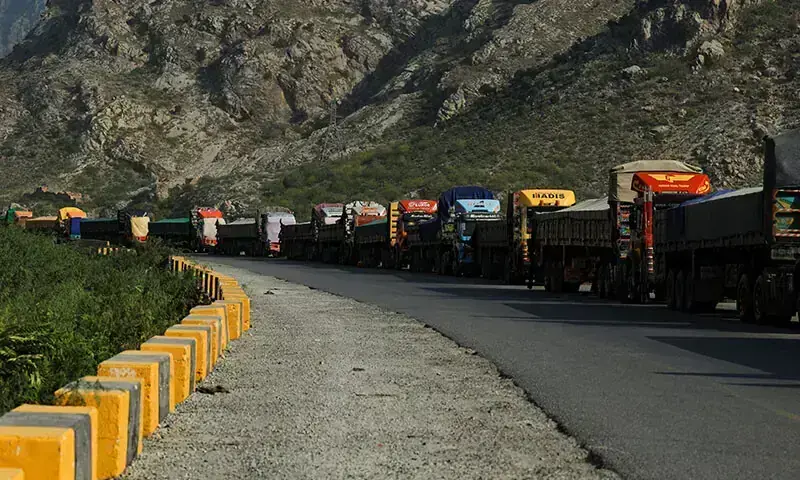
By freezing cross-border trade while managing a refugee influx, Pakistan and Afghanistan have created a perfect storm of economic pressure and humanitarian quandaries. This piece explores how short-term political choices are inflicting long-term damage.
For two neighbours that routinely endorse connectivity, stability, and shared prosperity, Pakistan and Afghanistan have taken a rather unconventional route: freezing the very trade corridors that make those aspirations even remotely attainable.
Both countries share one of the most economically interdependent borders in South and Central Asia. For decades, bilateral trade and Afghan transit trade have supported millions of livelihoods—from farmers and transporters to port workers, exporters, and small traders. Today, that lifeline stands severely constricted at a time when both economies are already under intense strain.
The costs are high and grave. Pakistan’s annual exports to Afghanistan are valued at approximately USD 1.5 billion. A three-month disruption has translated into losses of nearly USD 375 million for Pakistani exporters. Exports routed via Afghanistan to Central Asia, worth around USD 900 million annually, have suffered an additional USD 225 million loss over the same period. Afghanistan, meanwhile, has incurred losses of roughly USD 200 million in exports to Pakistan and USD 75 million in exports to India via Wagah.
Ports and logistics infrastructure have also been directly affected. Afghan transit trade through Karachi typically involves 40,000 to 45,000 containers annually, generating close to USD 160 million each year for Pakistan through transport, insurance, port handling, and allied services. The current closure has already resulted in an estimated USD 40 million loss in just three months. More than 10,000 containers of Afghan transit cargo remain stranded inside Pakistan, exposed to demurrage and detention charges of around USD 120 per container per day. For Afghan importers, this amounts to losses exceeding USD 1.2 million daily—or approximately USD 108 million over the past three months alone.
Aside from these, there are secondary impacts that are no less damaging. Pakistan has lost billions of rupees in customs duties and taxes, while supply chain disruptions have driven up domestic prices for imports from Central Asia, such as cotton and lentils. Afghanistan, in turn, has suffered significant revenue losses from import duties due to stalled transit cargo. These pressures feed directly into inflation, market instability, and public discontent.
This economic paralysis is unfolding alongside another major development: the large-scale repatriation of Afghan nationals from Pakistan. Nearly one million individuals, including documented and undocumented persons, have returned to Afghanistan in recent months. This movement is taking place while cross-border trade routes remain constrained. The simultaneous restriction of trade and an escalating refugee crisis is intensifying economic distress on both sides of the border, stretching already fragile local economies and undermining Afghanistan’s absorptive capacity at a critical moment.
What makes the current situation particularly striking is that the business communities of both countries remain largely aligned. Traders, exporters, and farmers in Pakistan and Afghanistan have consistently called for expanded trade, improved connectivity, and predictable transit arrangements. They are not the architects of this deadlock, yet they end up as primary victims. Treating trade as a political instrument erodes its capacity to deliver shared prosperity and long-term stability.
Recent measures by Pakistan, including the limited provision allowing the re-export of stranded Afghan cargo, offer only partial and largely cosmetic relief. Under this arrangement, containers that have already accumulated detention, demurrage, and parking charges must now be documented again for re-export to any other seaport per the exporter’s demand. This process is slow, bureaucratic, and expensive, and the charges continue to mount throughout. Once re-exported, the consignments would still have to move onward to other proximate ports, such as Bandar Abbas, and then into Afghanistan, which multiplies costs and eliminates any possibility of recovering losses. For Afghan traders, this becomes a major financial blow with no path to break even. In practical terms, it deepens resentment, weakens business confidence, and generates further ill will toward Pakistan at a time when trust is already fragile.
The demand from stakeholders across the border is straightforward. Reviewing rigid policy positions, reopening transit corridors, and insulating trade from political fluctuations would serve the economic interests of both states. More importantly, it would protect millions of ordinary people whose livelihoods depend on the uninterrupted flow of goods.
It is important to note that trade and economic prosperity are part of the solution, not the problem. The current impasse benefits neither Pakistan nor Afghanistan. What it does achieve is the quiet decay of livelihoods, goodwill, and regional economic potential—a price that neither country can afford to keep paying. Lastly, what does this moment reveal about prevailing mindsets? Are knee-jerk, reactive approaches serving anyone? Introspection and a recognition of the region’s greater interests are what both sides need most. It is time to rise above egos.