




Don’t Give Up Rational Engagement
In this piece, CRSS Executive Director Imtiaz Gul argues that Pakistan and Afghanistan’s ongoing mistrust and tit-for-tat posturing come at the expense of ordinary citizens, traders, and refugees. A lasting solution will demand moving past blame and coercion toward pragmatic, accountable dialogue.
The battle lines are drawn. Pakistan has removed any distinction between Tehreek-e-Taliban Pakistan (TTP) and Tehreek-e-Taliban Afghanistan (TTA), and portrays them as two sides of the same coin – both working in the service of arch-rival India.
The stand-off has brought Afghans together like never before, both at home and abroad. The Afghan diaspora is celebrating the collapse of the third round of the talks in Istanbul, setting aside their long-standing criticism of the Taliban regime for excluding women from work and education. Once ardent haters of the Taliban, they are celebrating the TTA’s “defiance” vis-à-vis Pakistan.
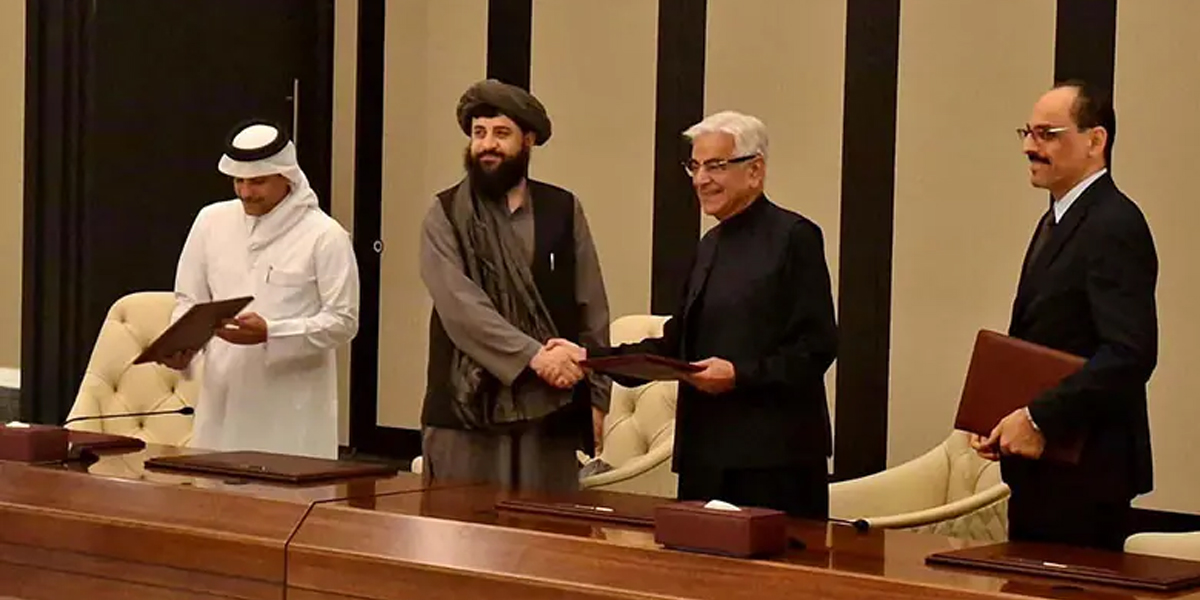
Friends in Afghanistan believe the talks were doomed to fail because of the structure: when two intelligence chiefs sit across the table, the best they can do is try to checkmate each other rather than engage in an out-of-the-box conversation.
Let us dissect this conundrum from four angles.
Firstly, many Pakistani friends familiar with the Afghan issue and its accompanying intricacies had foretold the outcome; the fate of talks is largely predictable when spymasters discuss political relationships, trade, and business.
Propagandist accusations, threats, and planted “leaks” from the talks appearing on official as well as dubious platforms further vitiated an already toxic air.
Secondly, one wondered why even dozens of hours of parleys failed in producing a mutually favourable result, particularly if the entire process centres on the TTP and its shelters in Afghanistan.
Pakistan demanded an end to terrorism in Pakistan via the TTP’s sanctuaries in Afghanistan.
“In the aftermath of Pakistan’s ‘Operation Zarb-i-Azb’ in 2015, terrorists belonging to the so-called TTP/FaK fled to Afghanistan,” a loaded Ministry of Foreign Affairs statement said in an apparent response to Taliban Foreign Minister Amir Khan Muttaqi. “They abetted the Afghan Taliban in their fight against the ISAF (International Security Assistance Force) and the Afghan Government of the time. These terrorists and their families are now being harboured by the Taliban regime as a payback for their allegiance to the Afghan Taliban.”
“Instead of finding solutions to address Pakistan’s core concern, the Afghan regime used the opportunity to malign Pakistan through hypothetical accusations and jingoistic rhetoric,” the statement added.
Afghan leaders and negotiators had initially denied the presence of TTP in Afghanistan, but later came up with different, at times incomprehensible, justifications to defend their inaction against TTP. They, on the contrary, accused the Pakistani delegation of a “duplicitous” attitude, glossing over its earlier denials on the presence of TTP leaders in Afghanistan.
Muttaqi presented this to his ministry staff in a televised speech on November 9, as if Islamabad wanted Kabul to ensure its internal security. How can we ensure this? He asked in a rather ballistic manner, positing several other controversial questions.
The projection of the three rounds of talks by Afghans is a cocktail of accusations, threats, and misplaced comparisons.
Afghan officials, according to the Afghan Eye, complained that Pakistan was ‘weaponising’ refugee expulsions and border trade crossings to “destabilise Afghanistan and facilitate the infiltration of Islamic State Khorasan Province (ISKP) operatives.” Zabihullah Mujaid, the Emirate spokesperson, went to the extent of saying that the TTP issue had existed in Pakistan since 2002, and hence it is their responsibility.
It amounted to tit for tat – creating an equivalence between the Pakistani demands on TTP and the Afghan complaints about Islamic State (havens in Pakistan).
Both sides essentially refused to budge from their stated positions – which means irreconcilable posturing.
Thirdly, should we assume that the TTP is now for the Afghan Taliban what the IMU, AQ, and ETIM were once to the TTP and the Hafiz Gul Bahadur? This may imply that even if the TTA wants to jettison TTP, ground realities – ideological partnership and tribal affinity – prevent it from doing so.
Fighters of most of these organisations had safe havens in North and South Waziristan. Many of them would beef up the TTP termination, suicide squads for activities inside Pakistan.
Many of the neutralised terrorists, for example, during the attacks at Karachi and Peshawar airports, turned out to be Uzbeks and Chechens.
The reason, in their battle for survival in a fast-shrinking space post Zarbe Azb operation (launched in June 2014), the groups had no choice but to assign their fighters to TTP’s suicide missions.
Fourth, Pakistani-Afghan acrimony has presented a Golden opportunity for India to reclaim the geopolitical space it had captured during the Republic years and lost once TTA returned to power. It’s no surprise that New Delhi is joyfully celebrating the “reunion” with the current rulers of Kabul. The bilateral trade has rebounded to the pre-2021 level, and they call it a reversal in view of “Pakistan’s waning leverage and India’s quiet re-emergence as a key economic and diplomatic player.”
The Istanbul process, it seems, once again exposed the deep mistrust and failed to overcome the entrenched socio-cultural complexities that separate the two neighbours. As borders remain closed, once again, common Afghans, refugees, traders, farmers, and labourers involved in trade and farming are the direct victims of this hold-up.
Ironically, China, Iran, and Uzbekistan are equally concerned about the Afghan safe havens of ETIM (TIP), IMU, and ISKP. Iran, in particular, has sent back several million Afghans, but the Afghans in general often point their fingers only at Pakistan, as if this is the only country being unfair to Afghanistan and its people.
Unless both sides move beyond coercive diplomacy, stop the blame game, and embrace a framework anchored in realism and accountability, conditions will only worsen.
Pakistani officials, on their part, believe the Emirate leadership is leveraging its relations with India. The Emirate leaders need to dispel that to deter detractors from fueling the tensions.
Islamabad also wants the Afghan Taliban to come clean on basic questions: are TTP’s actions against Pakistan legitimate? And do these attacks inside Pakistan fall in the category of Jihad? The answer to these questions would certainly help in understanding the Taliban regime’s counter-terrorism policy and its position vis-à-vis Pakistan.
Pakistani leaders also need to dissipate the meanwhile deep-running perception among the ruling Taliban that Islamabad is now pushing for regime change in Kabul. What fuels this suspicion? Several weeks ago, Pakistan abandoned the term “interim government and instead began calling it the “Taliban regime.” Even the November 9 statement by the Ministry of Foreign Affairs refers to “Afghan regime,” which Afghans and observers in general interpret as Islamabad’s “change of heart.”
The reality may be somewhere in the middle, but clearly, brinkmanship and intimidation are no recipe for de-escalation nor a permanent solution. Kool step back and reflection needed instead of allowing rumour mills and fake news factories to sow more seeds of hatred.