




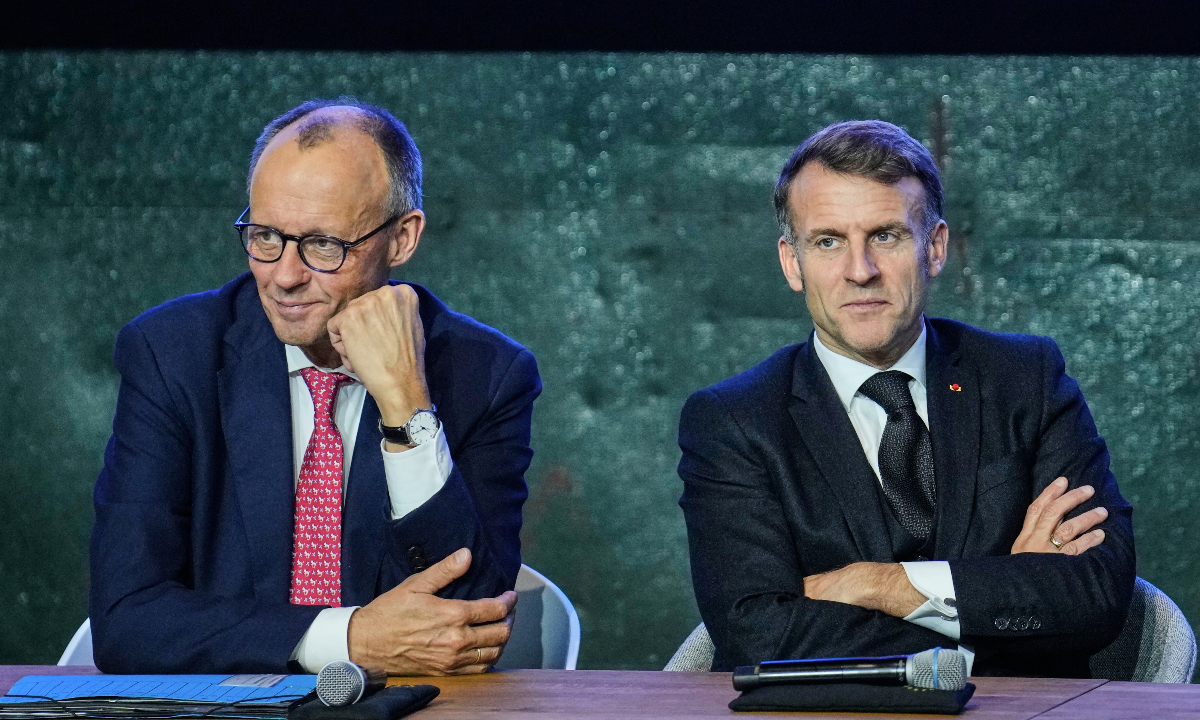
Two European leaders visited China and saw the same reality yet drew entirely different lessons from it.
German Chancellor Friedrich Merz recently visited China for the first time. The trip reflects a focused attempt to rebalance an increasingly uneven economic relationship between China and Pakistan. During the visit, both sides pledged to cooperate with one another.
After returning from China, Merz appeared deeply impressed by the country’s development. Addressing fellow Germans, he urged them to work harder if Germany hopes to remain competitive in an increasingly demanding global environment.
Two European Readings of China
Merz’s reaction stood in sharp contrast to that of French President Emmanuel Macron, who called for tariffs and protectionist measures against China after his own visit. In essence, both European leaders witnessed the same reality but drew diametrically different conclusions.
Merz’s takeaway was that “the problem is us,” suggesting that Europe must strengthen its own competitiveness. Macron, by contrast, concluded that “the problem is them,” overlooking the fact that China’s progress reflects years of sustained effort and strategic planning.
Germany’s China Policy
The visit also reflects the broader China policy of the current German government, which has remained relatively consistent. Berlin seeks a fairer market environment for German firms, while also encouraging Chinese investment where it aligns with German interests. At the same time, it continues to cautiously pursue a strategic partnership that acknowledges China’s global weight and the responsibilities that accompany it.
Germany has also emphasized that economic engagement cannot be separated from geopolitics. During the visit, Berlin pressed Beijing to assume a more constructive role in Russia’s war against Ukraine.
Berlin has been reassessing its long-standing assumptions about China’s industrial strength, economic pressures, and the growing geopolitical competition surrounding it. As Europe’s largest economy, Germany has played a central role in shaping the European Union’s de-risking strategy toward China.
At the same time, Berlin has advocated strategic pragmatism over open confrontation. German policymakers continue to speak of the need for a “reliable and fair partnership,” even as doubts about its long-term viability continue to grow.
China’s Approach to Germany
China, for its part, recognizes Germany’s importance within Europe and has adopted a dual-track approach. On one hand, Beijing engages Germany through selective market access and targeted areas of cooperation. On the other hand, it resists initiatives from Brussels when they are perceived as undermining Chinese interests.
A major concern for Berlin remains the growing trade imbalance between the two countries. Germany’s trade deficit with China reached €90 billion in 2025. At the same time, German business leaders increasingly blame what they see as unfair competition from Chinese firms for mounting pressure on the country’s manufacturing sector.
The strain is visible in the labor market as well, with roughly 10,000 manufacturing jobs being lost each month.
The contrasting reactions of Merz and Macron capture the dilemma facing Europe today. China’s rise is no longer a distant prospect but an established reality. The real question is whether European leaders respond by strengthening their own economies or by trying to shield them from competition.