




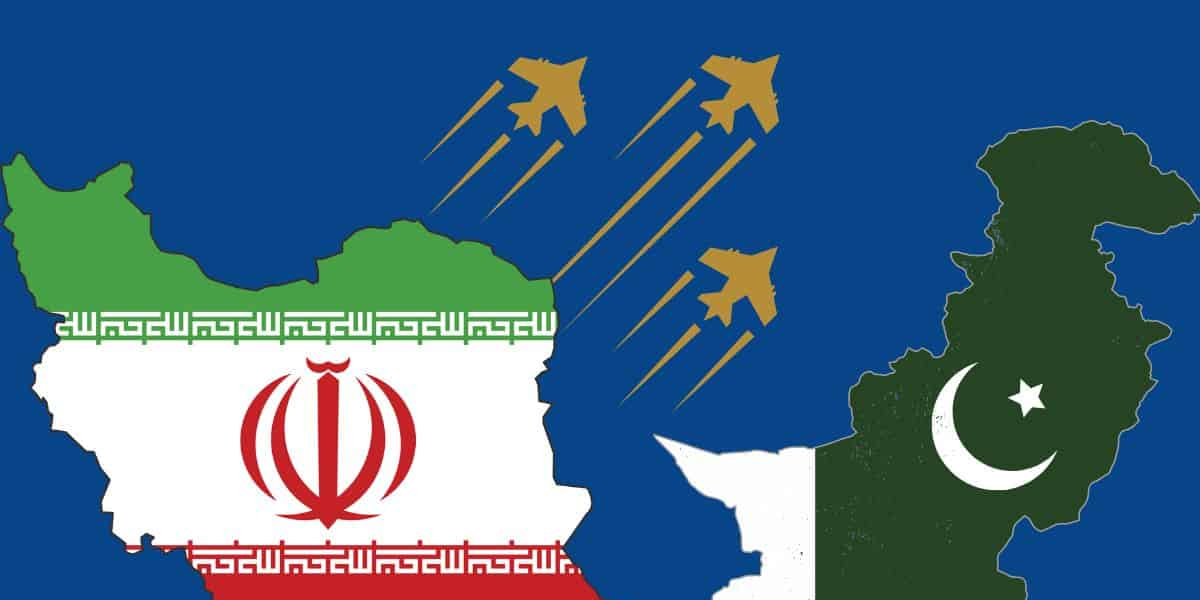
Iran’s response to Israeli aggression has redrawn the contours of modern conflict in the region, where missiles are only part of the story. For Pakistan, the real threat may lie in the invisible war already underway.
The recent ceasefire between Iran and Israel marked the end of a brief but consequential confrontation, one that unfolded not just on the battlefield but across cyber domains, diplomatic arenas, and intelligence networks. While the immediate hostilities may have ceased, the shockwaves they triggered are only beginning to reach countries like Pakistan, which must now confront a rapidly evolving security landscape.
This was not merely another Middle Eastern skirmish. It was a direct challenge to the established regional order, exposing not only the vulnerabilities of traditional military alliances but also the silent war unfolding beneath the surface, involving drones, data, and deeply embedded espionage networks.
A Heavy Toll and Unshaken Resolve
Iran is currently engaged in a comprehensive post-conflict assessment. The country suffered grave losses, both in human terms and in critical infrastructure, particularly its drone and defense production capabilities. Over 600 people were killed, including senior military commanders, nuclear scientists, intelligence operatives, and civilians.
Despite these staggering losses and the overwhelming pressure from the United States and Israel, Iran did not buckle. Instead, it responded forcefully. The Israeli perception of security was punctured by a massive Iranian missile barrage, which reportedly bypassed Israel’s defense systems and led to an American-mediated ceasefire after 12 days of intense confrontation.
The Illusion of Invincibility Shattered
Though figures like Donald Trump have claimed that Iran’s Natanz nuclear facility was decimated, credible observers argue there is no concrete evidence of such irreversible damage. More importantly, the myth of Israeli military invincibility, carefully constructed and reinforced over decades, has now been dealt a serious blow.
The war exposed Israel’s vulnerability despite its access to cutting-edge American military hardware, including F-35 fighter jets and advanced missile defense systems. Israel, accustomed to confronting relatively weaker foes such as Hamas or Hezbollah, found itself unexpectedly shaken when facing Iran’s direct retaliation.
The Strategic Map Around Iran
A glance at the regional map reveals that Iran is surrounded by U.S. military bases, stationed in Iraq, Saudi Arabia, Bahrain, Qatar, UAE, and Syria, with over 42,000 American troops encircling it. Israel and the U.S. perhaps assumed this network provided a strategic shield. Yet, Iranian missiles managed to penetrate this regional defense web, further undermining the perceived dominance of U.S.-Israeli military cooperation.
Diplomacy and Defiance
Iran’s conduct in the crisis showcased extraordinary diplomatic and military resilience, arguably unmatched in the region in the last five decades. Unlike previous instances in the Middle East where conflicts often resulted in regime change, Iran’s government remained firmly intact despite repeated Western calls for overthrow.
The Islamic Republic emerged with its political structure undisturbed and its stature elevated across the Muslim world. From the Arab heartlands to South Asia, Iran is now viewed by many as a symbol of resistance, challenging the dominant Western narrative that often casts it as a pariah.
The Hidden War: Spies, Software, and Cyber Espionage
One of the most alarming revelations during this conflict was the deep penetration of Iran’s security infrastructure by Mossad, Israel’s intelligence agency. Underground workshops for drone and missile production, reportedly run with foreign support, were exposed and targeted.
Between June 13 and 15, Iranian authorities uncovered and shut down several such operations. On June 25, three alleged spies were executed. Earlier, on June 16, 28 others were arrested, some reportedly Indian nationals, though these claims remain unverified independently.
According to intelligence sources, nearly 700 individuals involved in unauthorized arms and drone manufacturing were arrested. The scope and depth of this espionage operation point to a serious vulnerability in Iran’s internal security systems.
India’s Shadow in the Espionage Network
Of particular concern is the reported involvement of Indian nationals. During the conflict, there were an estimated 5,000 to 10,000 Indians working in Iran, primarily in the IT sector. Several were investigated for potential links to cyber surveillance networks. Allegations suggest that:
- Indian programmers were communicating with India using Starlink satellite connections
- Many Iranian digital systems had Israeli back-end frameworks
- Sensitive data was being leaked directly to Israeli servers
Such findings have triggered alarm within Iranian intelligence circles and could strain diplomatic ties with India. In fact, Iran’s Embassy in New Delhi issued a carefully worded statement on June 25, thanking “freedom-loving Indians and political parties” while pointedly avoiding any mention of the Indian government, a subtle but unmistakable diplomatic rebuke.
Lessons for Pakistan
The implications of these developments go beyond Iran. For Pakistan, the Iranian experience offers a critical warning. The region is now a battleground for hybrid warfare, involving:
- Cyber surveillance
- Drone strikes
- Espionage via commercial and software networks
- Proxy warfare
- Diplomatic pressure through international forums like FATF and the United Nations
With over 9 million Indians working across the Gulf region, including 4.3 million in the UAE, many involved in key software and infrastructure roles, the threat is not hypothetical. Pakistan must assess whether similar infiltration could occur within its own borders or in countries critical to its security interests.
Conclusion: Prepared or Unaware?
Iran paid a substantial cost of the war. Still, it also withstood military pressure and revealed the extent to which espionage and cyber infiltration now define the security challenges of the region. For Pakistan, the implications are instructive. Resilience in this new era will depend less on conventional deterrence and more on securing digital architecture, regulating critical sectors, and building institutional mechanisms capable of detecting subtle, often deniable threats. The instruments of influence—once overt—now operate through infrastructure contracts, softwares, and informal networks. Pakistan still has room to respond, but doing so will require a shift in posture from reactive defense to anticipatory governance.