




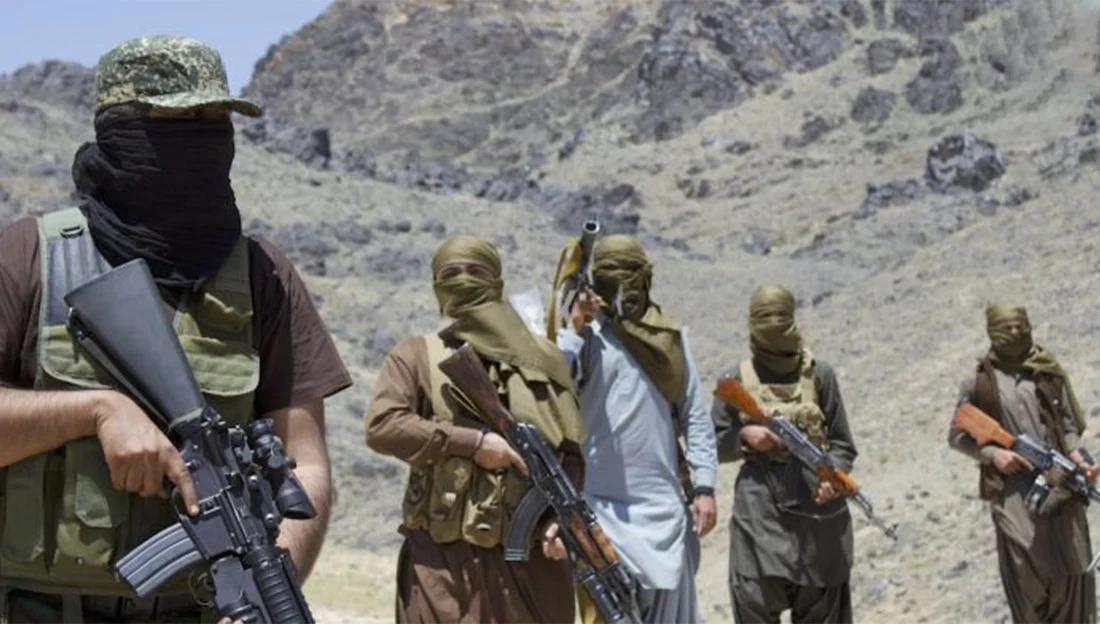
When a woman walks into a heavily guarded military compound with explosives strapped to her body, it forces a rethink of everything we assume about insurgency, vulnerability, and power.
The identification of Zareena Rafiq, also referred to as Tarang Maho, as the attacker in Nokkundi signals a deliberate move by the Baloch Liberation Front (BLF) to use female operatives as both tactical and symbolic instruments. While women-led suicide attacks remain extremely rare in Baloch militancy, each instance carries outsized significance, challenging conventional assumptions about who participates in armed insurgency and how. This situates the BLF within a broader trend in Baloch insurgent groups to deploy women in high-profile operations, where visibility, shock value, and the messaging potential of gender intersect with operational objectives.
In April 2022, the Baloch Liberation Army (BLA) deployed what is widely acknowledged as the first confirmed female suicide bomber in the Baloch insurgency: Shari Baloch. She detonated herself outside the Confucius Institute at the University of Karachi, killing several Chinese instructors and a Pakistani driver. At 30, she was a school teacher from Turbat, a mother of two, studying for an MPhil after earning an MSc in Zoology. Her profile shattered prevailing security assumptions: a middle-class, educated woman from a non-militant family background willing to self-sacrifice.
Then came Sumaiya Qalandrani Baloch, who carried out a suicide attack in June 2023 targeting a military convoy in Turbat. She was engaged to Rehan Baloch, the son of BLA founder General Aslam Baloch, and had previously worked in the group’s media wing, illustrating how militant networks merge ideological indoctrination, recruitment, and operational deployment within long-standing personal networks. Mahal Baloch reportedly carried out a car-bomb attack at the gate of an FC (Frontier Corps) camp in Bela, Balochistan, in August 2024, while earlier this year, on March 3, 2025, Mahikan Baloch carried out a suicide attack targeting a paramilitary convoy in Kalat, Balochistan. Both were linked to the BLA.
Zareena Rafiq, the alleged bomber in the December 2025 Nokkundi attack, is now counted as the fifth female suicide bomber in Baloch militancy and reportedly the first female operative for the BLF, deployed through its newly formed SOB (Sado Operational Battalion) sub-unit tasked with high-profile, symbolic attacks. The emergence of these female attackers from nationalist or educated backgrounds shows how long-term disenchantment—not just economic deprivation but political alienation, marginalisation, or perceived injustice—is being re-routed into militancy through gendered agency. BLF’s claim of Zareena Rafiq as a bomber is not necessarily a radical break, but a tactical alignment. If the BLA’s earlier operations demonstrated the utility of female bombers, the BLF adopting the pattern might indicate competition for relevance or an attempt to assert operational parity. It also suggests that insurgency dynamics in Balochistan are increasingly networked and shared, not strictly compartmentalised.
The use of female suicide bombers, though still rare, reflects insurgent adaptation to state pressure, recruitment stress, and changing demographics. From a gendered perspective, these attacks complicate conventional narratives of women in conflict: they are neither passive victims nor liberated agents in a straightforward sense; instead, their presence becomes an apparatus through which political and operational messages are conveyed. Deploying women in high-visibility strikes exposes both the insurgency’s awareness of state biases and the symbolic power of gender in conflict, where a female attacker carries meaning beyond immediate tactical outcomes. The phenomenon highlights how insurgencies can instrumentalise gender to reshape perceptions of power and sacrifice.
The rise of female suicide bombers disrupts conventional security logic. Intelligence, profiling, and counter-terror efforts in Balochistan will have to adapt. The old templates looked for male militants, tribal strongholds, or male-dominated networks. The new template may include educated women from towns, who may pass unnoticed until the moment of deployment.
Lastly, Zareena Rafiq and others like her are not isolated anomalies; their participation in such acts points to a deeper, unresolved issue. The “elephant in the room” remains the longstanding disenchantment among the Baloch population. Militarised approaches to Balochistan, rather than addressing grievances, risk fueling further alienation and perpetuating cycles of violence. Without meaningful political engagement and socioeconomic inclusion, these high-profile attacks will remain symptoms of a broader structural problem. While the proxy nature of militant groups cannot be ignored, the internal fault lines—the cornering of Balochistan, the erosion of social cohesion, and the neglect of local grievances—must be addressed as a priority.
As per the Population Council’s latest report, 17 of the 20 most deprived districts are in Balochistan, plagued by severe shortages of basic services, extreme poverty, and failing infrastructure. We must ask ourselves why Balochistan is repeatedly drawn into regional and geopolitical rivalries, what motivates insurgent groups to seek external support, and what inspires the new generation of Baloch to take up arms. Yes, many are influenced or brainwashed by militant networks, but are we doing enough to prevent it? Creating opportunities—through education, economic agency, and compassion—remains the most effective way to provide alternatives to violence and address the root causes of unrest.