




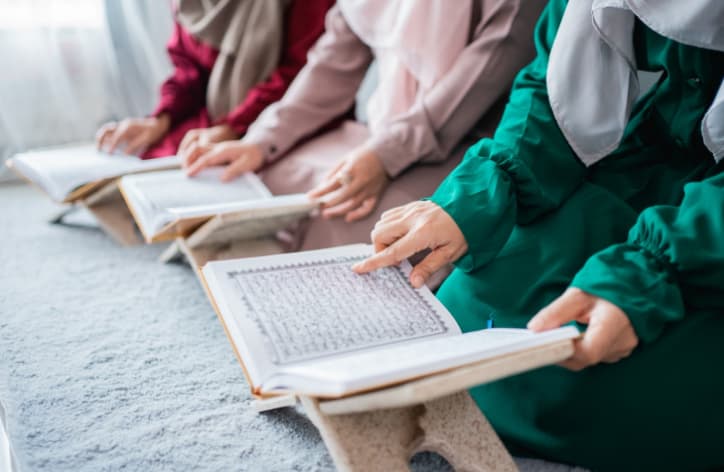
True empowerment of women in Islam lies in striking a balance between faith, knowledge, and active participation in society.
Throughout history, women in many societies have faced severe restrictions that undermined their dignity and denied them basic rights. In pre-Islamic Arabia, these injustices were especially grave: girls were sometimes buried alive, women were deprived of property and inheritance, and their participation in public life was minimal. It was in this environment that Islam emerged, introducing reforms that transformed the role of women in society.
The Qur’an affirms the equal dignity of all human beings: “And We have certainly honored the children of Adam…” (Al-Isra 17:70). It also makes clear that faith and righteous deeds are valued equally for men and women: “Indeed, the Muslim men and Muslim women, the believing men and believing women… for them Allah has prepared forgiveness and a great reward” (Al-Ahzab 33:35). The Prophet Muhammad (peace be upon him) reinforced this principle, stating: “Women are the twin halves of men” (Sunan Abu Dawood, Book 11, Hadith 2142).
From its earliest days, Islam affirmed women’s right to life, dignity, and participation in society. Education was established as a universal duty: “Seeking knowledge is an obligation upon every Muslim” (Ibn Majah, Hadith 224), a command that applies equally to women and men. Historical records show that many women in the Prophet’s time were active learners and teachers of religious knowledge.
Islam also guaranteed women the right to own, manage, and inherit property independently. The Qur’an states: “For men is a share of what they earn, and for women is a share of what they earn” (An-Nisa 4:32). Khadijah (RA), the Prophet’s first wife, was a successful businesswoman whose wealth and leadership greatly supported the early Islamic mission.
The Qur’an further acknowledges women in leadership roles. The story of the Queen of Sheba (An-Naml 27:32) illustrates a woman governing wisely and consulting with her people. Several women among the Prophet’s companions, such as Shifa bint Abdullah and Umm Sulaym, contributed to their communities through education, healthcare, and public service.
These teachings and examples underscore that women’s active participation in education, the economy, and social life is vital to building a just and flourishing society. Educated women not only achieve personal growth but also serve as the first educators of future generations, shaping stable and prosperous communities.
Unfortunately, in some modern contexts, cultural and political barriers have overshadowed these Islamic principles, restricting women’s opportunities in ways that contradict the Qur’an and Sunnah. The Islamic vision instead calls for a balanced approach, where spiritual values are harmonized with education, economic empowerment, and social engagement.
Practical steps to advance women’s rights within the Shariah framework include:
- Expanding access to quality education through both formal institutions and digital platforms.
- Supporting women’s economic independence via entrepreneurship, handicrafts, and home-based industries.
- Establishing women-only facilities in healthcare and education to ensure cultural comfort and broader participation.
- Encouraging women’s involvement in community leadership, healthcare, and social services.
By drawing upon the legacy of early Islam and incorporating contemporary best practices, Muslim societies can create environments where men and women work together—upholding dignity, equal opportunity, and moral integrity. This approach is not only a return to Islamic authenticity but also a forward-looking step toward an enlightened and resilient ummah.