




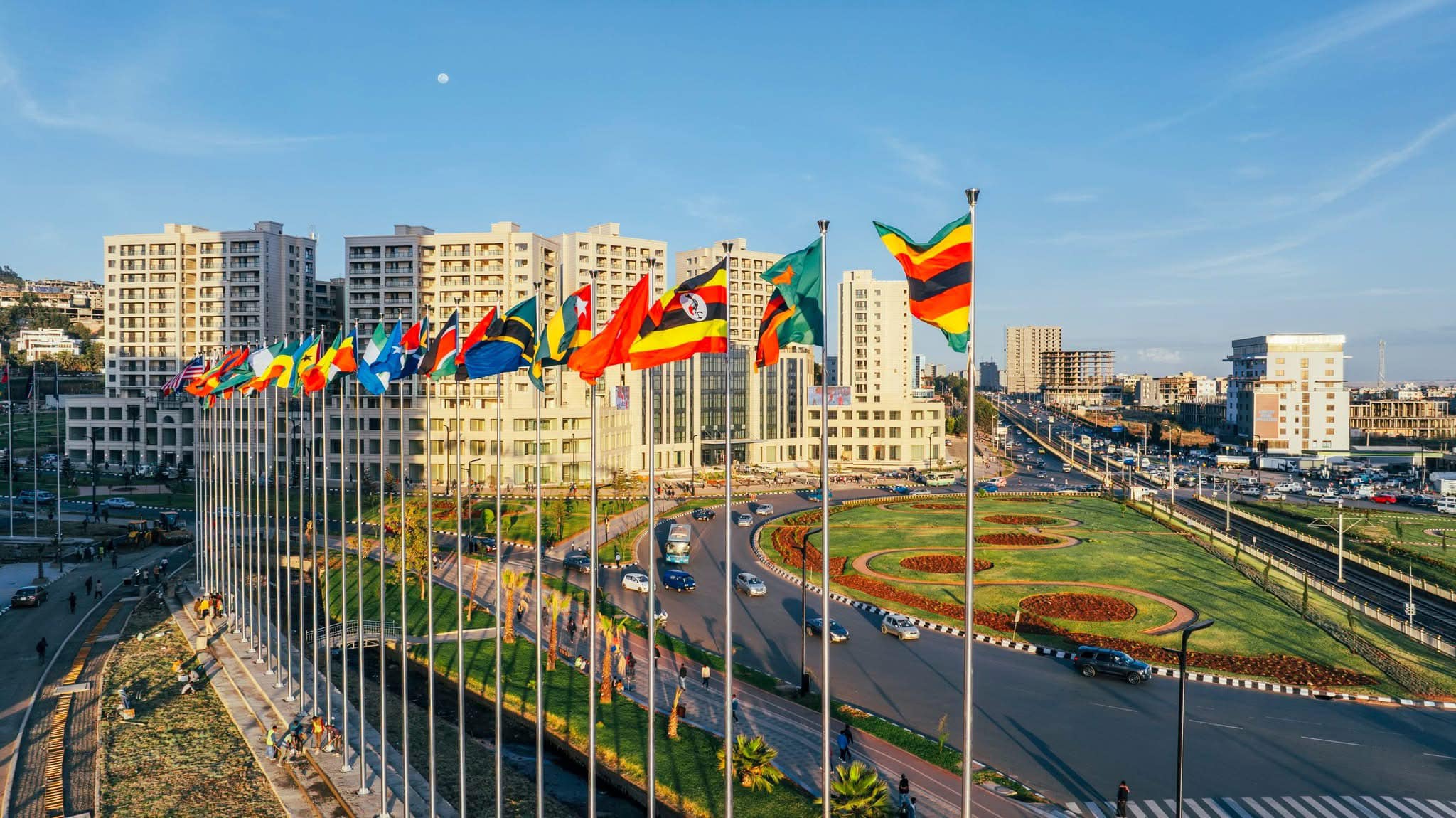
Ethiopia soared with vision and discipline; Pakistan stumbled under greed and misgovernance—proof that leadership, not resources, shapes a nation’s destiny.
For decades, since the 1980s, Ethiopia has been synonymous with famines, drought, poverty, civil unrest, and bad governance in the international discourse. In contrast, since the early 1980s, Pakistan has remained part of the global discourse as a country with a strategic location, tactical anti-Soviet and counter-terror alliances with the US-led West, inimical relations with its eastern neighbour, India, and a thriving security establishment, albeit with continuously declining socio-economic indicators.
But both countries, sadly for Pakistan, have evolved differently; Ethiopia has transformed itself into a continental powerhouse. Its GDP growth clocked in above 8% in 2025, one of the highest in Africa. Today, Ethiopia stands out for stellar performance in agriculture, industry, and services, and infrastructure investments, including a monumental Grand Ethiopian Renaissance Dam (GERD).
Prime Minister Abiy’s reformist “Homegrown Economic Reform Agenda” represents a remarkable story of vision and commitment to enforcement that broke the bureaucratic shackles and put the country on the path of amazing progress. It is also evident from the fact that Ethiopian Airlines distinguishes itself with a fleet of nearly 150 aircraft.
Pakistan – on the other hand – offers a dismal picture of visionless misgovernance that even the China-Pakistan Economic Corridor (CPEC) failed to turn around—not because of China’s generosity, but thanks to a predatory ruling elite of Pakistan—surrounded by self-serving bureaucrats, technocrats, and favour-seeking friends and families.
CPEC had offered a once-in-a-century opportunity to reshape Pakistan’s industrial, energy, and water destiny. But the populist elites apparently squandered that chance. The power sector, in fact, epitomises the endless greed and the populist mindset that has entrapped the country in a deadly circular debt.
Two projects exemplify short-sighted vision and lopsided planning: the 720MW Karot Hydropower and the 884MW Suki Kinari Project. Neither of them provides water storage or irrigation—they are mere power generators, incapable of addressing Pakistan’s worsening droughts, floods, or agricultural crises.
Contrast this with Ethiopia’s achievements. The Gilgel Gibe III Dam, built at an extremely economical cost of $0.96 million per megawatt, which is half that of similar projects in Pakistan, not only generates power but also stores and supplies water for agriculture and helps in drought management. It was followed by the Grand Ethiopian Renaissance Dam (GERD)—completed at $0.97 million per megawatt, setting a world record with 60 million acre-feet of water storage. Where Pakistan turned loans into liabilities, Ethiopia turned them into legacies.
Had Pakistan’s planners possessed an ounce of Ethiopia’s wisdom, they would have launched a 4,800MW multipurpose Bhasha Dam with 8 million acre-feet of storage as far back as 2007. With its completion by 2021, that project would have delivered both power and water for irrigation. Instead, Pakistan now imports fuel to run coal and LNG plants—projects chosen not for national benefit, but for private profit. The result is catastrophic: mounting debt, power shortages, foreign dependency, and a bankrupt economy.
Beijing fulfilled every promise it made under CPEC. The rot actually lay within Pakistan’s corridors of power—in a political elite whose personal interests take precedence over national interests, a bureaucracy led by the Pakistan Administrative Service (PAS) that guards privilege instead of serving the people, and where the Planning Commission became a graveyard even for well-thought-through plans. If viewed against the dismal outcomes from the $25 billion CPEC investments, this nexus of politicians and bureaucrats literally sacrificed national interest for personal convenience, preferred populism over considered strategy, and disregarded elaborate planning for tactical and financial convenience. Isn’t it deliberate betrayal?
Ethiopia, under Prime Minister Abiy Ahmed—awarded the Nobel Peace Prize in 2019 for ending his country’s long-standing conflict with Eritrea—continues to gallop ahead at an astonishing pace. Nobody talks of PM Abiy having built palaces in London, Paris, or stashed assets in Dubai and elsewhere. He has built dams, roads, and schools in Ethiopia—all on the back of homegrown development plans—building wealth inside the country, not laundering it abroad.
Pakistan’s elite, on the contrary, continues its addiction to luxury and deceit. Its rulers own mansions across the USA, UK, Canada, and Europe, while its people live in darkness. Every decade, new governments promise reform, but the same bureaucratic mafia sabotages progress. The so-called “Aristotles” of the Planning Commission and the elite PAS cadre operate like a colonial relic—arrogant, detached, and corrupt to the core.
Abiy Ahmed’s government proves that leadership matters more than wealth. Ethiopia rose from famine to fortune because its leaders chose to serve rather than steal. Pakistan, with far greater resources, fell from promise to poverty because its leaders chose power over principle. Today, Ethiopia is exporting electricity and attracting investment, while Pakistan is begging for bailouts from the IMF, its foreign reserves dwindling, and its youth migrating in despair.
Ethiopia’s success is not luck; it is discipline, integrity, and courage—a lesson to the world that nations rise not by wealth, but by wisdom. Pakistan’s sad trajectory, on the other hand, testifies that despite strategic location and mountains of natural wealth, predatory leadership, and extractive instincts combined with incompetence, can take the country only down a disastrous path.
There comes a time when nations must act. Clearly, the Ethiopian leadership heeded the call and rose to build peace, power, and prosperity. Pakistan kept relying on geo-politically triggered hand-outs, and its leadership remained hooked to the “dividends of geo-strategic location.”
Consequently, Ethiopia today shines as Africa’s rising star. Pakistan, despite its much-touted potential, struggles for survival and economic relevance. Ethiopian leaders’ wisdom and sincerity became their power; Pakistani leaders’ insatiable greed and propensity for expedience became their curse, subjecting the majority of 250 million Pakistanis to an incessant crisis of misgovernance and lawlessness.
The day Pakistan sends its bureaucrats to learn from Addis Ababa instead of Washington or London may mark the beginning of the path to redemption. Perhaps!