




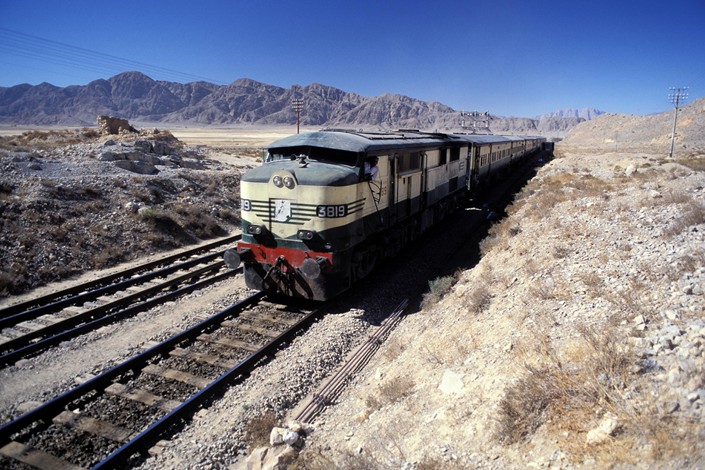
As China moves ahead with its plan to electrify Iran’s railway to Turkey, a new corridor is emerging that could reshape regional trade routes and challenge existing economic alignments. Once completed, the electrified railway will allow China to transport large volumes of goods directly to Europe via Iran and Turkey. For Pakistan, this development presents both a strategic opportunity and a looming challenge.
With road corridors already constructed under the China-Pakistan Economic Corridor (CPEC) from northern routes passing through Abbottabad to ongoing motorway developments in western Balochistan, Pakistan has built the infrastructure for regional connectivity. In theory, the new railway could complement these routes. If managed wisely, it might allow Pakistan to tap into Central Asian markets more efficiently, bolstering trade links beyond its current limitations.
But the optimism comes with caution.
China’s move to diversify its transport corridors suggests something more than logistics. Political uncertainty, security challenges, and economic instability in Pakistan may be prompting Beijing to seek alternative routes that bypass CPEC altogether. In this context, the Iran-Turkey railway appears not merely as a trade initiative, but as a strategic recalibration one that quietly sidelines Pakistan.
It’s a signal that China may be growing wary of overdependence on any one route or partner, especially one where promises of security and economic reform remain unmet. If Pakistan fails to provide the guarantees it has long committed to security, political consistency, and infrastructure reliability, China may continue to build corridors that quietly erode CPEC’s centrality. This is not only about trade; it’s about trust.
China’s broader Belt and Road Initiative (BRI) has always favored flexibility. The eastern corridors through Iran and Central Asia are not new ideas; they’ve been on the table for years. But Beijing’s recent urgency to energize them signals a shift. The electrification of the Iran-Turkey railway is not an isolated decision; it’s part of a long-term strategy to strengthen alternative routes amid regional volatility.
For Pakistan, this is a critical moment. The question is not whether China is abandoning CPEC, but whether Pakistan is doing enough to keep it relevant. While the new railway could serve as a complementary route, it could also sideline Pakistan if key gaps in policy, security, and execution remain unaddressed.
Yet all is not lost.
Pakistan still holds geographic value. With a proactive approach, it can align its road networks to connect with the new corridor, turning potential isolation into deeper integration. Recent outreach to Central Asia, including Azerbaijan and other regional partners, could be expanded to support this pivot. If pursued with vision and discipline, the Iran-Turkey railway might not be a threat, but a bridge to broader economic participation. But it will require more commitment than maps and memorandums.