




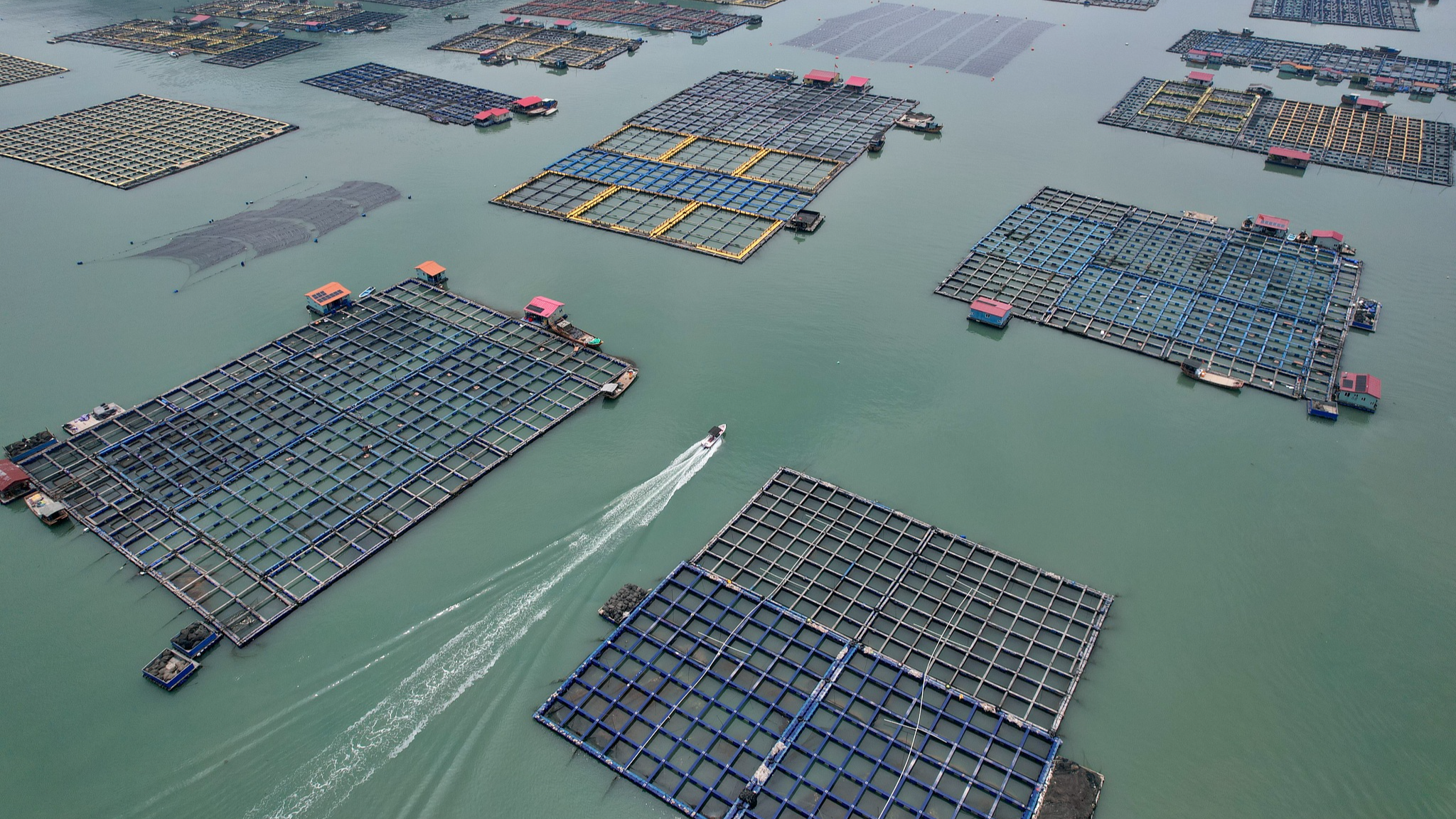
China’s newest offshore aquaculture platform points to a different way of thinking about food security.
China is not simply expanding fish farming; it is experimenting with ways to reshape the global protein supply chain at sea.
The Haixuan-1 functions as a floating aquaculture platform designed to operate in deeper waters rather than near the coast. It can move with ocean currents to reach more suitable habitats and draws clean deep-sea water, reducing the risk of contamination often associated with coastal fish farms. The system is supported by AI-based monitoring that manages feeding, water conditions, and fish health.
The platform is designed to produce around 8,000 tons of fish annually while requiring fewer than 50 workers, reflecting a broader effort to automate and industrialize offshore aquaculture.
For China, such projects are part of a larger strategy to secure long-term food supplies for a population of more than 1.4 billion. By combining marine engineering, automation, and aquaculture science, the country is attempting to expand protein production while reducing pressure on coastal ecosystems.
In this sense, offshore aquaculture platforms like Haixuan-1 offer a glimpse of how the emerging ocean economy may evolve—shaped less by geopolitical debate and more by the capacity to design and deploy large-scale marine infrastructure.