




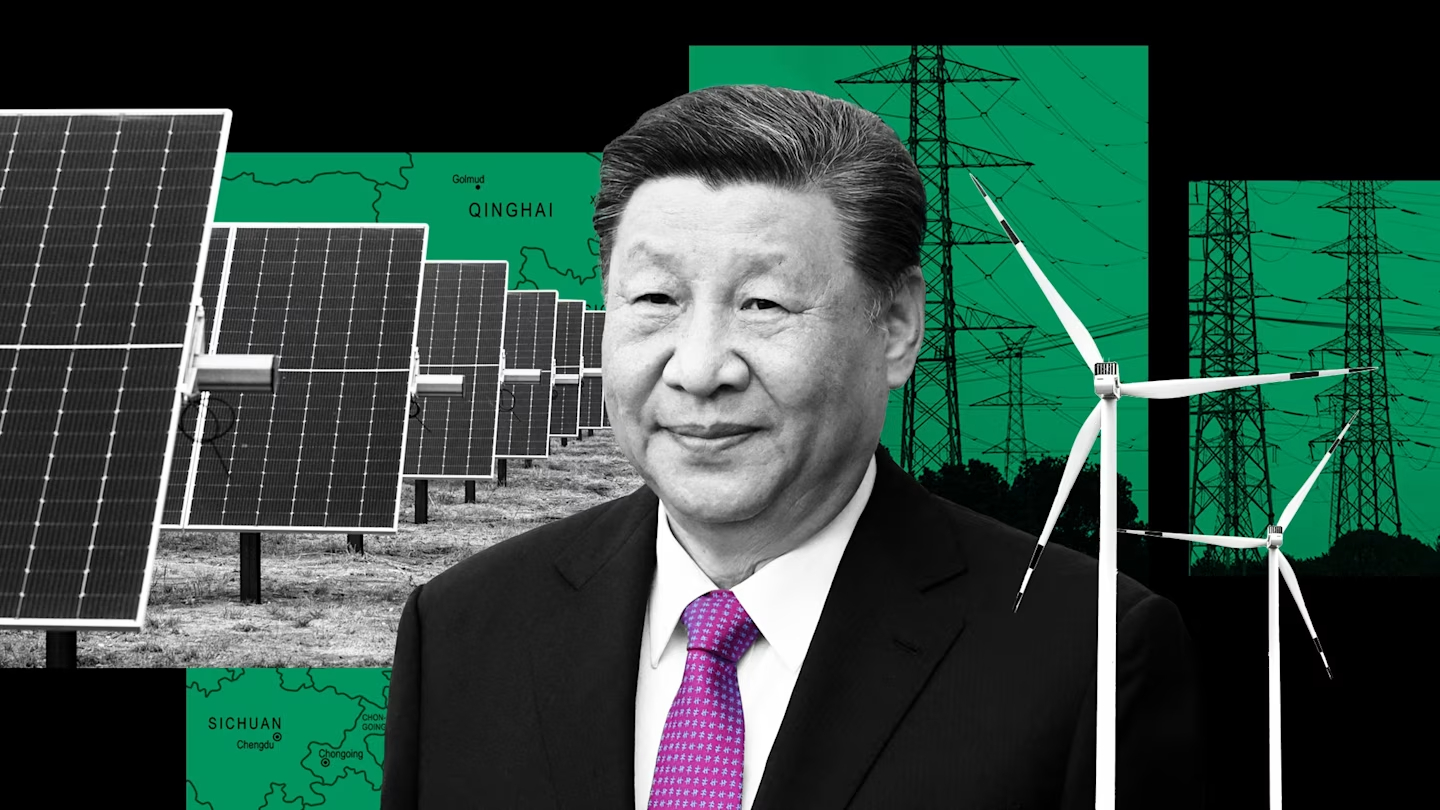
By aligning green finance with national priorities, China has translated climate goals into scale, speed, and global influence.
China’s rise as a global leader in renewable energy generation and clean-technology manufacturing is closely linked to the evolution of its sustainable finance framework, which aligns with international norms while remaining tailored to national conditions.
According to a recent report by the United Nations Environment Programme (UNEP), China’s green finance ambition, regulatory architecture, and enabling environment have expanded rapidly over the past 18 years. Recognising early the economic and environmental costs of unchecked pollution and energy insecurity, China channelled large-scale investment into cleaner air, energy security, employment creation, and economic resilience—investments that are now yielding tangible returns.
China’s economic and social development has entered a phase of high-quality growth characterised by accelerating green and low-carbon transformation in support of its broader goal of ecological civilisation. The country’s green finance system has played a central role in steering the economy away from heavy dependence on natural resources towards innovation-driven and capital-efficient growth. The system evolved gradually: initially focused on environmental protection, it has expanded alongside shifting national priorities to incorporate climate, social, and governance considerations. This reflects a transition from predominantly policy-driven initiatives to a more internationally integrated green finance framework.
Under the 14th Five-Year Plan (2021–2025), renewable energy is projected to account for around 60 per cent of China’s total installed power capacity by 2025. China also ranks first globally in electric vehicle production and sales. Energy intensity continues to decline, the national carbon market is expanding, and air quality improvements—particularly in cities such as Beijing—highlight the environmental dividends of these policies.
A defining feature of China’s climate-technology push is the integration of advanced digital technologies, notably artificial intelligence, big data analytics, and the Internet of Things (IoT), into energy and environmental systems. This digital layer is accelerating the clean-energy transition by improving efficiency, lowering costs, and enabling smarter resource management. Beyond mitigation, these technologies also strengthen climate-adaptation capacity by enhancing system resilience. Digital intelligence thus acts as a force multiplier, allowing China to deploy renewables at scale, maintain grid stability, and unlock efficiency gains across the economy.
For the international community, China’s rise in clean technology has been both a wake-up call and an opportunity. It has intensified competition, with the EU, the United States, and others racing to scale up domestic industries and innovation capacities. This emerging “race to the top” could benefit the planet—provided it remains focused on deployment and is not derailed by protectionism. Cooperation and knowledge exchange will therefore be critical. Joint standards for green products, collaborative research, and reciprocal market access for clean technologies can help align efforts and enable a more coordinated global response to climate change.