




As trade tensions with Washington mount, Ottawa looks east to recalibrate its economic and strategic priorities.
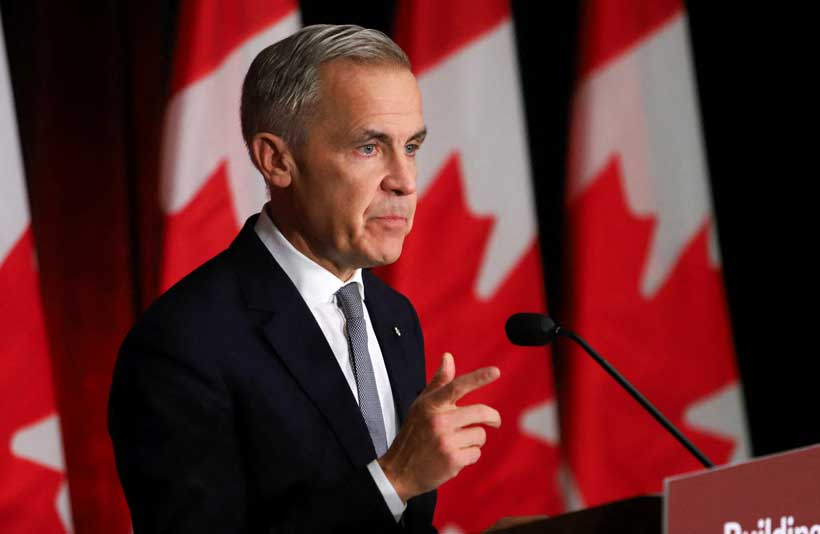
Canada’s Prime Minister Mark Carney is en route to China for a pivotal visit aimed at exploring new economic opportunities beyond the United States. Amid rising tensions with Washington marked by aggressive trade policies and an increasingly confrontational global posture, Canada has emerged as one of the first countries to actively recalibrate its external economic strategy.
For China, the agenda will focus on trade, agriculture, international security, and people-to-people ties. Beijing’s foreign ministry has stated that both countries share common interests and should strengthen cooperation, particularly through cultural exchanges. Prior to the onset of “Trump 2.0,” relations between Ottawa and Beijing were strained. In 2024, Canada imposed 100% tariffs on Chinese electric vehicles and 25% duties on crude oil, aluminum, and steel. China responded with retaliatory tariffs on Canadian canola, pork, and seafood. Now, circumstances have shifted, and both sides appear willing to re-engage and cooperate.
Previously, Canada joined the United States and Europe in banning Chinese EVs. However, following renewed U.S. pressure and tariff threats, Canada and, to some extent, Europe are reassessing their stance toward China. U.S. tariffs on key Canadian exports, including steel and timber, came as a shock after decades of close bilateral ties and have accelerated Ottawa’s push to diversify trade partnerships.
China and Canada remain crucial trading partners, with bilateral trade reaching $118 billion in 2024. For Beijing, however, Canada carries added strategic value. A successful agreement between President Xi Jinping and Prime Minister Carney would expand China’s influence in a country located on America’s immediate doorstep.
Canada’s earlier tariffs on Chinese EVs were largely intended to support the U.S. electric vehicle industry. With Washington now adopting a hostile trade posture, that rationale has weakened. A potential rollback of tariffs would benefit Canadian farmers and EV manufacturers alike, particularly as Canada’s economy has absorbed significant losses from U.S. duties on steel, aluminum, and automobiles.
Consumers, meanwhile, prioritize quality and affordability over geopolitics. If an agreement moves forward, Canadian consumers are likely to shift toward Chinese EVs, delivering a blow to the U.S. automobile industry. As U.S. credibility on the global stage erodes, continued reliance on coercive trade measures risks pushing Washington toward greater international isolation.
The European Union has already moved in this direction by reaching a price agreement with China on EVs. The deal aims to enhance the security and stability of industrial and supply chains while safeguarding the broader interests of China–EU economic and trade cooperation.
Canada’s outreach to China reflects a broader recalibration underway among U.S. allies confronted with Washington’s increasingly transactional trade policies. For Ottawa, re-engagement with Beijing is less an ideological shift than a pragmatic response to economic vulnerability and the need for diversification. If managed carefully, renewed Canada–China cooperation could ease pressures on Canadian industry, expand consumer choice, and restore balance to its external trade strategy. At a systemic level, this moment underscores a wider reality: as protectionism deepens, middle powers are likely to hedge, diversify, and seek stability beyond traditional alliances—reshaping the contours of the global economic order in the process.