




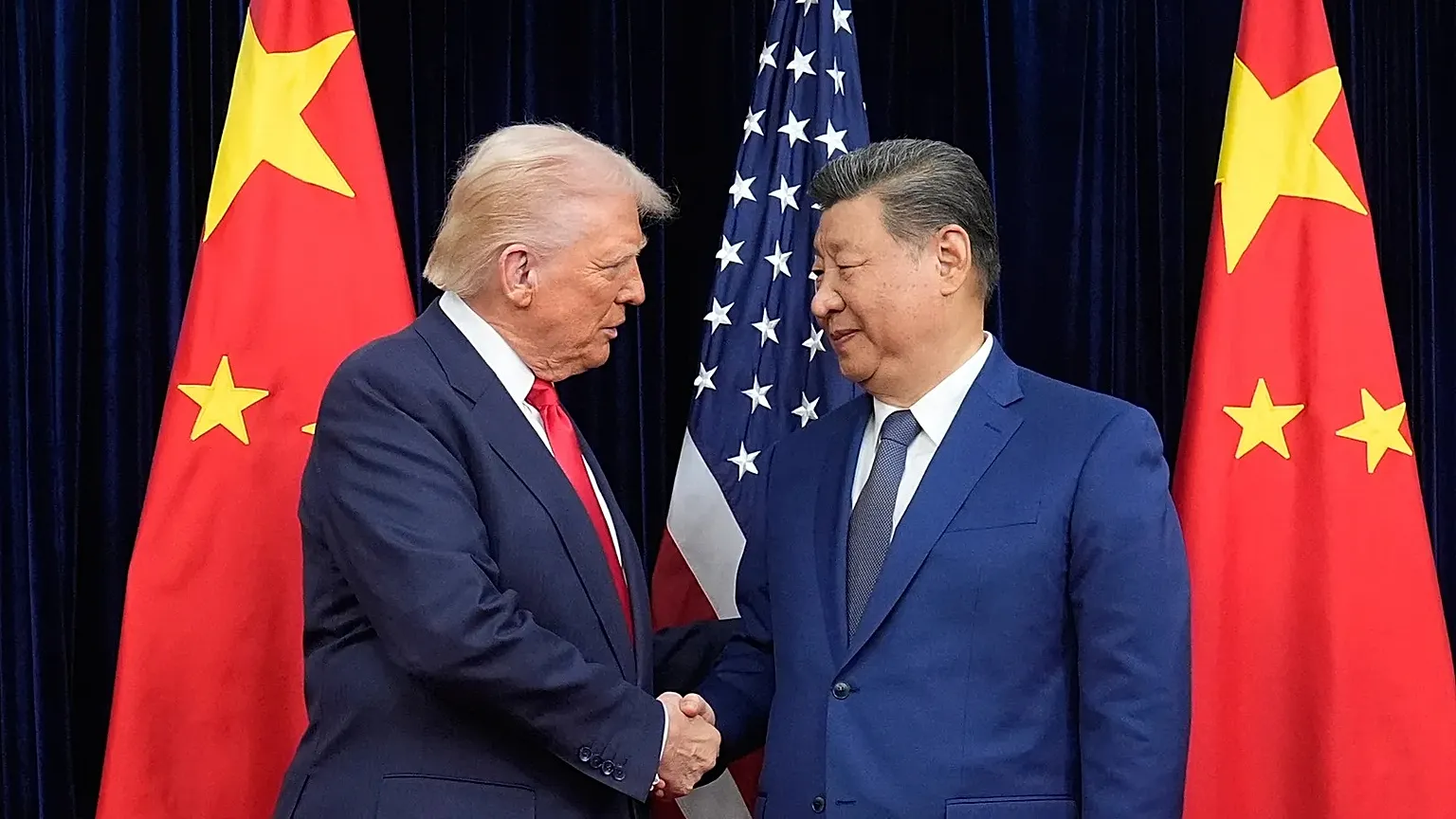
In a highly anticipated encounter in Busan, South Korea, Chinese President Xi Jinping and U.S. President Donald Trump met on October 30, 2025, to reaffirm their commitment to stabilizing China-U.S. relations. Xi described the bilateral relationship as a “giant ship” that both nations must steer steadily through “winds, waves, and challenges.” His remarks emphasized shared leadership and the need for consistent navigation amid geopolitical turbulence.
Since Trump’s reelection, Xi noted that the two leaders have spoken by phone three times and exchanged several letters, maintaining what he described as “close contact.” This continuity in communication contrasts sharply with earlier phases of U.S.-China tensions, signaling an intent on both sides to prevent their relationship from drifting into confrontation. Xi underscored that while the two countries do not always see eye to eye—a natural occurrence between two leading global economies—it remains vital to stay the course and focus on mutual benefit.
The closed-door meeting in Busan followed a round of economic and trade consultations in Kuala Lumpur, where negotiators from both nations reportedly reached a “basic consensus” on resolving major concerns. This progress created the necessary conditions for the Busan meeting and appears to have paved the way for concrete economic outcomes.
Following the talks, President Trump announced that the United States could sign a trade deal with China “pretty soon,” adding that an agreement had been reached on rare earth materials. Trump further indicated that Washington would begin reducing tariffs on Chinese imports, a move that could further ease the strain and long-standing trade confrontation. He also announced plans to visit China in April 2026, with President Xi expected to make a reciprocal visit to the United States later in the year—an exchange that could help sustain momentum toward rebuilding trust.
A brief pause in May saw both sides roll back some of the retaliatory tariffs that had exceeded 100 percent, but trade tensions soon resurfaced. The Busan meeting, therefore, represents a renewed effort to rebuild predictability and cooperation in economic relations.
Xi’s rhetorical linkage between China’s development and Trump’s “Make America Great Again” vision was a calculated gesture, framing cooperation as mutually reinforcing rather than zero-sum. It allowed Beijing to position itself as a pragmatic partner willing to work toward “concrete achievements,” while simultaneously projecting confidence in China’s global trajectory.
Overall, the Busan meeting marks a moment of cautious détente between Beijing and Washington. Xi’s nautical metaphor of steering the “giant ship” captured both the magnitude and fragility of China-U.S. relations: cooperation remains possible, but it requires vigilance, balance, and political will.
While short-term agreements on trade and rare earths may ease immediate tensions, the underlying structural rivalry over technology, global influence, and economic governance continues to define the broader relationship.