




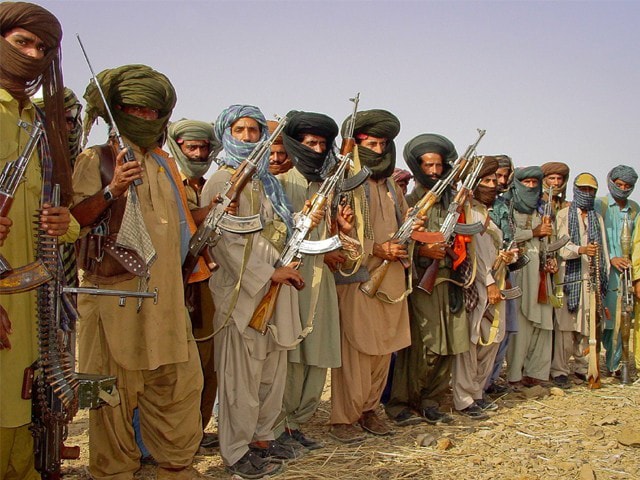
Decades of marginalization, unfulfilled rights, and exclusion from political and economic opportunity have made armed struggle an appealing, if tragic, path for the Baloch generation seeking justice and recognition.
A spate of coordinated attacks by the Balochistan Liberation Army across the province claimed dozens of lives over the past weekend, marking one of the deadliest outbreaks of violence in recent memory. Security forces responded with exceptional rapidity, and within 40 hours, at least 145 insurgents were reported killed. In a bid to contain the fallout, the provincial government imposed a one-month ban on gatherings, processions, and sit-ins of five or more individuals.
Balochistan Chief Minister Sarfraz Bugti, speaking at a press conference in Quetta, pledged to eliminate the militants, noting that the bodies of the insurgents were in the custody of authorities. “This is the highest number since Pakistan has confronted this war on terror,” he stated, while confirming that 17 law enforcement personnel, including members of the police, Frontier Corps, and the Navy, had lost their lives. Civilian casualties amounted to 31, including those injured.
What has stood out again this time is the BLA’s use of a female suicide bomber in the recent attack. Hawa Baloch from Gwadar is reportedly the sixth known female suicide bomber in the Baloch insurgency. Previous female operatives include Shari Baloch, Sumaiya Qalandrani Baloch, Mahal Baloch, Mahikan Baloch, and Zareena Rafiq. In a video message prior to the attack, Hawa exhorted Baloch women to join the armed struggle, asserting that the Pakistani state had “oppressed Baloch women as well as men,” and emphasising that they were “neither intellectually nor practically weak.” Hawa’s message indicated that insurgency can cross traditional societal divides. The BLA social media channels reported that Hawa Baloch was a writer. Similarly, other female fighters, as well as males, are known to have come from educated backgrounds.
So how does an educated generation, aware of the consequences and personal risks, come to embrace armed rebellion? More fundamentally, what does this suggest about the recognition of Baloch rights and the value accorded to their lives?
The Baloch militant organisations have spent years cultivating a narrative that frames militancy as a moral and historical duty in response to the decades of injustice and deprivation. In this narrative, Baloch youth are cast as heirs to a struggle for identity, autonomy, and justice in a province rich in mineral wealth, strategically positioned, yet chronically excluded from the political and economic benefits of its own resources. What is now concerning is that even those pursuing higher education, institutions ostensibly designed to open avenues of social mobility, find themselves drawn to this narrative when conventional political channels and economic opportunities appear blocked or ineffective.
Security measures, while necessary, have repeatedly proven insufficient to address the structural roots of unrest. Heavy militarisation, curfews, and intelligence-led operations can neutralise immediate threats, but they do not resolve the underlying grievances. For the new generation of Balochistan, both men and women, the discrepancy between official rhetoric and lived realities is massive and unsettling. Development projects frequently bypass local communities, governance structures offer minimal representation, and security operations restrict civilian life even as insurgent ideology continues to circulate unchecked. The state addresses symptoms of militancy, but not the machinery that sustains it.
External involvement also adds to the issue’s complexity. On multiple occasions, Islamabad has presented evidence of India sponsoring militancy in Balochistan. While cross-border dynamics cannot be ignored, overemphasising external actors without attending to the actual concerns of the Baloch people risks a tunnel-vision approach that further alienates the province. Moreover, Baloch civil society and rights activists have faced repression, raising questions about what avenues of constructive engagement remain available between the ruling authorities and the people of Balochistan.
There are some urgent and unavoidable questions for Pakistan. How can the state demonstrate, not merely in rhetoric but in tangible action, that the rights of Baloch citizens are respected and their lives valued equally? How can it counter narratives that glorify militancy while simultaneously offering credible pathways for opportunity, agency, and political participation? Security operations must be complemented by strategies that address both perception and reality, and provide practical proof of inclusion where Baloch youth can see their aspirations realised without recourse to violence.
Balochistan’s crisis is not a “law-and-order” challenge as it is often referred to in the national discourse. The deeper issues are injustice, economic deprivation, and a struggle for identity and agency that the Baloch have long endured. True security cannot be achieved through curfews, raids, and arrests alone. It will require the state to demonstrate, consistently and convincingly, that every Baloch life matters, that political and economic rights are respected, and that insurgency will no longer appear to educated youth, men or women, as the only viable path to justice. Vigilance without foresight, action without engagement, risks not only temporary suppression but the perpetuation of the very conflict it seeks to resolve.